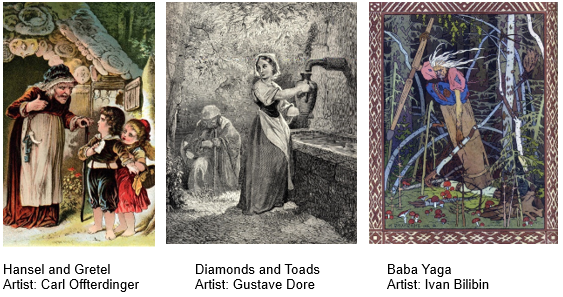
As this year’s conference theme is Witches in Fairy Tales – Wise Women or Evil Enchanters?, we’d love to know who your favourite (and least favourite!) witches are.
The wicked witch stereotype is common in fairy tales – the old, ugly hag with warts and a hooked nose – and their deeds can be terrible, as evidenced by the murderous Evil Queen in Snow White and the cannibalistic witch in Hansel and Gretel. But there are other witch figures who offer aid, guidance and protection to the young protagonists, such as the Rumpelstiltskin-esque magical helpers in The Three Spinners, the wise crone grandmother in Little Red Riding Hood, the wondrous sea witch, the groac’h, in Upon a Starlit Tide, or even Glinda the Good Witch.
Others are portrayed as both or neither, blessing those who are kind and only meting out punishment when it is deserved, such as Frau Holle and other witch-figures from The Kind and Unkind Girls tales, and Baba Yaga, who can be an agent of change and initiation, even protection, for the young woman she encounters, and is only vengeful if you deserve her wrath. These women live outside of society’s strict rules, with a freedom that inspires many.
Dr Sara Cleto and Dr Brittany Warman of Carterhaugh say:“The witches that appear in folklore – in fairy tales, legends, and other folk narratives – are often deeply ambiguous. Rarely are they purely good or evil. Consider, for example, the famous Russian folkloric witch Baba Yaga. In some tales, she is an evil monster… in others, she is the main character’s only hope – she is not just a dangerous witch but also a maternal benefactress. Witches are liminal, creatures of thresholds and becomings who resist simple binaries. They frequently have close ties to the natural world. They are associated with healing and knowledge as often as they are with dark magic, but, in either case, witchcraft is all about power. Witches of folklore invite change and galvanise transformation.”