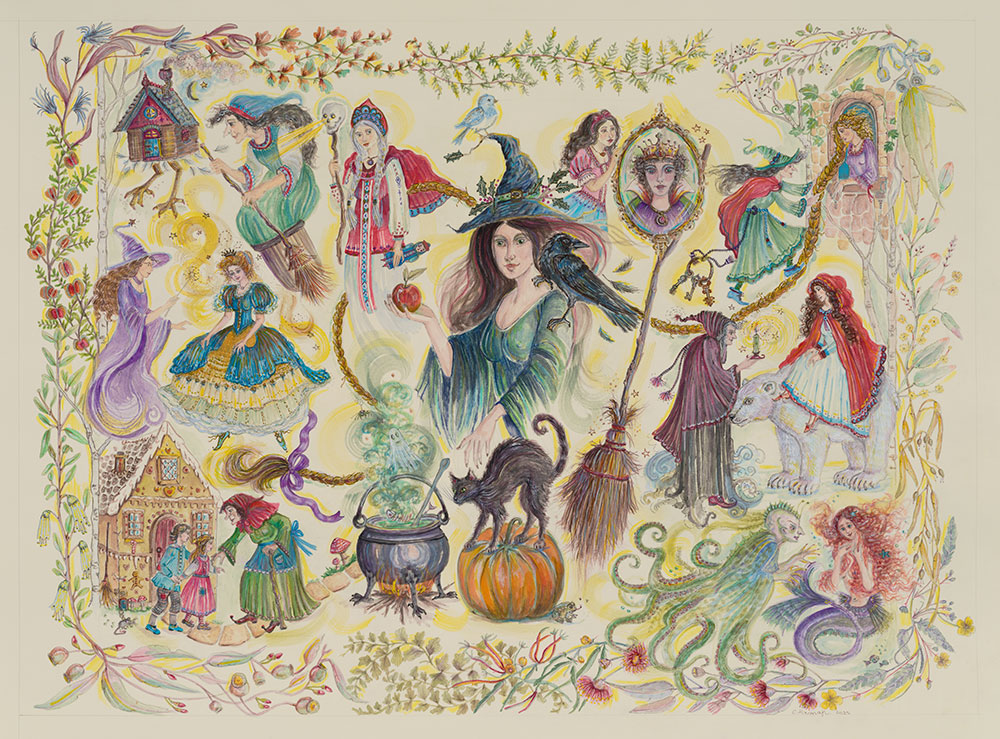
In part two of our interview with artist Cassandra Kavanagh, she reveals her delight at being asked to illustrate our 2026 conference theme, and her further thoughts on ‘Witches in Fairy Tales: Wise Women or Evil Enchanters?’ (August 15-16, Melbourne).
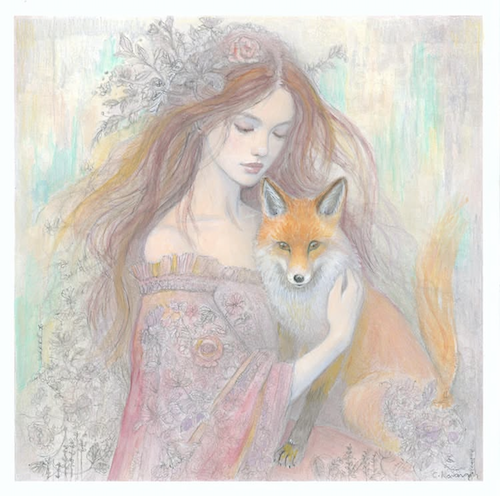
How did you feel when you were asked to create the conference artwork?
I was absolutely thrilled beyond measure to have been asked. I gave a resounding YES! The theme is one of my favourites – Witches in Fairy Tales: Wise Women or Evil Enchanters? It’s such an exciting theme to explore, and I was immediately overflowing with ideas. Local artist Helen McCosker was the artist for the 2025 Australian Fairy Tale Conference, and now I have the good fortune to have been chosen for the 2026 one! The Illawarra Fairy Tale Ring to which we both belong must have magic! I am truly feeling enchanted.
You said you love the theme – what does it mean to you?
I love the duality of it. Fairy tales reveal that morality, like beauty, is in the eye of the beholder. The concepts of good and evil are not always inherently obvious, but depend on perspective. Sometimes the protagonist acts on the belief that any means taken to achieve their goal or complete the quest is acceptable, but would the witch agree? I love that witches are often agents of transformation or revelation and of truth-telling. They often hold the dual power to help or harm, depending on the hero or heroine’s true heart.
Often witches represent the secret wisdom of the elder and of wise women who teach and show the way – but they can also appear as agents of destruction, revenge and chaos; forces of nature and of consequence! The role of the witch in a fairy tale is often to challenge the hero or the heroine, so they pay the price for their folly or reap their reward, or achieve their quest. They also hold important evidence of attitudes towards women and women of difference.
How do you feel about real-life witches?
As a woman, I have always felt very passionate about the fate of witches and women. The word “witch” carries power and is often weighted with judgement. Witches can be good and bad, leaning to the light or drawn to the dark, and often hovering in-between. Witches are often cast as either sacred healers, helpers and holders of ancient wisdom, or as wicked women who bring harm and misfortune.
I was hugely excited by the theme because I absolutely identify with the women who were practising witches, and also those named witch simply because they were different; women who held ancient wisdom and had healing hands and hearts, herbalists and those for whom the wild green places were sacred, and who had a connection to Mother Earth. Stories of witches reveal a lot about the historical perceptions of women and the historical struggle they have faced in society, and in particular against the patriarchy.
You, the keynote speaker and two of the conference organisers are witches – how do you feel about the craft today? Have things changed over time?
I think the solitary witch is gaining a resurgence, although covens exist. I think the elements of the craft have become more fluid and inclusive, and there is often an overlap between the once distinct paths of Paganism, Wicca and the Occult. I think the modern witch can choose to embrace the elements that call to her soul. I personally lean deeply towards paganism enhanced with warm well-wishing Wicca, and embrace the creed of “Do no harm”. Nature and healing are my primary focus.
Witches often inhabit the forests and woods. Forests represent the wild within us and without. They are places of temptation or redemption with thresholds into the unknown, places of sanctity and transformation or of risk and danger. Often, the underlying theme behind the witch is the “wild woman” in her true form, unpredictable and potentially dangerous, who must be tricked, tamed, appeased, or destroyed. The witch is in effect a force of nature.
Do you have a favourite fairy tale witch?
This might surprise people, but I truly love Baba Yaga. Aside from the fact that her stories hint at origins with both a dawn and a forest goddess, Baba Yaga is an extraordinarily morally complex witch and an ancient force of nature. She can be benevolent, helpful and even loving, or vengeful and truly terrifying, depending on what you deserve. She is a witch who delivers consequences for actions taken, and Baba Yaga has very distinct correlations with the fairy godmother/good witch archetype in the story Cinderella, which fascinates me.
Do you have a least favourite?
As a child, I was haunted by the Sea Witch in the tale of The Little Mermaid. I could not understand why the sea witch made the little mermaid suffer so much for love. The price she paid was too steep. The curse of being unable to speak, and to feel the pain of knives cutting her at every step, seemed to doom the little mermaid to failure. Much, much later, I wondered if the sea witch was in fact warning the little mermaid that true love does not always prevail, perhaps even hoping the little mermaid would decline her services? The message here is that if you sacrifice yourself to be something else for the person you love, the love you seek is not worth it. However, the sea witch was a powerful being and could have granted the little mermaid’s deepest desire to win the love of the prince if she chose to.
The other witch that always struck terror into my heart was the “Gingerbread Hag” in Hansel and Gretel. As a child, I was always wandering in the woods, and I have an absolute passion for gingerbread! I would certainly have been tempted, but I like to imagine that I would have been brave and fierce like Gretel. As a child, I often wondered if the witch might have been transformed by love if she had had the chance. (But that would be another story! Perhaps I will write it!)
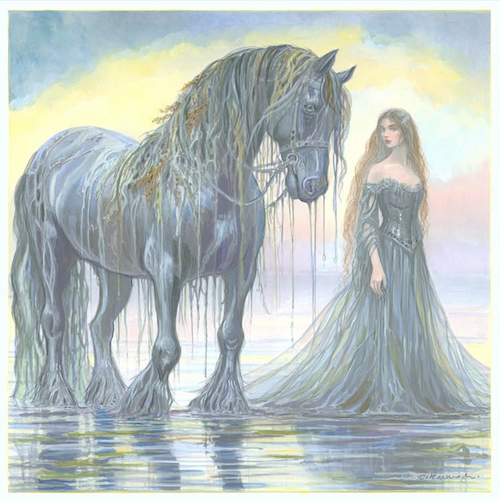
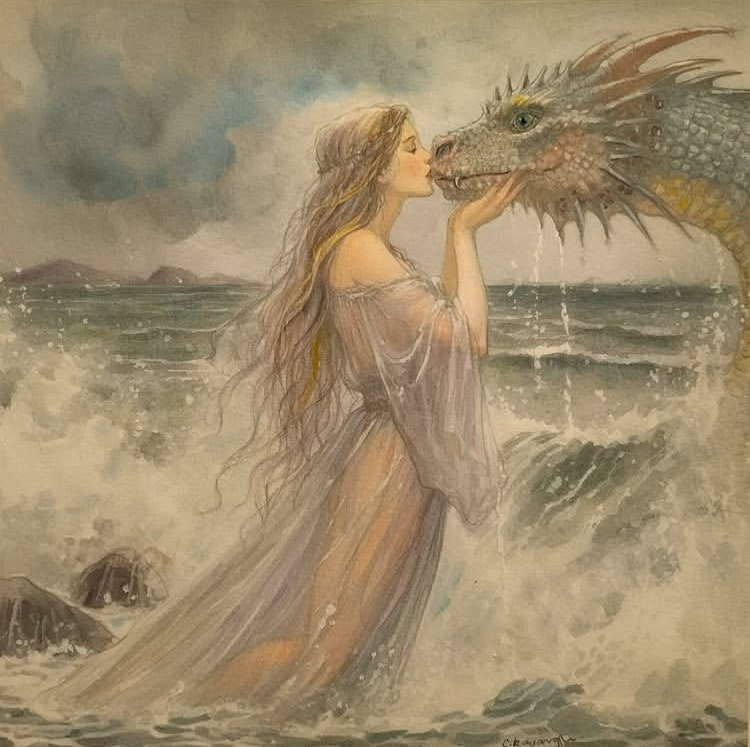
You can meet Cassandra at the conference in August, review our Part 1 interview, and check out her gorgeous artwork now at instagram.com/cassandrakavanagh