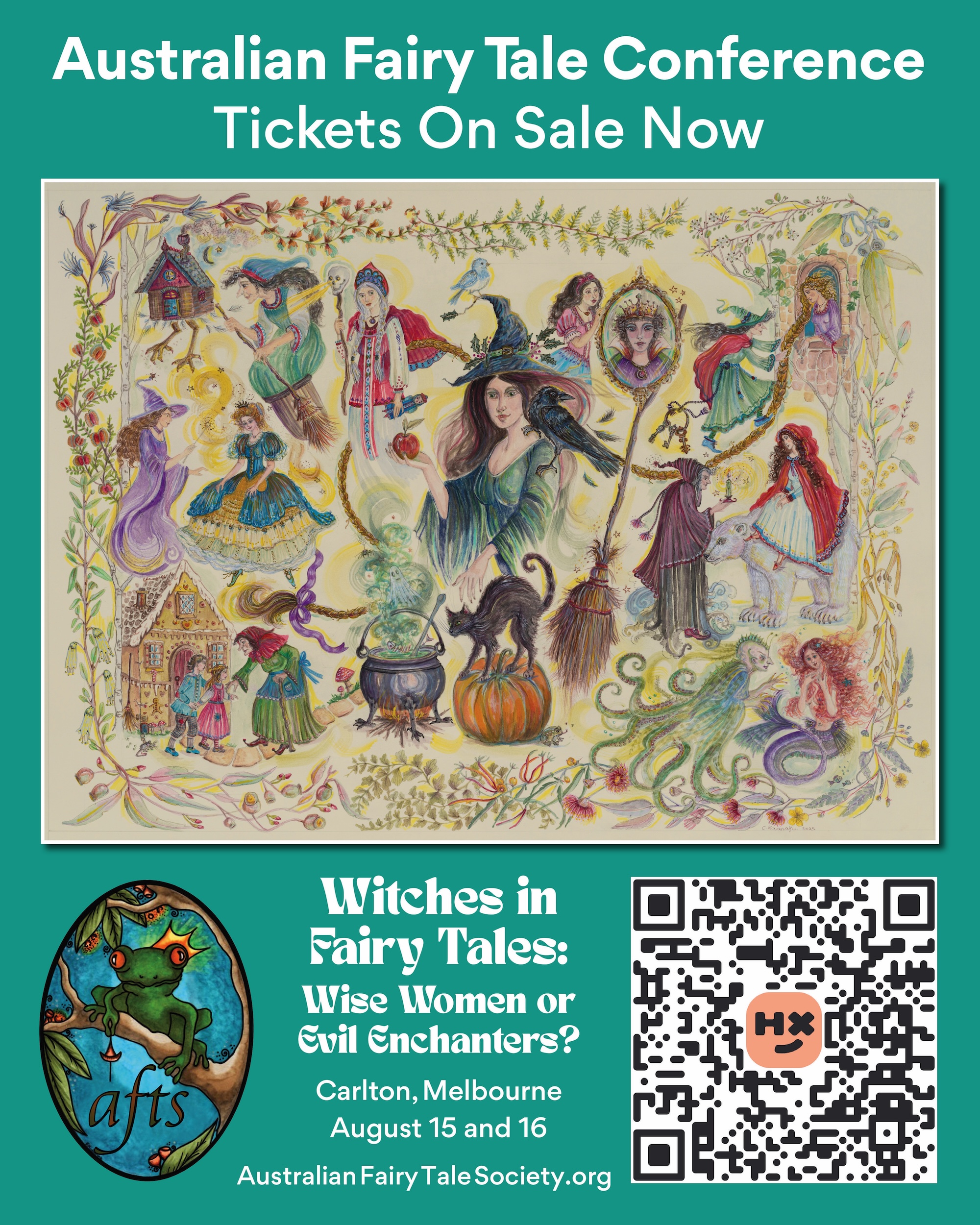
Join us in Melbourne for two magical days exploring fairy tales from an Australian perspective. Our keynote speaker, internationally celebrated author, oracle deck creator and witch Lucy Cavendish, will make a rare appearance, and will be joined by acclaimed fairy tale writer Kate Forsyth and an eclectic selection of artists, authors, storytellers, musicians, psychologists, academics and fairy-tale lovers.
There will be fun performances, thought-provoking presentations, fascinating panels and creative workshops, and lots of time to chat with like-minded people from around the country.
In Part 2 of our interview, 2026 keynote speaker Lucy Cavendish discusses her deepening understanding of fairy tales as she grew up, what connects people to them today, and the magic within them. Her even deeper dive will be shared at ‘Witches in Fairy Tales: Wise Women or Evil Enchanters? – our August 15-16 conference in Melbourne.
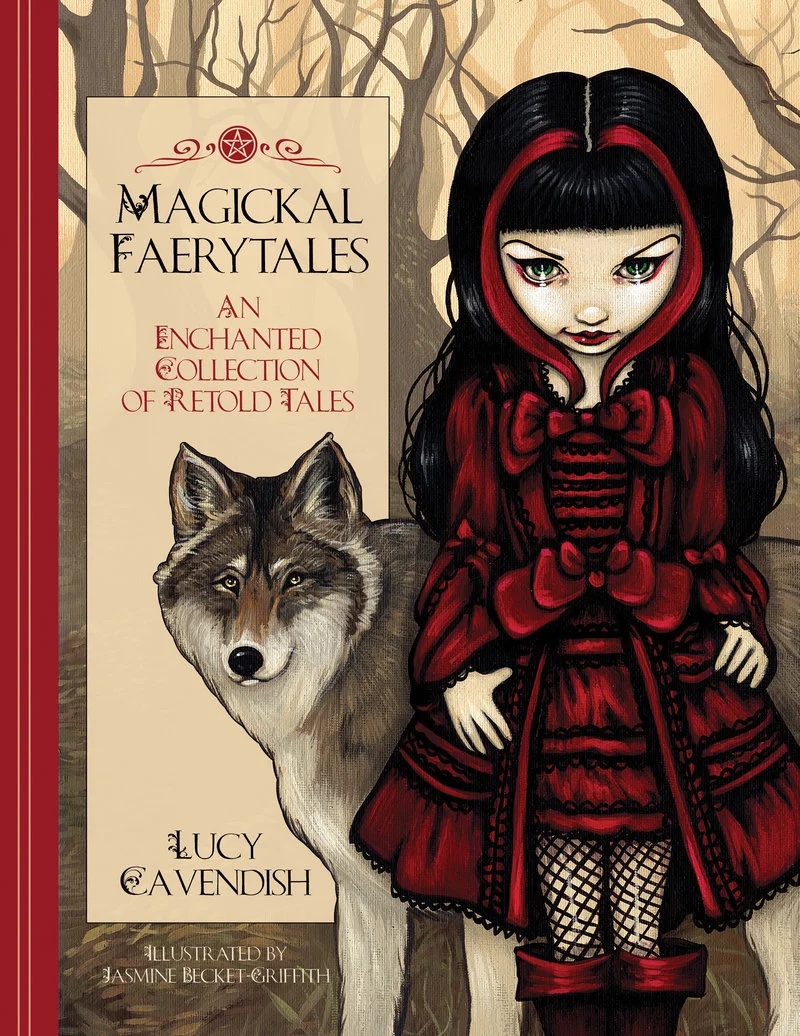
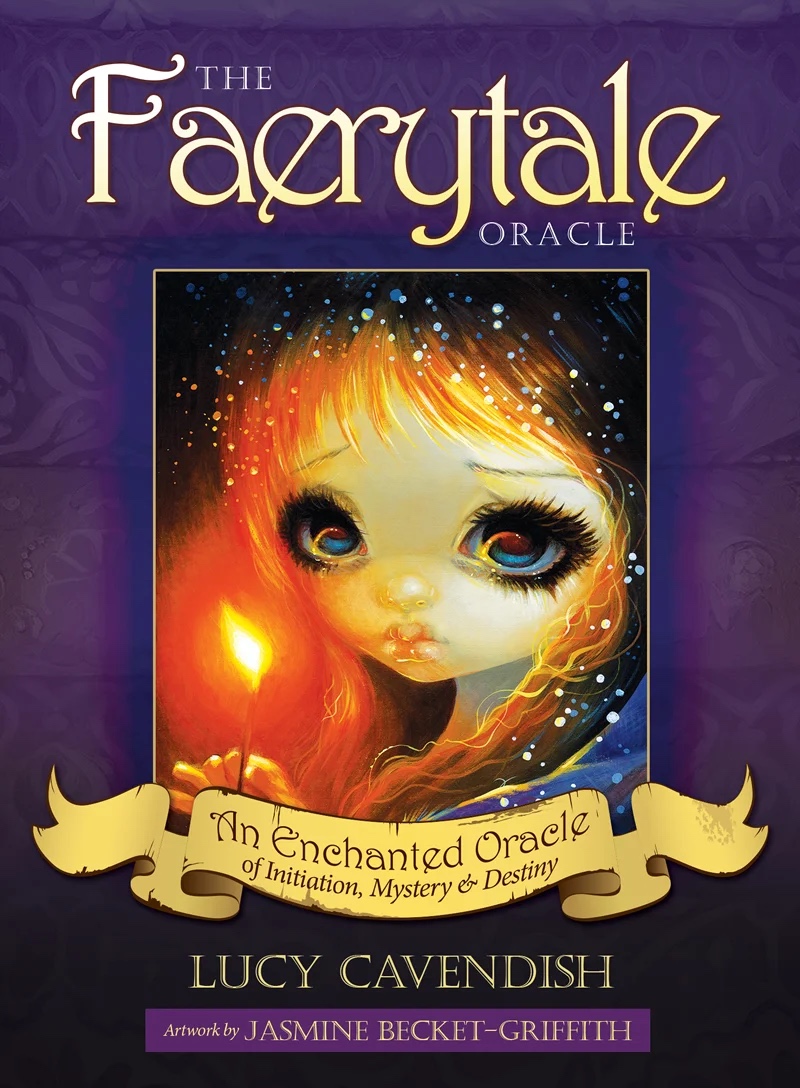
Book cover for Magickal Faerytales, by Lucy CavendishFaerytale Oracle – by Lucy Cavendish
What draws you to fairy tales today?
In my twenties I discovered the writings of Angela Carter, and her fairy tales. I was so captivated and inspired. They helped me to manage my feelings and my wounds and my confusions at being a young adult woman. The Company of Wolves, the 1984 Neil Jordan movie based on her short story, is an adaptation of Little Red Riding Hood, and is still a favourite. I loved, still love, magickal realism, and I think that is what fairy tales are, to an extent. The magick is often centred in the everyday in the tales. Spinning, but make gold from straw. Grow antlers. A horse’s head that speaks.
Writers like Angela Carter and Marina Warner had a strong hold on my mind, and on beginning to contemplate who the tellers of the tales were, and how the teller shaped the tale, and how the tellings were shaped and reshaped by the cultures they arose from and each era they are told within. I love that so many tales are almost eternal thematically, but they illuminate very different aspects of ourselves and our relationship to nature, to death, to ageing, to desire, to mystery and beauty.
I think fairy tales are the framework for so many stories. I guess I think they are a cultural framework for us too. Tales we all know, but have very different imaginings of within our own imaginations. There is within so many tales a sense of kingdoms and royalty, and the psychology of families, and power relationships. The telling reveals as much about us as the tale.
I don’t know how to articulate it and I am no expert, but they seem to me to shape our thoughts about the world and our place within it. They inform the way we live, as if a life was a story, and we are presented with challenges, and we can draw strength and inspiration from the tales. I think they have influenced my sense of what is good and what is wrong. Yet they have an ambiguity which is beautiful and mysterious and keeps us a little uncertain in the world.
How do you feel about the way witches are perceived in fairy tales, even today?
I accept that part of the archetype of the witch is to be something of an outsider and feared. I think the trope that we are all obsessed with – stealing the life force or beauty of others, like Snow White’s “evil stepmother” – is a little tedious though. I suppose the witch is a kind of repository of all the things we find unacceptable about being a woman. Old? Witch. Want Power? Witch. Impatient and cross at royalty stealing your herbs from your garden? Witch. Irritated at children eating your shelter? Witch.
You, the conference artist, two of the conference organisers and some of the people who will attend are witches. How do you feel the craft is perceived in 2026?
Well, I thought we were on a fairly auspicious trajectory and then… everything changed. Right now, I think we are in a very dangerous place with the rise of Christian nationalism and the spirituality/conspiracy crossover, and I have noticed the word witch being used as an insult more frequently – again. It had faded out slightly. I’m also concerned at a revival of the Satanic panic. It’s scary out there on the internet. I recently had a discussion with a long-term friend about my dislike of the word satanic for criminality and child abuse, as abuse and child sex trafficking occurs across cultures and religions, and it certainly happens within western religious institutions. I think unfortunately people use “witch” and “Satanic” quite interchangeably when what they mean is “wrong” or “evil”. Scapegoating is making a comeback.
And AI is creeping into the craft, which is dystopian and awful, for too many reasons to go into here. But I would like our path and craft to be a force for creativity, humanity and the kind of magick that doesn’t rely upon theft of art, in all of its manifestations.
But back to the resurgence of the witch fear and the witch wound. Fear always does get a makeover and reappears in extreme times, and scapegoats tend to shapeshift a little, but mouthy older women who are independent seem to be back on the most mistrusted list!
Has this changed over time? Were you nervous about being publicly known as a witch when you first came out of the broom closet as the editor of Witchcraft magazine in the nineties?
It has changed. And I was nervous, for sure, but mostly I was nervous that I was using a word which I wasn’t yet worthy of to describe myself with. I think Witchcraft magazine was when I first came out, although I had thought about it a lot and been involved in spiritual activities for a while – tarot studies, meditation, a circle of witchy people for a year and a day.
How does it feel to be the person breakfast show hosts and TV stations call on when they want to interview a witch?
Oh, they have lots of witchy people to call on who are so clever and learned! It’s an honour, and a responsibility, and one I take seriously but lightly. I do understand the time constraints and the kinds of questions. I like to think I am warm and approachable, and I am most of the time, I think. I want to do my best and be authentic. I also try to be someone who reduces fear and superstition while maintaining that sense of wonder and magick. It always strikes me as so odd when people are scared of me, as they have been at some television stations. I guess, culturally, I am pretty free of that fear, but for other people, there are generations of hostility and suspicion to work through. I just try to do my best.
What is the most important role of a witch right now? (I love that you’re speaking up about predators within political and spiritual circles, and giving clear, science-based information about health etc.)
Thank you! Hmm, that’s a big one, because we are all very diverse and I am not sure I can speak on behalf of so many of us. I think for me, while speaking up and out is important, it’s also keeping that connection to nature very real and alive in everyday life, and not losing that or feeling overwhelmed by the sadness that the human world of conflict is conjuring up within so many of us.
Also, I need to be really mindful that we are powerful as we grow older, and should remember to be visible and open and even loud about growing older. Becoming the crone in a visible, audible way, where I take up space and then share that space, is helpful for me as I grow older and maybe is helpful for others too. I think we as witches have enormous symbolic value as creatures who are able to withstand being outside of communities and thus maintaining our independence, but still connecting and being in service to communities. We are wisdom, truth, knowledge and power. We are history’s disservices to women incarnate.
What are you most looking forward to about this year’s Australian Fairy Tale Conference?
I am nervous! I am feeling quite doubtful that I have any special expertise, but perhaps what I am excited most by is being surrounded by like-minded passionate people in our own little coven of faery tale magick. I love that feeling of being in a lovely, wise, magickal space where we appreciate each other’s obsessions!
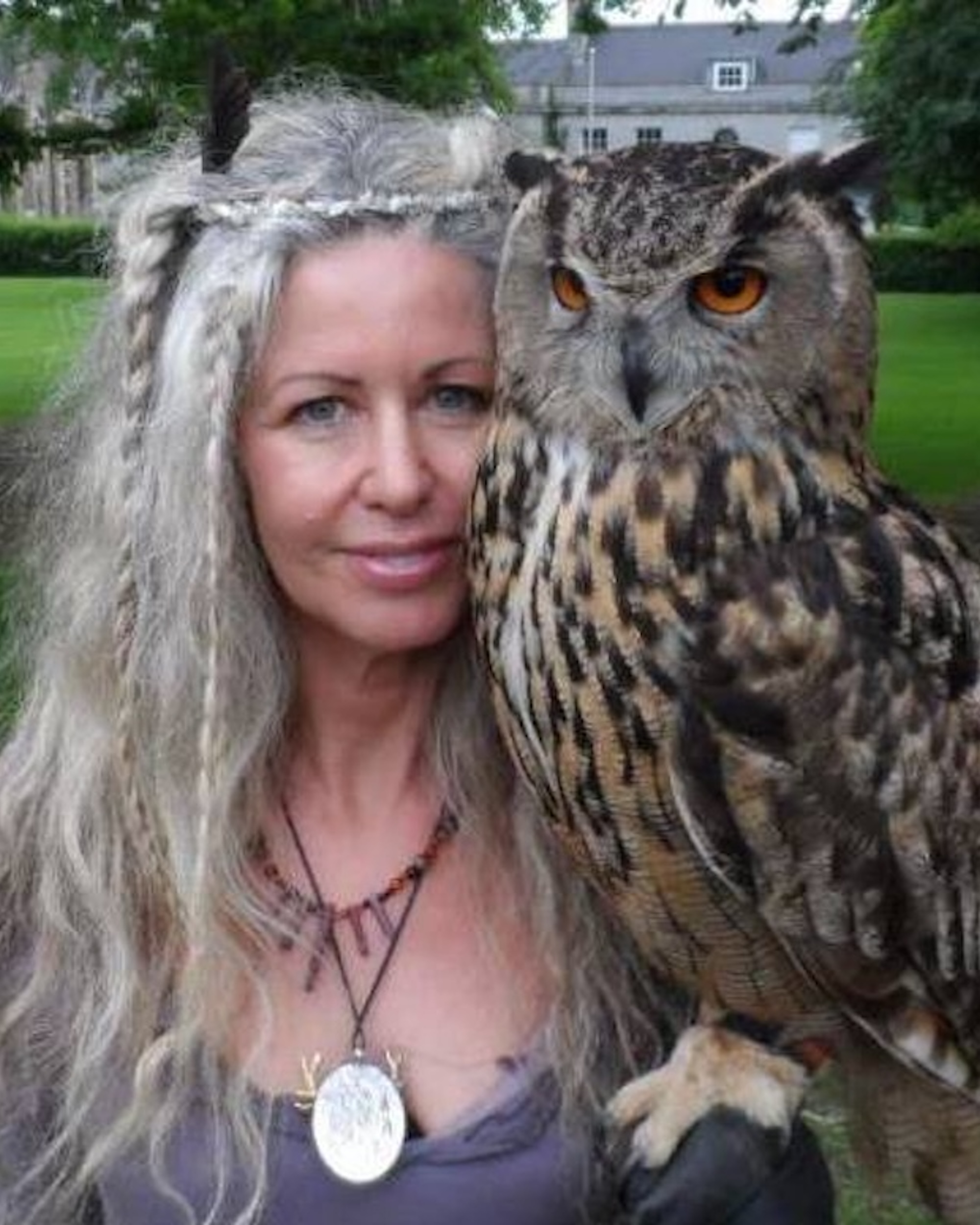
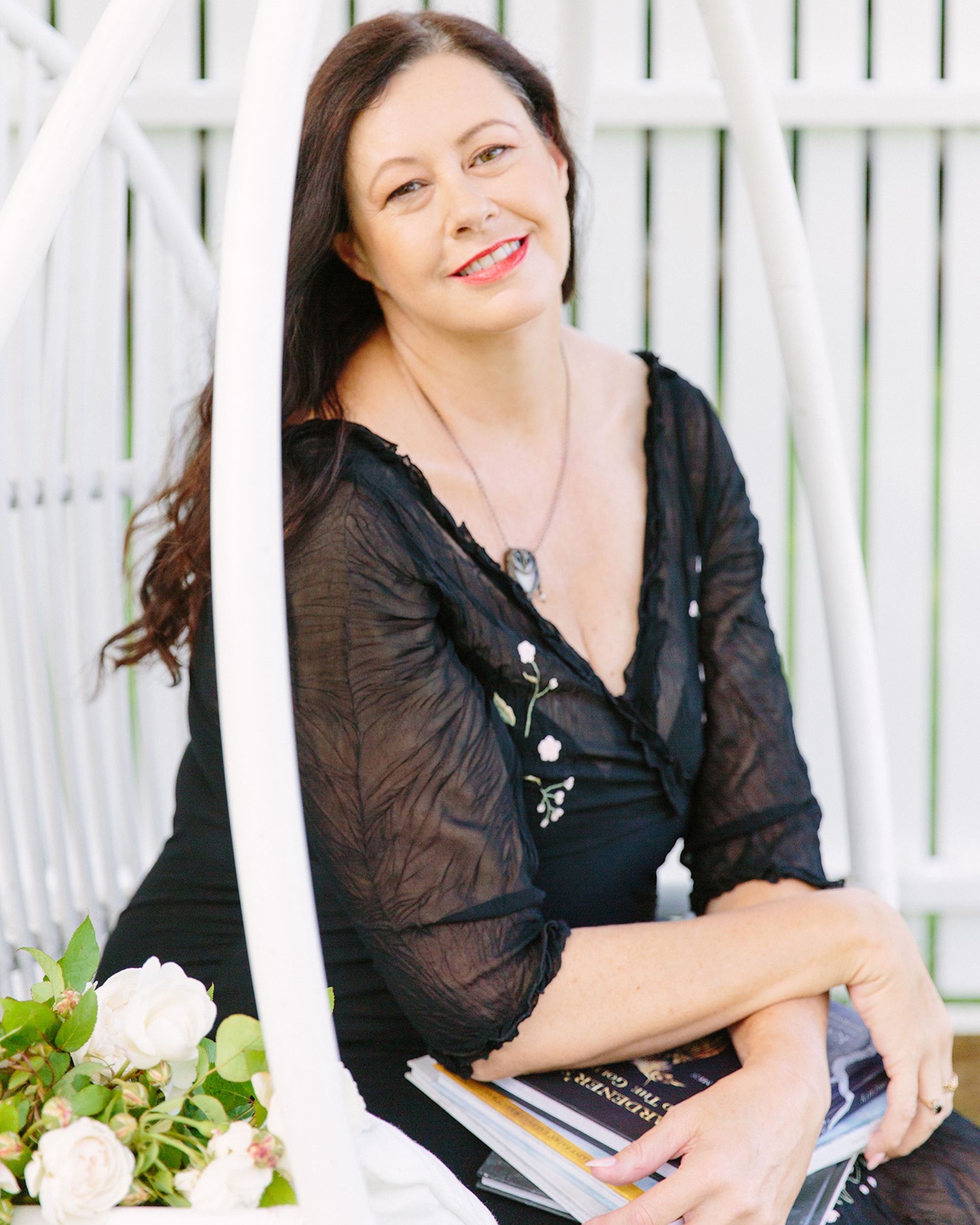
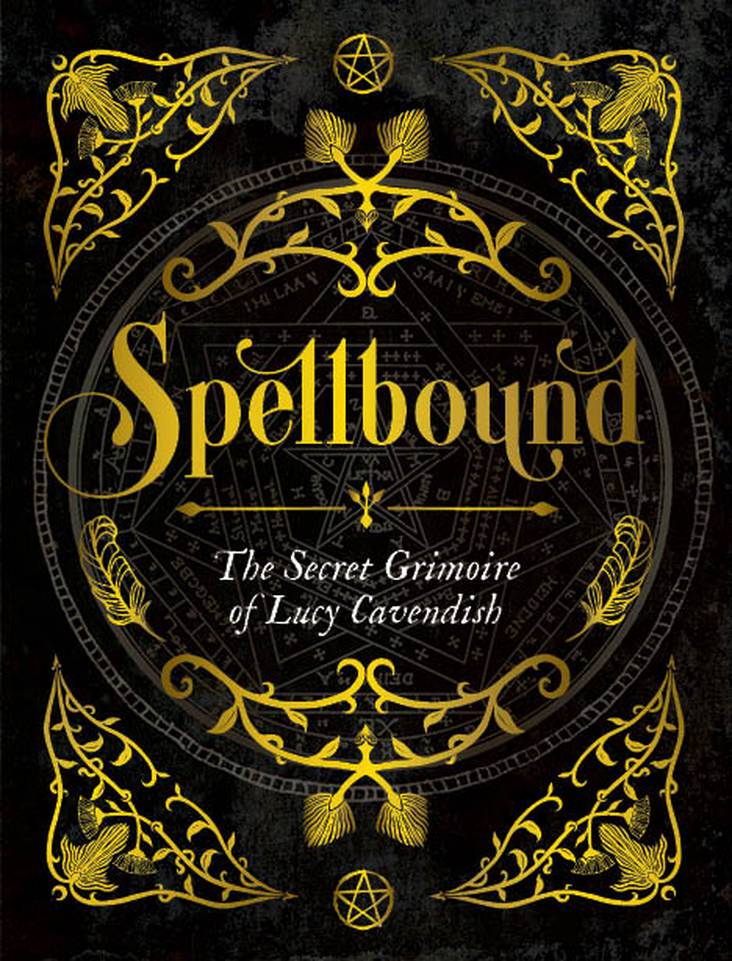
Lucy Cavendish – author, oracle deck creator, podcaster, witch, surfer and wildlife carer – will keynote our August 15-16 conference in Melbourne, Witches in Fairy Tales: Wise Women or Evil Enchanters? Until then, review our Part 1 interview, check out her books Magickal Faerytales, Spellbound and Witchy Magic; oracle decks including The Faerytale Oracle, Into the Lonely Woods, The Solitary Witch and The Faery Forest, and podcast, The Witchcast. Connect with her at instagram.com/lucycavendish.