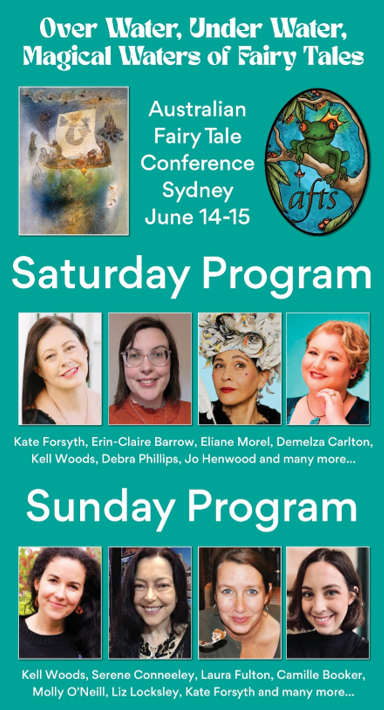
Fairy tale enthusiasts from across Australia and beyond will gather this weekend, June 14-15, in Sydney for our conference, Over Water, Under Water, Magical Waters of Fairy Tales.
For your interest and delight the full program has been revealed, and registrations are still welcome (quickly!) via our conference page. See you at Prince Henry Bay!
The place where we will meet for our Sydney conference – our coming together – is Bidjigal land, water, and sky. Current evidence is that Aboriginal people have been living around Sydney Harbour for about 20,000 years, though the population was thin and sporadic up until about 5,000 years ago.
One of the two oldest sites around current Sydney is a hearth from about 7,800 years before present at the old Prince Henry Hospital site. We truly will be standing on ancient land as many generations have done before us.
We are honoured and grateful that Aunty Barbara Simms-Keeley will Welcome us to her Country.
Aunty Barbara, a Bidjigal, Gweagal and Wandi Wandi elder, who was taken away from her family when she was just eight years old, grew up on a nearby Mission. She knows this place deeply and can tell stories from the mid-20th century about fishing and swimming around here, and the people and places that she remembers. Here’s one she recorded for the NSW National Parks and Wildlife Service.
Aunty Barbara protects the living too as an experienced Aged Care Co-ordinator, and as an Aboriginal health worker who has worked tirelessly in raising community awareness around cancer. She also nurtures and educates all the community, from whatever cultural background, to listen, to understand and to respect.
We are very grateful to her and to the Bidjigal people for making us welcome.
The stunning artwork for this year’s conference, Over Water, Under Water, Magical Waters of Fairy Tales, is worth diving deep into to find all the stories and characters that are hidden under water.
If you would like to own this art yourself, you can buy any version of merchandise you choose through the AFTS Redbubble store.
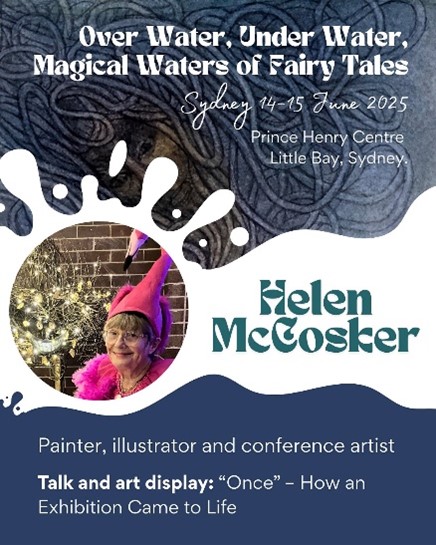
This remarkable painting was created by our own Helen McCosker, who contributes so much to the Illawarra Fairy Tale Ring, including the creation of their logo.
Helen is a children’s author and illustrator from Thirroul, a seaside village south of Sydney. Helen’s picture book, The Night Fish – another watery theme! – was published in 2006 by The Five Mile Press.
As a keen woodworker, she is currently working on a collection of wooden ‘assemblages’ inspired by her love of fairy tales.
Helen continues to share not only her art and depth of knowledge, but the generosity of spirit that inspires other member artists to find new ways of interpreting fairy tales – which is what the Society is all about. You can meet her from June 14-15 at the conference, where she will deliver, Once: How an Exhibition Came to Life.
With just five weeks to go, we’ve released Helen McCosker‘s stunning artwork on conference merchandise at our Red Bubble store.
While there, browse all the other incredible art from our talented members: Lorena Carrington, Erin-Claire Barrow, Debra Phillips, Helen Hewitt, Sue Khoo, Zoya Makarova and more.
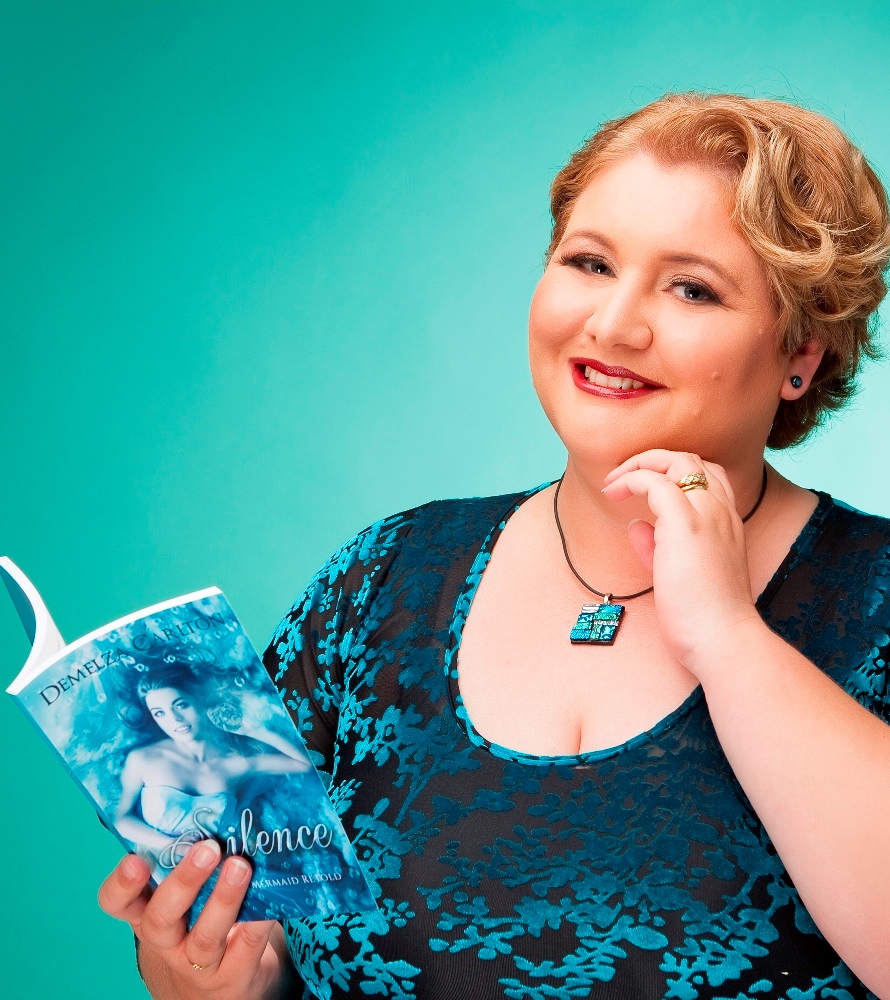
Our keynote speaker Demelza Carlton is an internationally celebrated author, who’ll make her only Sydney appearance at our conference, Over Water, Under Water, Magical Waters of Fairy Tales!
Joining her will be acclaimed fairy tale writers Kate Forsyth and Kell Woods, and a range of authors and academics, storytellers and psychologists, artists and other performers, and all the fairy tale enthusiasts from around the country, at a beautiful ocean-facing site in the water-based city of Sydney.
For the full list of presenters and topics, please visit our conference page.
Register now for our June 14-15 conference at Prince Henry Centre, Little Bay, Sydney. (Please note, sessions run 10am-6pm each day.)
We invite all lovers of story to an afternoon of live storytelling to celebrate World Storytelling Day. Thrill to tales of ‘Deep Water’ from Christine Carlton, Jill Webster, Jo Henwood, Kiran Shah and Liz Locksley, our performers from the AFTS Sydney Fairy Tale Ring and Australian Storytellers.
When: Sunday March 23, 1-4pm Where: Kirribilli Neighbourhood Centre, 16-18 Fitzroy Street, Kirribilli, NSW 2061 Tickets: $15 members (AFTS or AS), $20 non-members
Scan the QR code for details and bookings, or visit humanitix.
Brought to you by:
World Storytelling Day celebrates the power and joy of storytelling around the world. The 2025 theme, Deep Water, matches beautifully with our 2025 Australian Fairy Tale Conference theme, Over Water, Under Water, Magical Waters of Fairy Tales. For June 14-15 details, visit our conference page.
Sydney is a water city, with our character and identity defined by the harbour. People have sailed here throughout time, the harbour and rivers forming shared spaces, thoroughfares, and barriers as well.
Welcome!
The Australian Fairy Tale Society was established to investigate, create and communicate fairy tales from an Australian perspective. Local Rings and our Magic Mirror (Zoom) gather five times a year to explore specific fairy tales, like a book club for fairy tales. We have an irregular eZine, YouTube channel, Redbubble merchandise store, and an original anthology, South of the Sun: Australian Fairy Tales for the 21st Century, and another West of the Moon: More Australian Fairy Tales for the 21st Century in progress.
Recent conference themes include Australian Fairy Tales: Flesh or Fossil?; Cottage, Cauldron, Castle: Power and Place in Fairy Tales; and Once and Future Tales: What was, what is, what if?
For our conference, we invite you to submit presentations in a diversity of forms, because this is one of the delights of an AFTS conference.
Submissions open February 1 and will close 11pm AEDT, February 28, 2025.
Case study(or poster display) of a creative process of staging a fairy tale performance
Performance, 10 minutes max, with optional 5 minute Q&A. For example, storytelling, puppetry, theatre, singing, music, dance.
Panel discussion, 25 minute maximum including Q&A
Workshop, 30 minute maximum including set-up time. For example, art, writing, storytelling, sand sculpture, puppetry, gardening, cake decorating
Games or participative activities, 10 minute maximum
Launch of your book, video game, performance
Sales and/or displays of your books, art, puppets, toys, costumes etc.
New ideas welcome!
Stuck for ideas? Here are some ways you could explore the theme…
Over Water
Voyages in fairy tales
Voyages of fairy tales: how fairy tales have travelled across the seas from other parts of the world to make their home here
Discovering new and old as we explore stories that have travelled across time: what matches with the original and what clashes
Maritime fairy tale characters (e.g. sailors, smugglers, fishermen, pirates, lifesavers): what they have and what they could represent
Shipwrecks – be they fairy tale, Australian or creative shipwrecks
‘Kingdoms’ (Communities) by or in the sea.
Under Water (what lies beneath)
Psychological and symbolic meanings in fairy tales
Underwater portals to other worlds, which could be magical kingdoms, Death, or somewhere else)
Magical underwater creatures: mermaids, nixies, etc and what they could represent, including fluid identities and disability
Water colours in fairy tale art
Magical and Healing Waters
Blood, sweat, tears, rain, tea – The Water of Life, the Water of Death
Waterholes, rivers, bathing pools
Watermills, bridges, wishing wells
Still waters (= finding peace?)
Reflections and/or scrying the future
For further inspiration, here are some fairy tales with watery themes –
Fisherman and His Soul; Frog Prince; Isle of Magnificence; Knights of the Fish; Lady White Snake; Little Mermaid; Little Obelia; Melusine; Nixie of the Millpond; Selkie; Three Men in the Well; Three Snake Leaves; Turbot; Water Lily; Water of Life; Well at World’s End.
Western Australian writer Demelza Carlton is a USA Today bestselling author of more than a hundred books, which have been translated into more than a dozen languages and sold more than three million copies worldwide.
Her fairy tale collection, including Silence: The Little Mermaid Retold, and her six-book series Sirens of War, set off the WA coast, make her the perfect keynote speaker for our 2025 conference theme: ‘Under Water, Over Water, Magical Waters of Fairy tales’ – even if she was once scared of fish!
You’ve always loved the ocean, but on your first snorkelling trip you found you were afraid of fish. How did you overcome that?
Lots more snorkelling, a bit of scuba diving, and swimming with sharks, actually. It’s hard to be afraid of fish when you’re chasing a shark for a photo you promised your kid, and it’s swimming away as fast as it can. I’ve now swum with sea lions, sharks and sea cucumbers, and stood on spray-drenched cliffs over a seeting sea as a seven-metre cyclonic swell surged in, shattering a shipwreck below. And I live in Perth, WA, the shark attack capital of the world – and can assure you that sharks taste delicious!
While doing your Masters research on shipwrecks at remote islands off the WA coast, you came across one that didn’t make sense. How did that inspire a multi-book series about mermaids?
During a cyclone in the 1920s, a fishing boat broke free of its moorings with the two-man crew still aboard. One man managed to swim ashore, but the other couldn’t swim, so he disappeared in the waves when the boat sank. Everyone thought he drowned, but his body wasn’t found… until more than three weeks’ later, when it washed up miles from the boat went down, in the complete opposite direction to the ocean currents. Stranger still, the man was recognisable – which meant his corpse hadn’t been floating at sea for all those weeks – and he’d done some first aid to his broken leg. There was nowhere the man could have been all that time except in the ocean; because if he’d washed up on the island, someone would have seen him and helped him. So how could a man survive for three weeks at sea, do first aid on himself, and yet drown within sight of land?
No matter how much research I did, I couldn’t solve the mystery, so I wrote ‘mermaids did it’ in my report and left it at that. When I did the final proofread, I burst out laughing when I saw that bit. I quickly deleted it, submitted my dissertation, and celebrated with a glass of wine. Wine in hand, I decided to search mermaid myths on the internet. Was it actually possible?
I was amazed to find heaps of mermaid stories from all over the Indian Ocean, and of course I also dug out my copy of Hans Christian Andersen’s tales to read the fairy tale I remembered. Put the two together with my miracle man, and I had a story.
What if the reason mermaids went ashore was a biological imperative – they needed human men in order to breed – but instead of saving the man like the prince in Andersen’s tale, my Indian Ocean mermaid accidentally lost him to the waves? She’d be heartbroken, not wanting to return to the place she lost the man for a very long time. And a very long time later, she did come ashore again at the same islands to investigate an environmental issue. Right at the same time, a brand-new deckhand starts work on a lobster fishing vessel at the islands; a deckhand, who’s very interested in the woman who lives in the fishing shack next door to his. And he just happens to have the same first name as the man she lost to the waves…
What drew you to shipwrecks off the WA coast as your area of research?
It wasn’t just shipwrecks – my Masters is in Emergency Management, and my research project involved plane crashes, wartime battles, quarantines and tsunamis, as well as shipwrecks. I have a personal connection to the Batavia disaster at the Houtman Abrolhos Islands, up near Geraldton as one of my ancestors was the navigator. That might explain why I get lost so easily!
[In June 1629, Dutch-owned ship Batavia struck a reef and sank amongst islands 65km off the coast of what is now Western Australia. The whole story is chilling, if you want to read about it.]
What had you planned to do with that qualification, before becoming a writer?
I was investigating those incidents for my job as an administrator at a remote site, to improve our emergency management planning. Seeing as I was doing the research anyway, turning it into a Masters research project and getting the qualification seemed like a no-brainer.
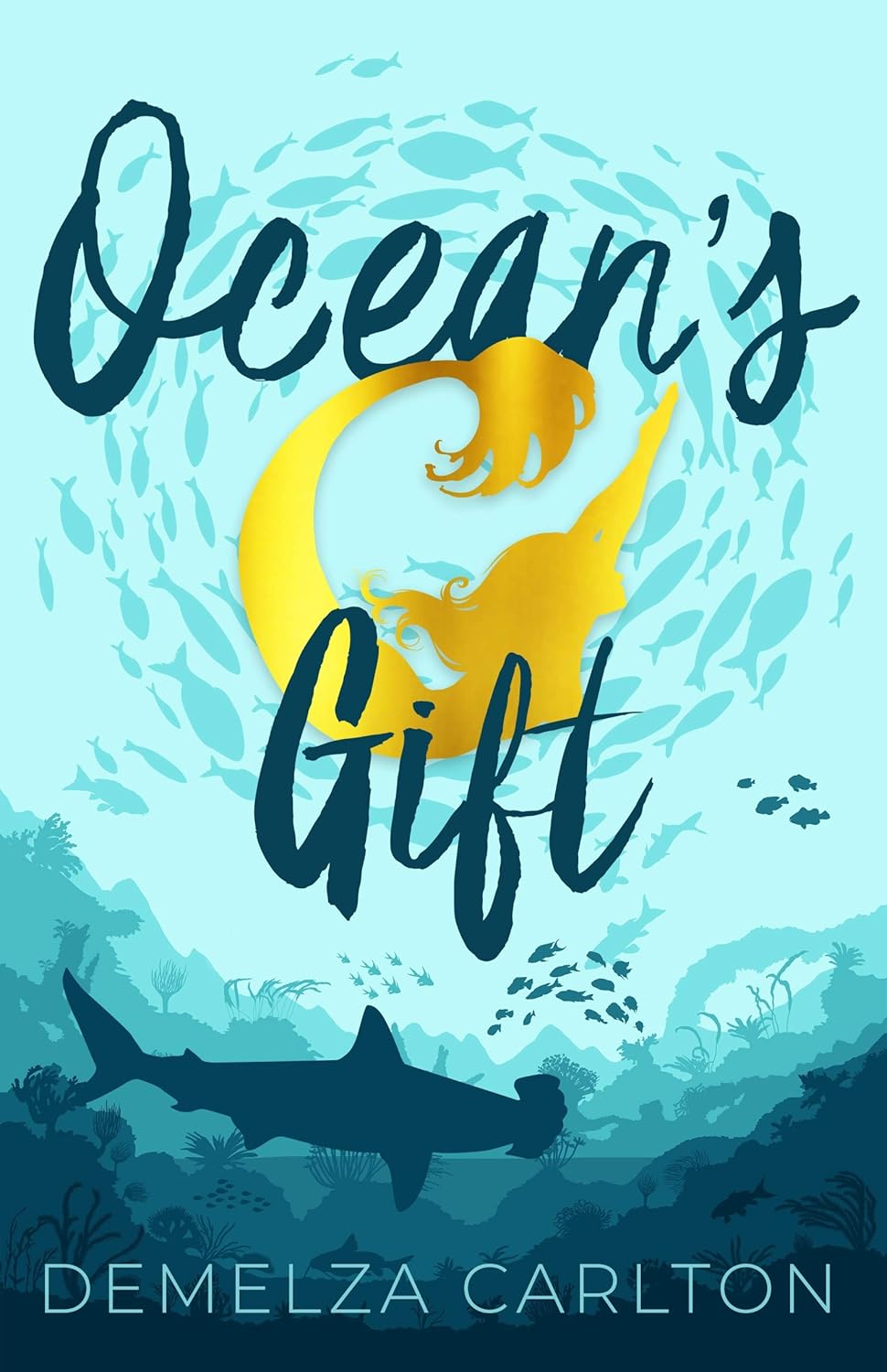
That research inspired your first book, Ocean’s Gift, about a mermaid off the WA coast, which turned into a three-book Siren of Secrets trilogy and the six-book Siren of War series. What made you want to set a fairy tale story in Australia, rather than the traditional European setting?
At the time, I’d lived most of my life here, and my research showed that mermaid legends were everywhere – especially in the Indian Ocean. This part of the world is kind of a fairy tale to most of the rest of the world, so instead of imagining somewhere new that I’d never seen, I wanted to breathe new life into old legends in a place I knew well, which many of my overseas (and east coast Australian!) readers probably don’t.
Why do you think so many Australian writers stick with more traditional settings?
I think they do it because that’s what publishers want, and know how to sell. It’s also closer to their source material, which is usually Hans Christian Andersen and the Brothers Grimm, and to what Disney do with their fairy tales – and let’s face it, Disney definitely knows how to sell fairy tales!
It’s a very personal choice – why set any book anywhere? Writers are told to write what they know. Well, I’m Australian, not English, so I can’t wax lyrical about the beauties of an English wood, because I’ve never seen one. I have gotten my feet wet in both the Baltic and the North Sea though, and seen some of the less populated parts of France and Eastern Europe, so when I chose to write my mediaeval fairy tales, those are the places I tended to set those stories. The history in those regions is particularly fascinating, and also little-known in the English-speaking world.
You also include environmental issues. How important, for you, is it to incorporate these?
I absolutely do! I admit those mostly come up in my contemporary and sci-fi stories, more than my mediaeval ones, but while I was visiting relatives in the Netherlands, they showed me a small desert in Hoge Veluwe National Park that resembles the Pinnacles in WA’s Nambung National Park.
I did some digging, and it turned out that around a thousand years ago, this particular region was the only arable land in a sea of marshland – until a combination of flooding and salt production resulted in salinity issues that turned it into desert.
So, in 2025, I’ll be releasing a new, present-day fairy tale series that centres around an eco-village. I’ve been having so much fun researching all the technology and sustainable practices that will make this village a reality.
What are you looking forward to about the Australian Fairy Tale conference?
I miss academic life, and while I get to do a lot of research for my books, most of it is on history, geography, and the cutting-edge of science for my sci-fi, rather than in-depth research into origins and interpretations of fairy tales. I’m really hoping to get my geek on and listen to other people’s findings on fairy tales, instead of constantly having to think of how a modern audience would relate to them.
Next month, find out more about Demelza’s fairy tale books, her favourite (and least favourite) tales, and some of her research trips around the world. Learn even more by visiting her online at www.demelzacarlton.com. Enjoy Part 2!
We are thrilled to announce that thanks to the support of Hobsons Bay City Council through its Make it Happen Grants program, the opening sessions for each day of the conference will be open to the public!
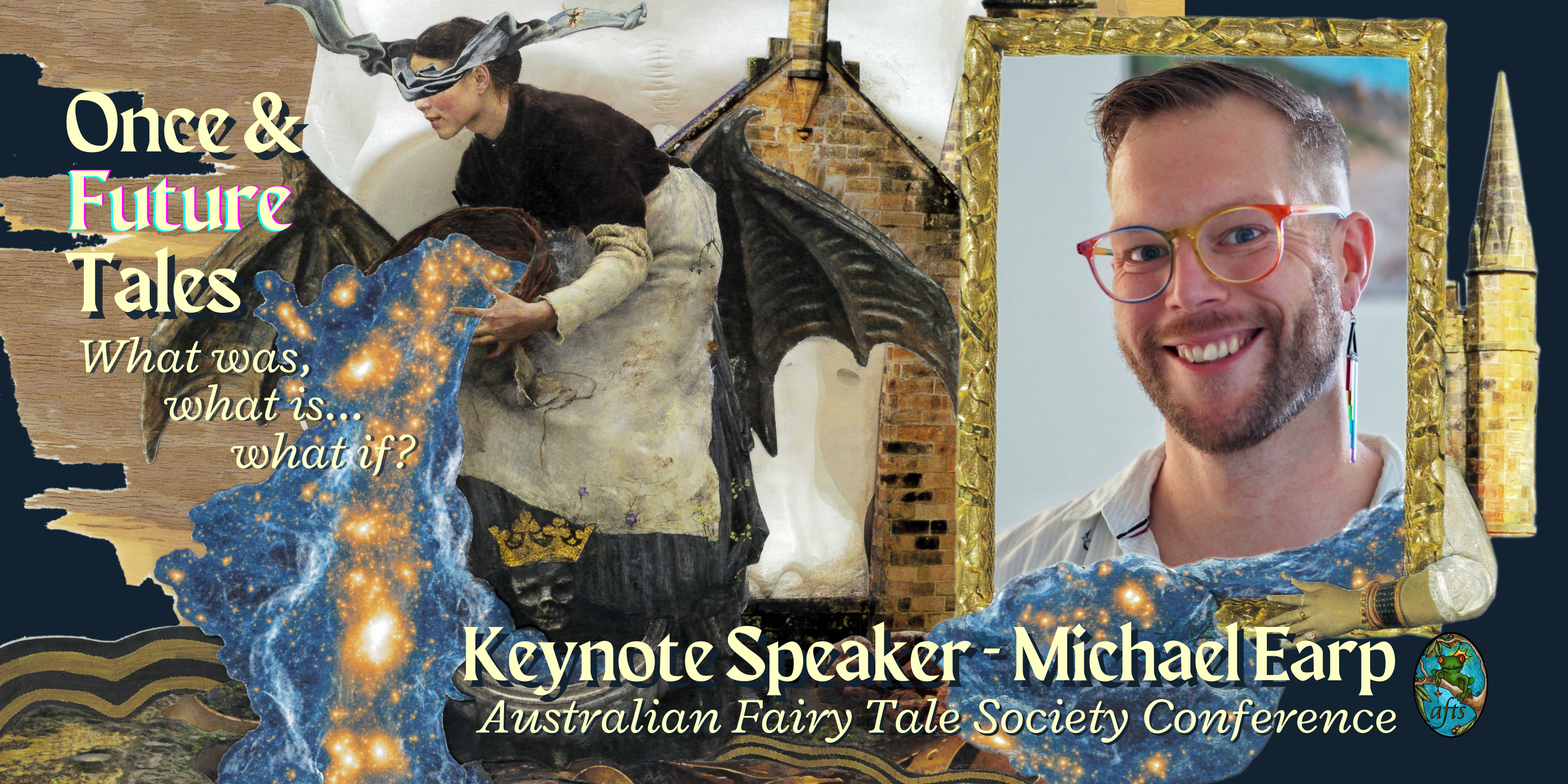
That’s right, Michael Earp’s Keynote Address and our Special Guest Presentation from Jaeden Williams (Boonwurrung educator, and founder/director of Biik Bundjil) will be free for everyone to attend. PLUS Michael’s Keynote Address will be Auslan interpreted too.
However, spaces for both sessions will be limited so whether you’re coming to the whole conference or just the morning sessions with Jaeden and Michael, register now!!!
(Note: if you’ve registered for the conference, you already have a place at the Keynote and Guest Presentation)
If you’re coming from regional Victoria, interstate, or even overseas(!) we have a handy dandy welcome pack to give you a starting point to find your way to the Newport Community Hub and other nifty bits of advice. You can download the welcome pack here.
We’re undergoing a little program revision, but start and end times will not change. Be ready to start at 9:45am each day, finishing by 6:30pm AEST and 4:30pm AEST on Saturday 3rd and Sunday 4th respectively. That gives you plenty of time to calmly plane, train, or automobile your way home. An updated conference program will be out very, very soon…
All AFTS members will have access to the recordings of conference sessions in the future, but if you have registered (regardless of whether you’re a member, and joining in-person or online) you will get access first. So what are you waiting for, get registered and get excited for a jam-packed weekend. We can’t wait to welcome you to Newport!
And if you need a reminder, our fantastic conference artwork is by the brilliant Roslyn Quin(@roslynquinart)!
Melbourne is currently in the midst of creating the amazing Once and Future Tales conference on August 3-4. Register here!
We love getting together in person to share ideas, and enjoy each others’ company and because we are a national Society with a sprinkling of international members, some of you will be travelling considerable distance to join us.
To make that a little easier for an existing AFTS member, we offer a bursary of up to $450 to pay for transport and accommodation and the helping hand of a local ‘fairy godmother/father’ to help you find your way around Melbourne.
We want to offer this opportunity to someone who is
part of our community
might need a boost to cover the costs of getting here
will use the chance of going to the conference to continue to invest in our Society.
The winner will be decided by popular vote between May 8 and May 15.
Nominees need not be an AFTS member, however nominators and voters must be current AFTS members.
At the 2023 Sydney Conference, we will again honour, by popular choice the person who has most inspired and contributed to Australian fairy tale culture.
To date, we’ve recognised the very different achievements of Belinda Calderone (2017), Dr Kate Forsyth (2018), Dr Robyn Floyd (2019), Lorena Carrington (2020), Louisa-John Krol (2021) and Jo Henwood (2022). Their names are engraved in our permanent Award, created by Spike Deane.
For 2023, we’re asking for your nominations, from which the finalists will be selected based on their body of work. This will have enduring significance due to its a) originality, b) influence, c) beauty or quality, d) depth of insight and breadth of scope, e) contribution to understanding of Australian fairy tales.
More details about the Award, and previous winners and finalists are here.
2023 Bursary – travel to the NSW conference!
The AFTS Executive will make a decision by May 14, 2023, from applications received between April 24 and May 8.
One AFTS bursary is on offer to a current member, who needs assistance to attend our Sydney conference. The bursary will cover a) transport and accommodation costs to $400, and b) a ‘fairy godmother/father’ as conference mentor.
Please note that the bursary holder is responsible for their own registration cost as detailed here. All best. We look forward to seeing you in Sydney!