For ‘Witches in Fairy Tales: Wise Women or Evil Enchanters?‘, we invite you to submit presentations in a diversity of forms, as this is one of the delights of an AFTS conference. How will you weave a fairy tale witch – male or female, wicked or wonderful – into your presentation?
Talk of 25 minutes, including optional 5 minute Q&A
Performance, 10 minutes max, with optional 5 minute Q&A. For example, storytelling, puppetry, theatre, singing, music, dance.
Panel discussion, 30 minute maximum, including 5 minute Q&A
Workshop, 45 minute maximum including set-up time. For example, art, writing, storytelling, sand sculpture, puppetry, gardening, cake decorating
Case study (or poster display) of a creative process of staging a fairy tale performance
Games or participative activities, 10 minute maximum
Launch of your book, video game, performance
Sales and/or displays of your books, art, puppets, toys, costumes, etc.
New ideas or formats welcome!
Stuck for ideas? Here are suggestions to pursue or inspire!
Create your own original fairy tale of witches and wisdom set in Australia – as a story, song, play, poem, artwork, or other creative medium.
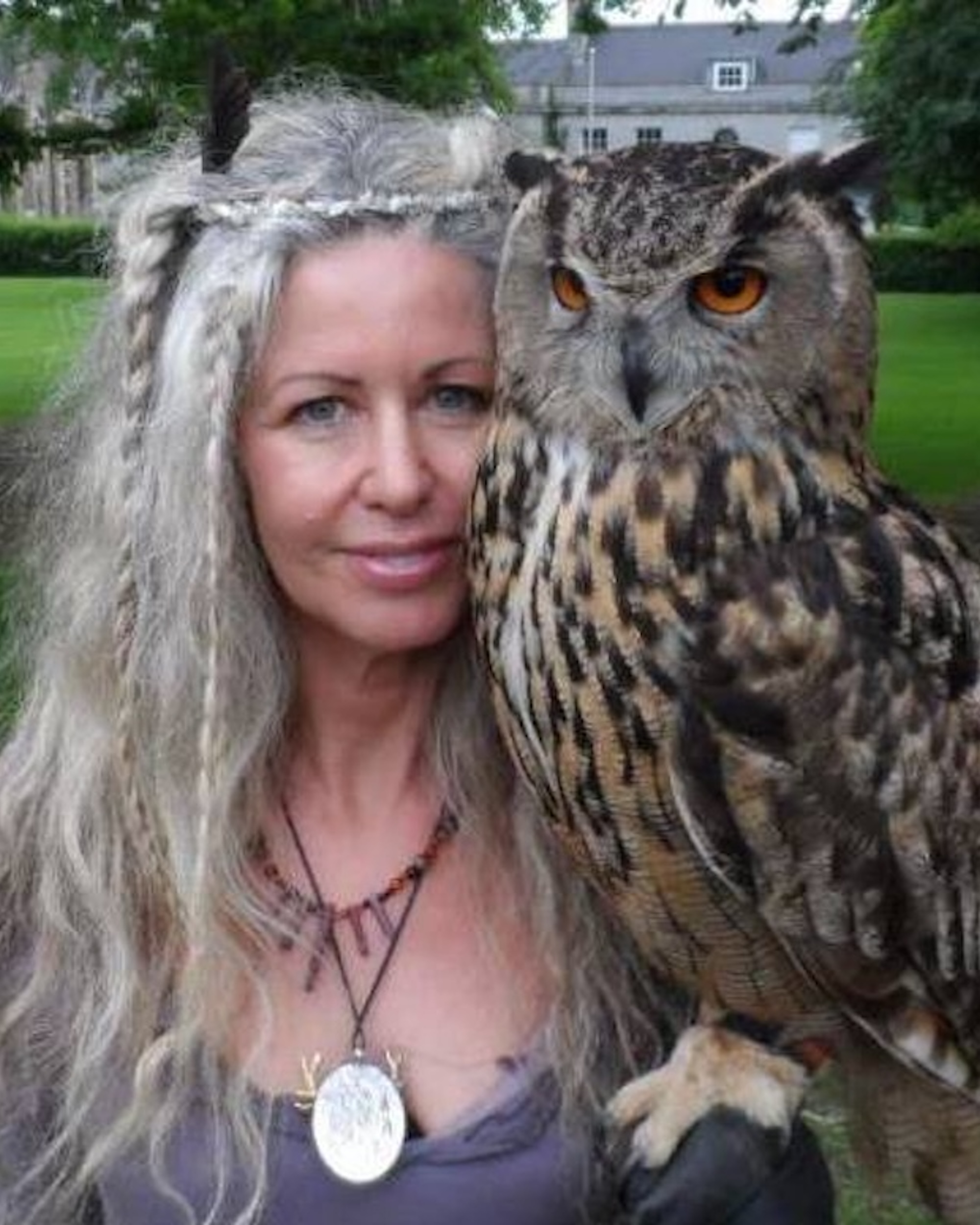
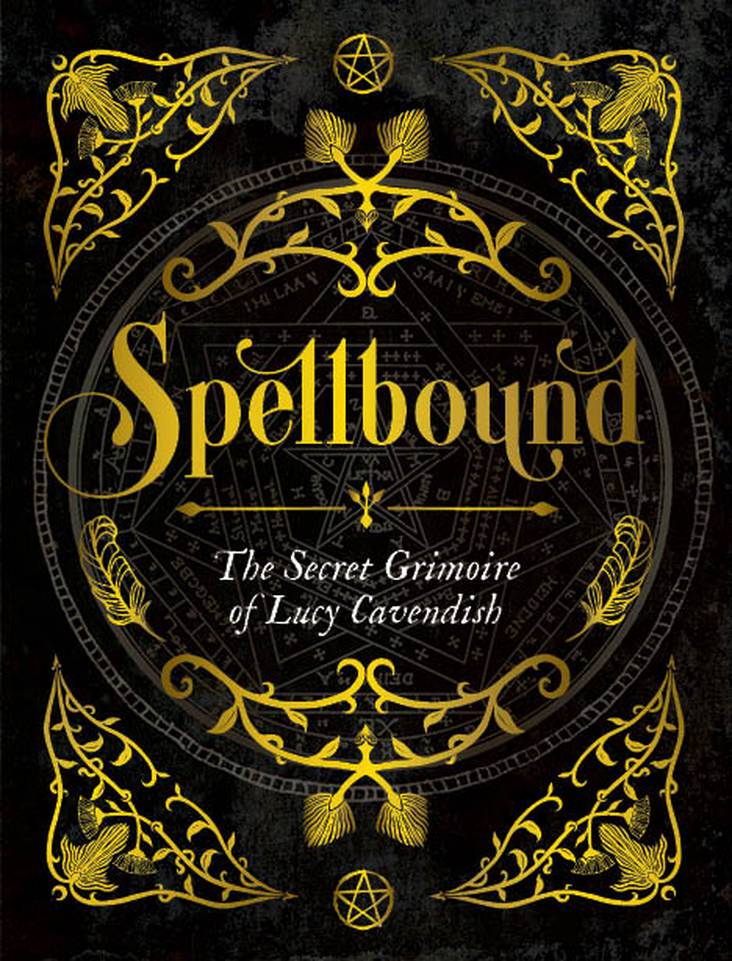
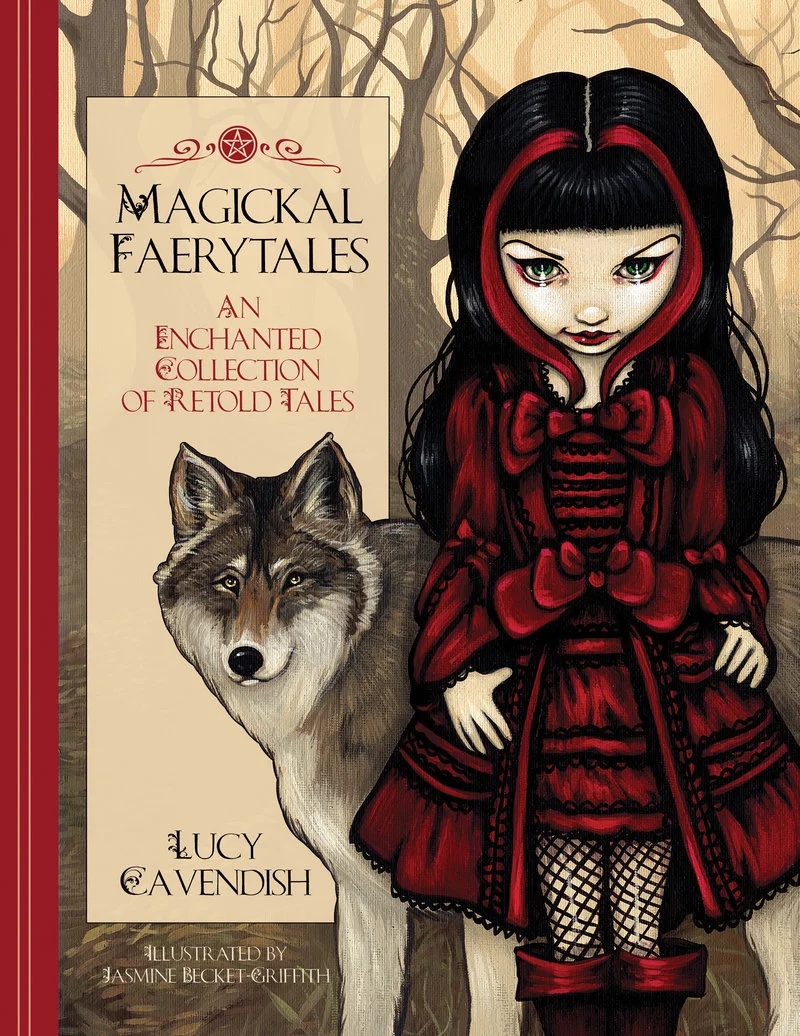
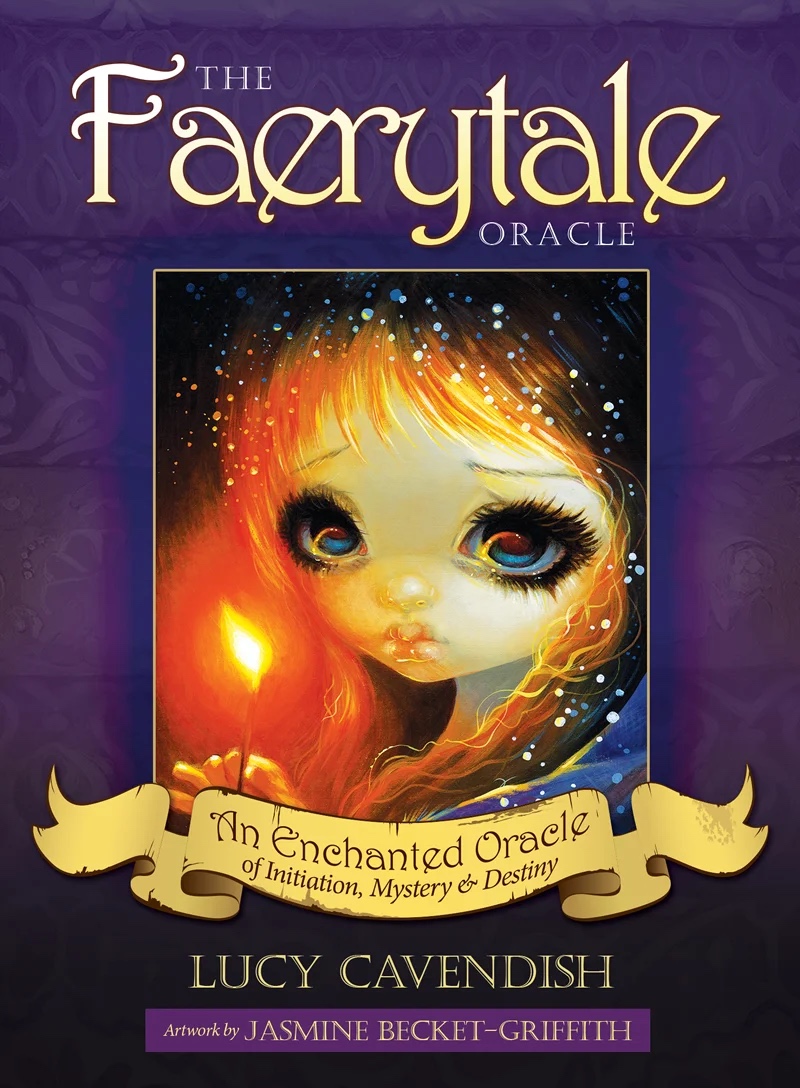
Examine the pagan roots of a fairy tale, before it was re-written by male tellers such as Perrault or the Brothers Grimm. Our keynote speaker Lucy Cavendish has done this in brilliant ways in her book Magickal Faerytales: An Enchanted Collection of Retold Tales.
Map the parallels between the real-life minimising of women’s power to the way it has happened in a fairy tale, such as Cinderella’s magical helper changing from wise and powerful witch to sweet and bumbling fairy godmother.
Weave together a mini-workshop to help people connect with their own fairy-tale witch archetype, or to draw a magical character, write their own tale, or perform a group ritual.
Re-imagine a supposedly powerless princess, who has an animal familiar (very witchy!) and the power to face impossible tasks, with the help and intervention of kindly creatures.
Consider how a powerful fairy-tale witch is showing up in your own life to help you heal, provide wisdom as you approach cronehood, or strength as you become a protector.
Explore the origins of Baba Yaga, often a stereotypical wicked witch in modern tales, whose roots can be traced back to old winter goddesses, and who is connected to deities of the dawn and springtime.
Chart the journey of Jack, of Beanstalk fame, as one who travels to another realm to bring back magical treasure.
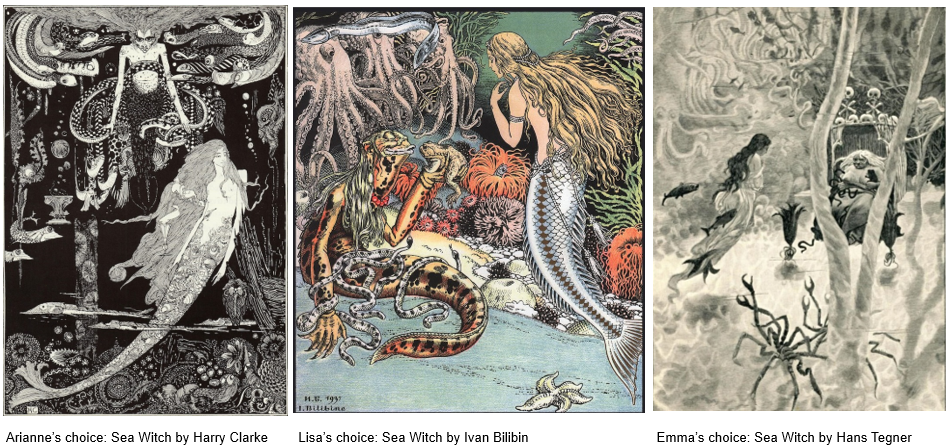
Argue the case of a fairy-tale villain. What changed Sleeping Beauty’s Maleficent from one of the good fairies into an evil sorcerer? What motivated the sea witch to agree to the Little Mermaid’s request? Why could the much-maligned ogre not defend against the thief who kept stealing his magical treasures?
Or something completely different! Witches and other magical folk contain multitudes! The sky is the limit, so reach for your broom, because we want to hear from you!
The Australian Fairy Tale Society was established to investigate, create and communicate fairy tales from an Australian perspective. Local Rings and our Magic Mirror (Zoom) gather several times a year to explore specific stories, like a book club for fairy tales. We have an irregular eZine, a YouTube channel, Redbubble merchandise store and an original anthology, with another in progress.
Chat with us, ask questions, read conference blog posts (like this one!) or engage with us on Facebook and Instagram.
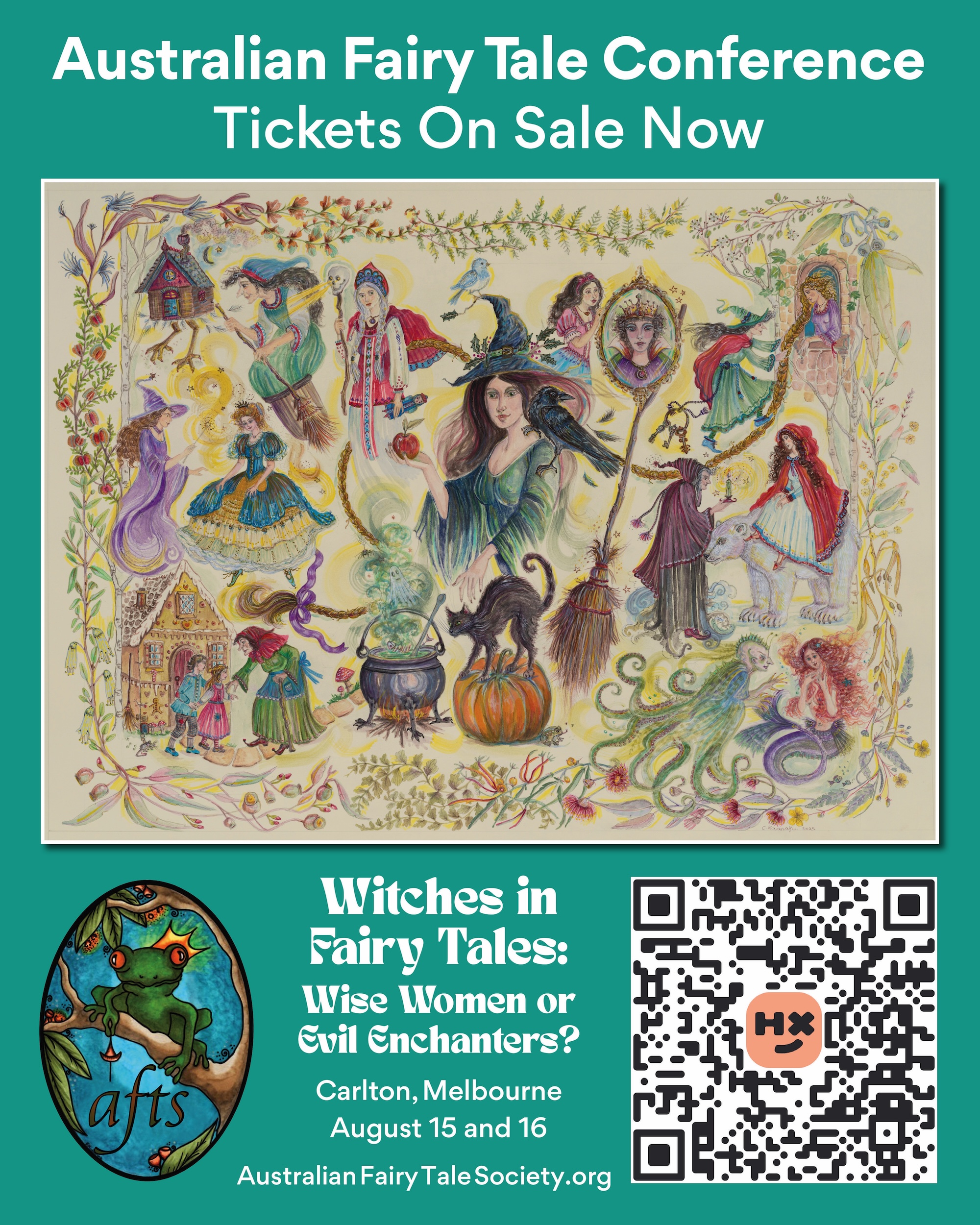
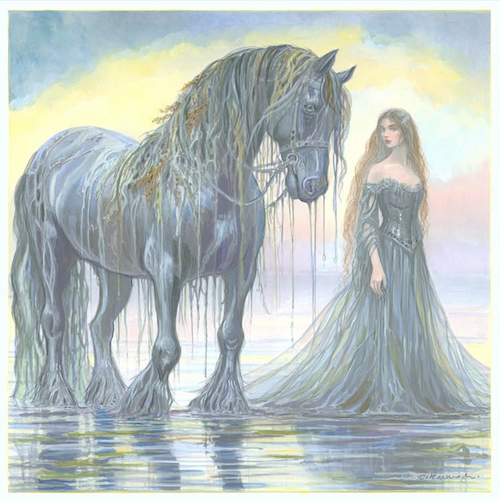
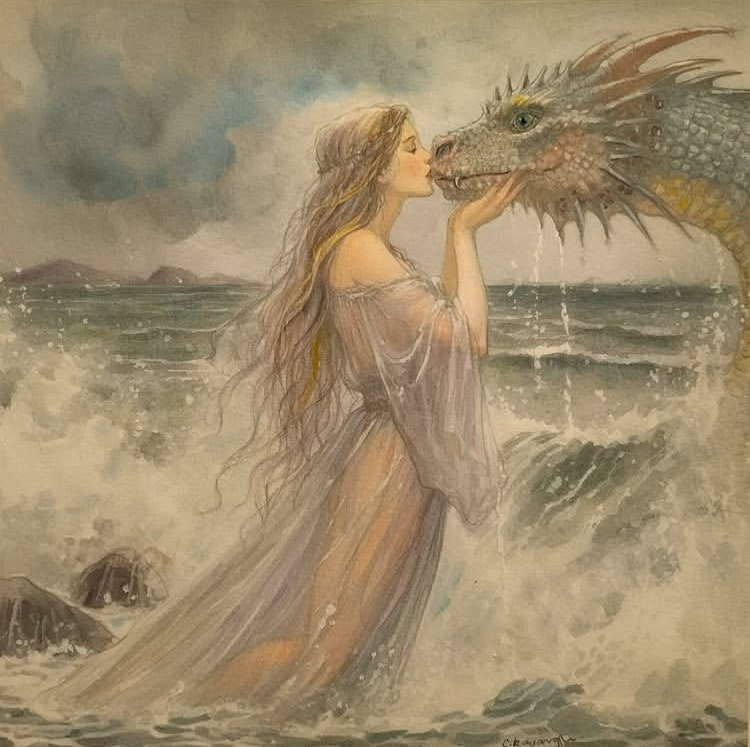
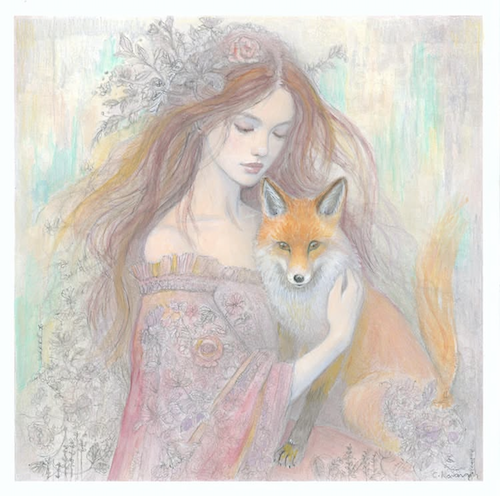
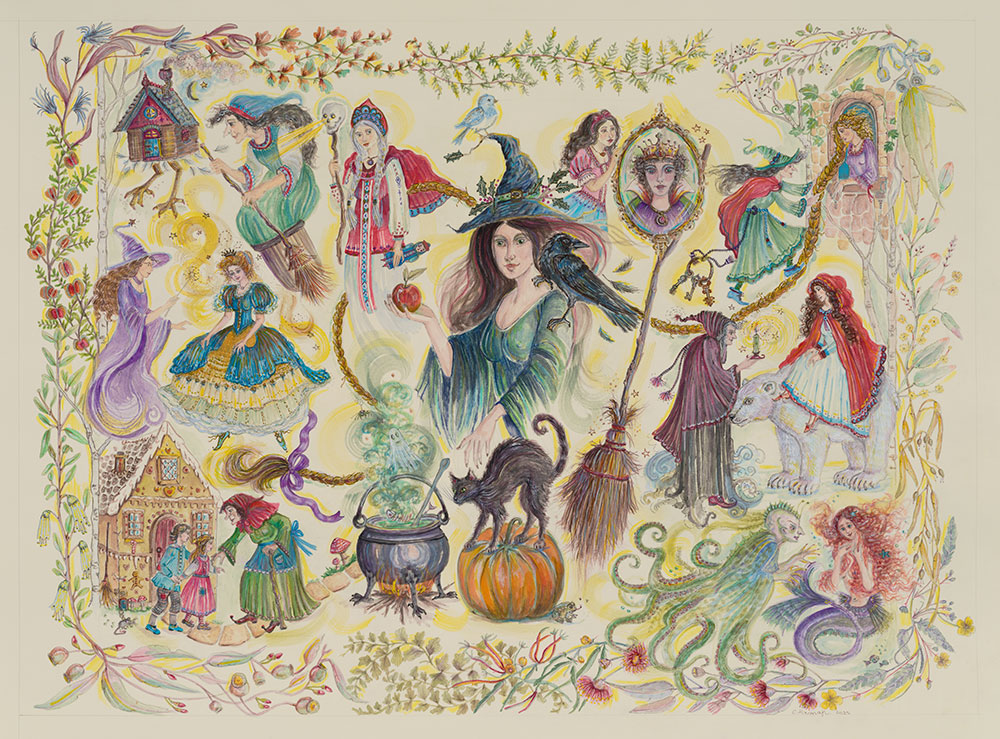
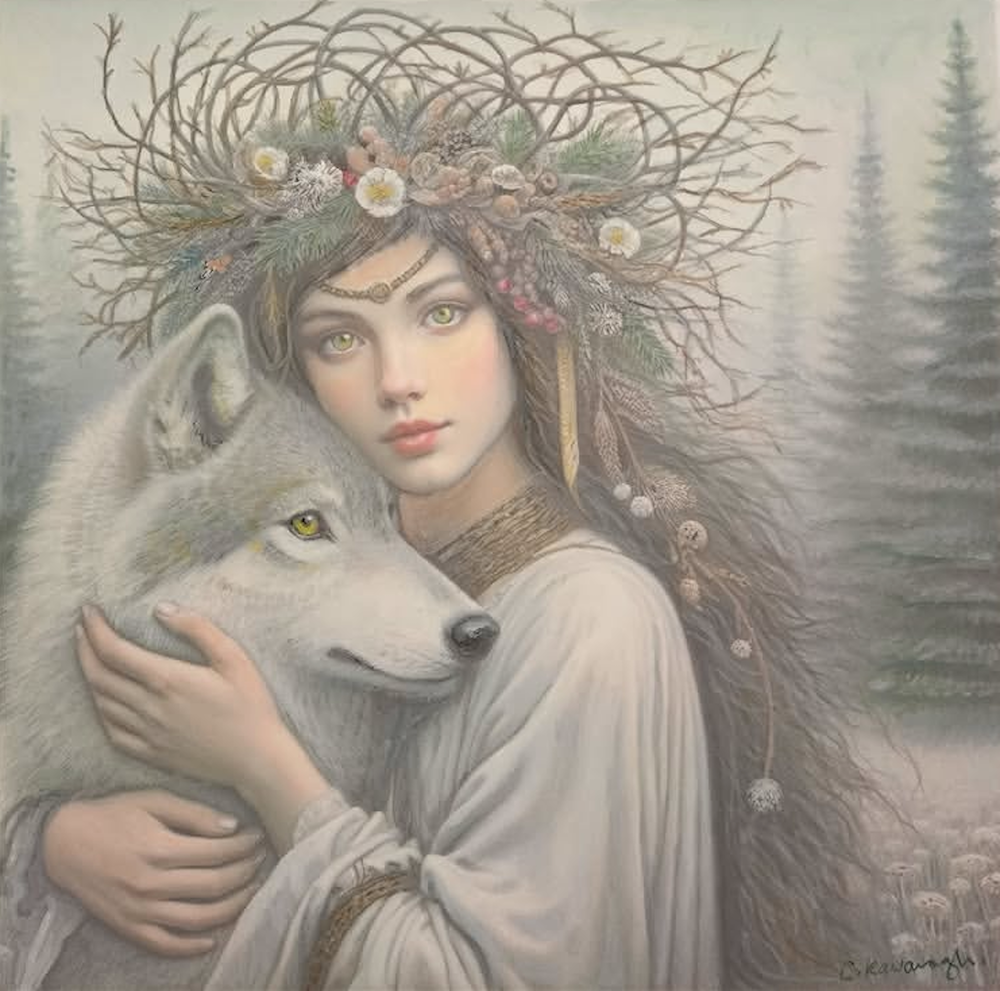
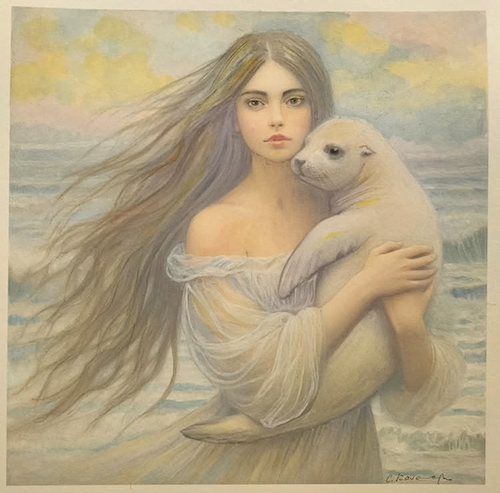
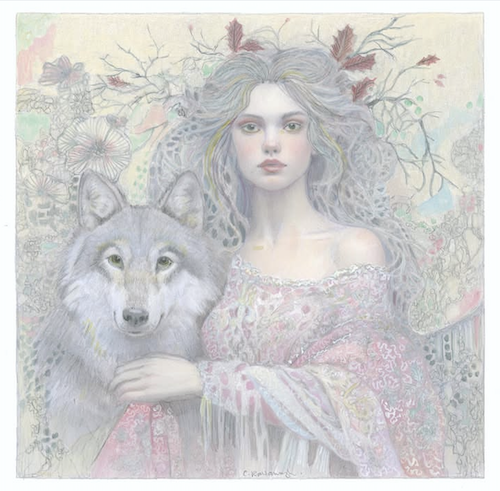
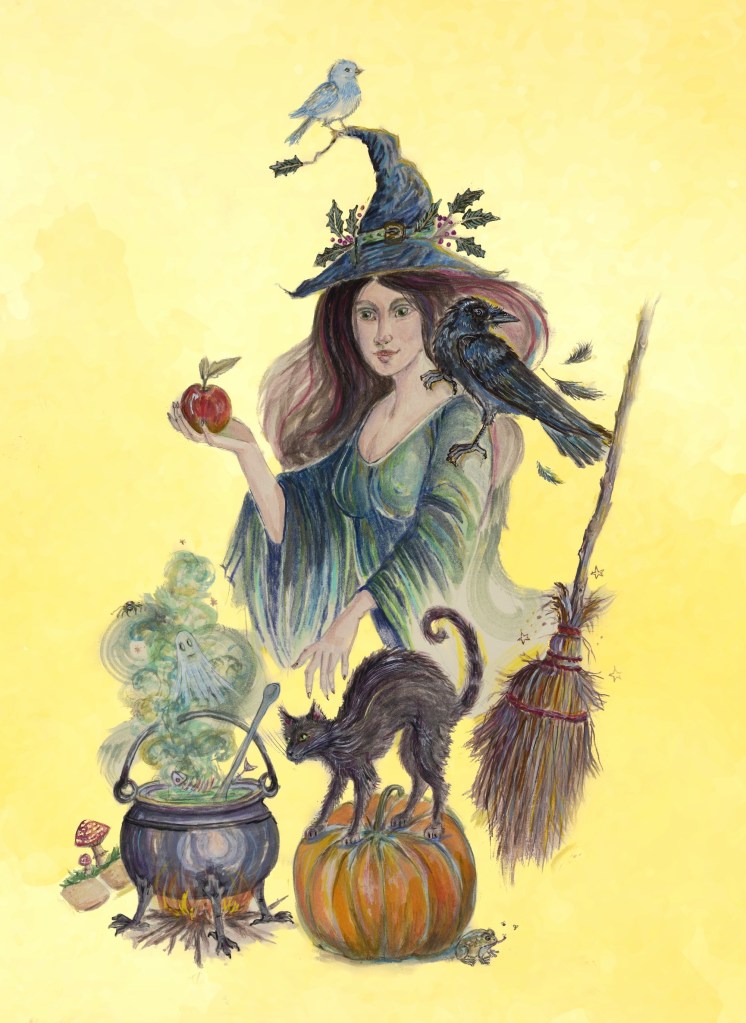
Witches in Fairy Tales as gloriously depicted by Cassandra Kavanagh, our 2026 conference artist
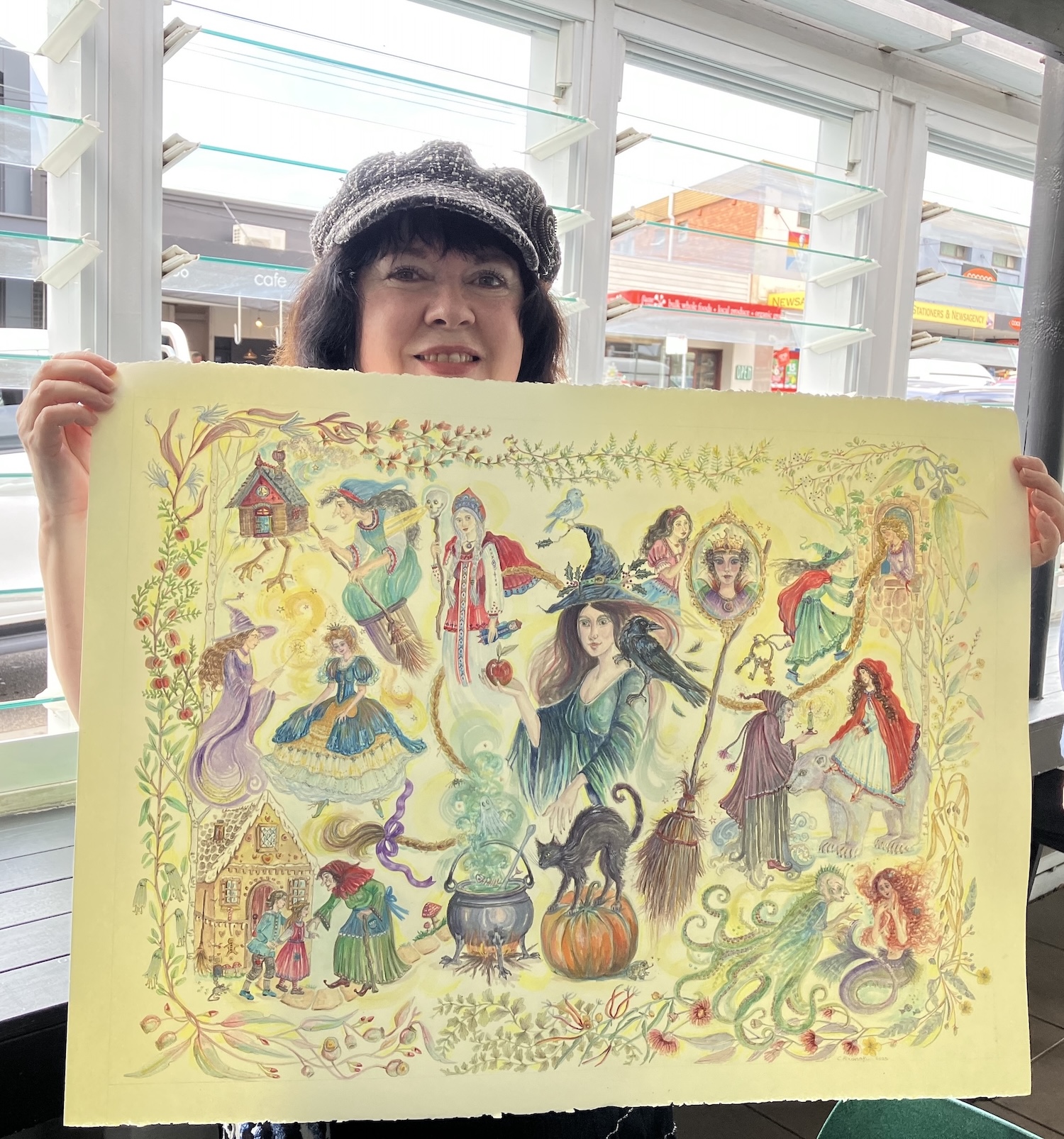
Come August 15-16, we’ll be Melbourne-bound for our 2026 conference, Witches in Fairy Tales: Wise Women or Evil Enchanters, as gloriously illustrated by Cassandra Kavanagh. Learn more in part 1 of our interview with this magical creator.
What drew you to fairy tales as a child?
I could read at age four, and the first books I was given were fairy tales. I believed every word. As I was a rather odd child with endless annoying questions, I was constantly sent down to the back of the garden to find the fey folk. I always took a fairy tale book with me to read out loud to the fairies. But the big golden event that was an everlasting shining moment in my life was being taken to an antique bookshop for my fifth birthday. The wonderful, enchanting old woman who owned this magical place showed me her favourite book. It was vast, heavy and old, stitched with gold thread, and the jewel-bright illustrations were protected by sheets of transparent rice paper, edged with gold. Fey-folk, fairies and old gods and goddesses wove their way through the pages like an enchantment. They felt familiar, as if in some other time and in some other life I had sat around a fire and heard these stories that seemed to still sing in my blood and had once warmed me over winter. The book beckoned like a doorway into another realm I belonged to.
What draws you to them now?
Fairy tales tell us who we are, how to be, and, more important still, how not to be. Fairy tales hold powerful reminders that resilience, true love, transformation and redemption are possible. They teach us that actions have consequences, often unforeseen. These time-upon-time tales that are passed down over hundreds, even thousands of years, hold ancient wisdom and warnings. They connect us to people in the past who had important things to tell us that still resonate now.
Do you have a favourite fairy tale?
Such a hard question. I love so many! However, I have always been drawn to Beauty and the Beast, and the numerous variations of the animal bridegroom in fairy tales. In particular, I adore the European stories featuring grey, white or silver wolves.
Friend Not FoeSelkie’s DaughterWolf Within the Woman
Do you have a least favourite?
I received Bluebeard for my seventh birthday and remain traumatised to this day. The story shook me to my bones! The illustrations were oddly beautiful, in stark contrast to their subject matter. The artwork depicting six murdered brides in long flowing gowns hung on meat hooks, while their blood pooled in swirls of pink and crimson beneath their pretty shoes, was truly horrifying. And as an incredibly curious child, I knew I would have disobeyed Bluebeard and opened the forbidden door with the mysterious key!
Tell us about the Illawarra Fairy Tale Ring*
Our Fairy Tale Ring meets on the last Thursday of every month. If I had more powerful magic, I would make it every week! It’s my favourite day of the month. Our amazing Ring Maidens, Pat Simmons and Helen McCosker, make it a truly magical experience. We pick a theme and an artist to study every month, and I am excited and enthralled every time. We all get along, and we are all a bit naughty in the nicest sense of the word! I have finally at long last found my tribe, and the experience is magical and enchanting. The Ring is like a magical box, with all the women-folk as the treasures.
Has being part of the Fairy Tale Ring inspired your art?
The members have been super supportive of my art, but the best is yet to come! I’m so inspired. Expect to see a lot more fairy-tale-inspired art from me! I am definitely going to paint more witches, and I have many that include fairy tale motifs and animals.
How long have you been painting?
I’ve been painting since the age of two, really as soon as I could hold a pencil or a paintbrush!
What inspired your early work?
I was inspired in equal measure by nature and by fairy tales, folklore, myths and legends. My birthday and Christmas presents were always books about these things. I was seriously bullied at school, so I would take my books and my sketch book and paints into the woods behind our house and sit by the stream. There I felt free to be me.
How has your art changed over time?
What has changed is my greater passion to put beauty and light back into a world that seems challenged by dark times. I have a new motivation to spread ancient and time-worn tales to a wider audience through my art – and I have become more passionate about reflecting paganism in my art, because the belief system honours the earth and her seasons while revering the natural environment and everything upon it. The smallest stone is as sacred as the forest.
What are you most looking forward to about this year’s Australian Fairy Tale Conference?
I’m most looking forward to the magic! Gathering with a community that shares and understands your passion is always so exciting, inspiring, heart-warming, soul-stirring and nurturing. The kinship with kindred spirits is a true blessing! I’m looking forward to indulging in my passion for all things fairy tale and witchy! I am also thrilled to extend my interest and learn from others, and of course, share my art.
* The AFTS has many Rings around Australia, including Adelaide, Brisbane, Perth, Sydney and Victoria, plus ‘Magic Mirror’ (our online Ring) that all members can attend. More details here, or E: austfairytales<at>gmail.com.
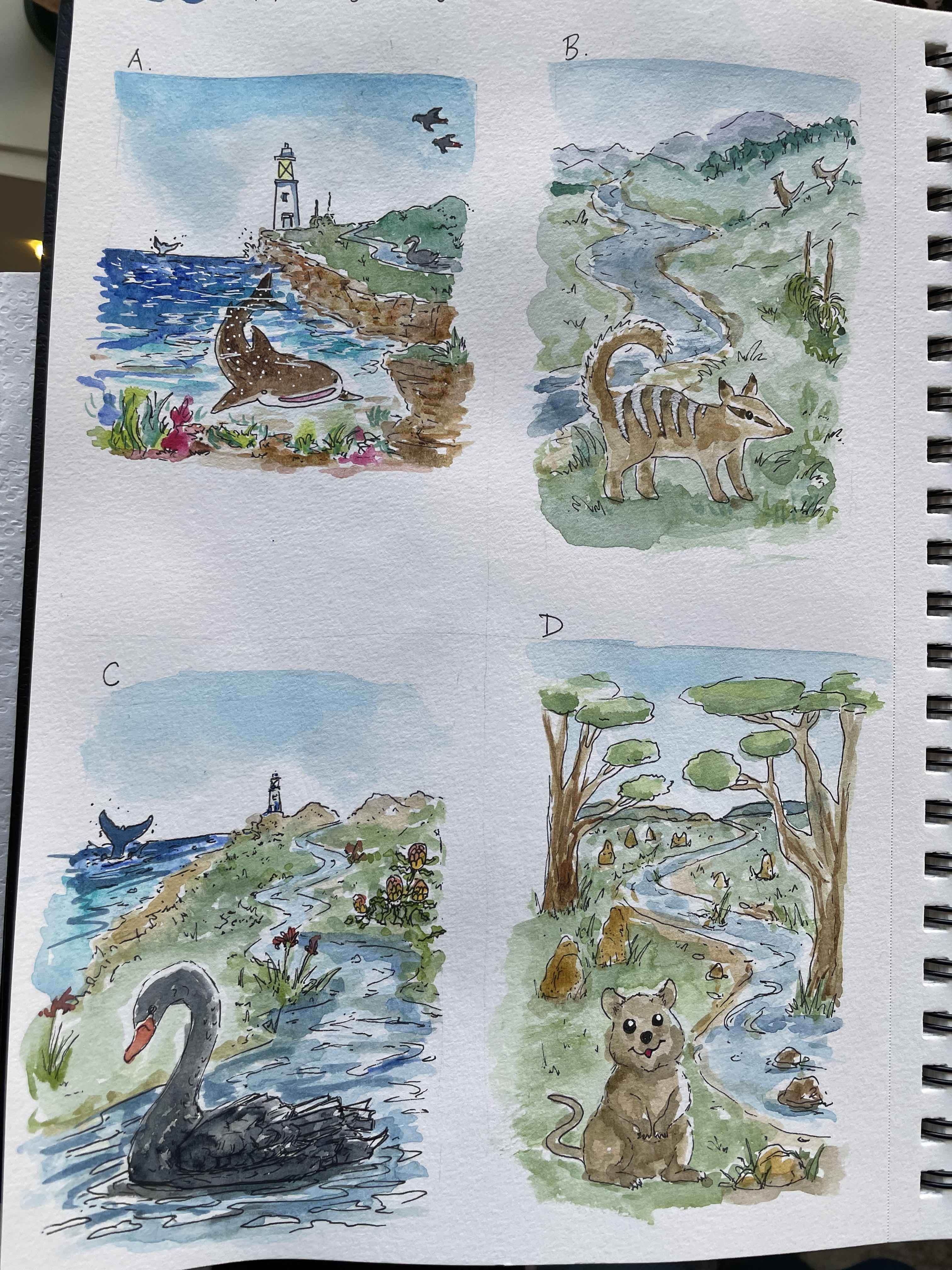
Around two years ago, I (Melanie Hobbs) volunteered to try designing a logo for the Perth Ring of the AFTS. Members suggested kangaroo paws, black swans, whale sharks or numbats as ideas. I thought it might be a fun project. I dabble in drawing and painting as a hobby, but trying to create a logo with just the right composition and appropriate pigmentation that fits the oval shape while looking cohesive alongside the other Ring logos turned out to be harder than I anticipated! Many months and sketches later, I still had nothing we could use.
When my good friend and artist Alex Myer visited Perth last year, I asked her if she would like to attempt a design for us. Alex came up with four fantastic draft designs (pictured below).
Alex Myer’s draft designs for Perth Ring logo
After discussing with fellow Perth Ring members Alyssa Curtayne, Debs Chaliha and Christine della Vedova, we felt the swan represented us best, being the animal that represents the state of Western Australia. There are several fairytales about swans too, so it felt right. We also loved the presence of wildflowers as Western Australia is known for its unique flora.
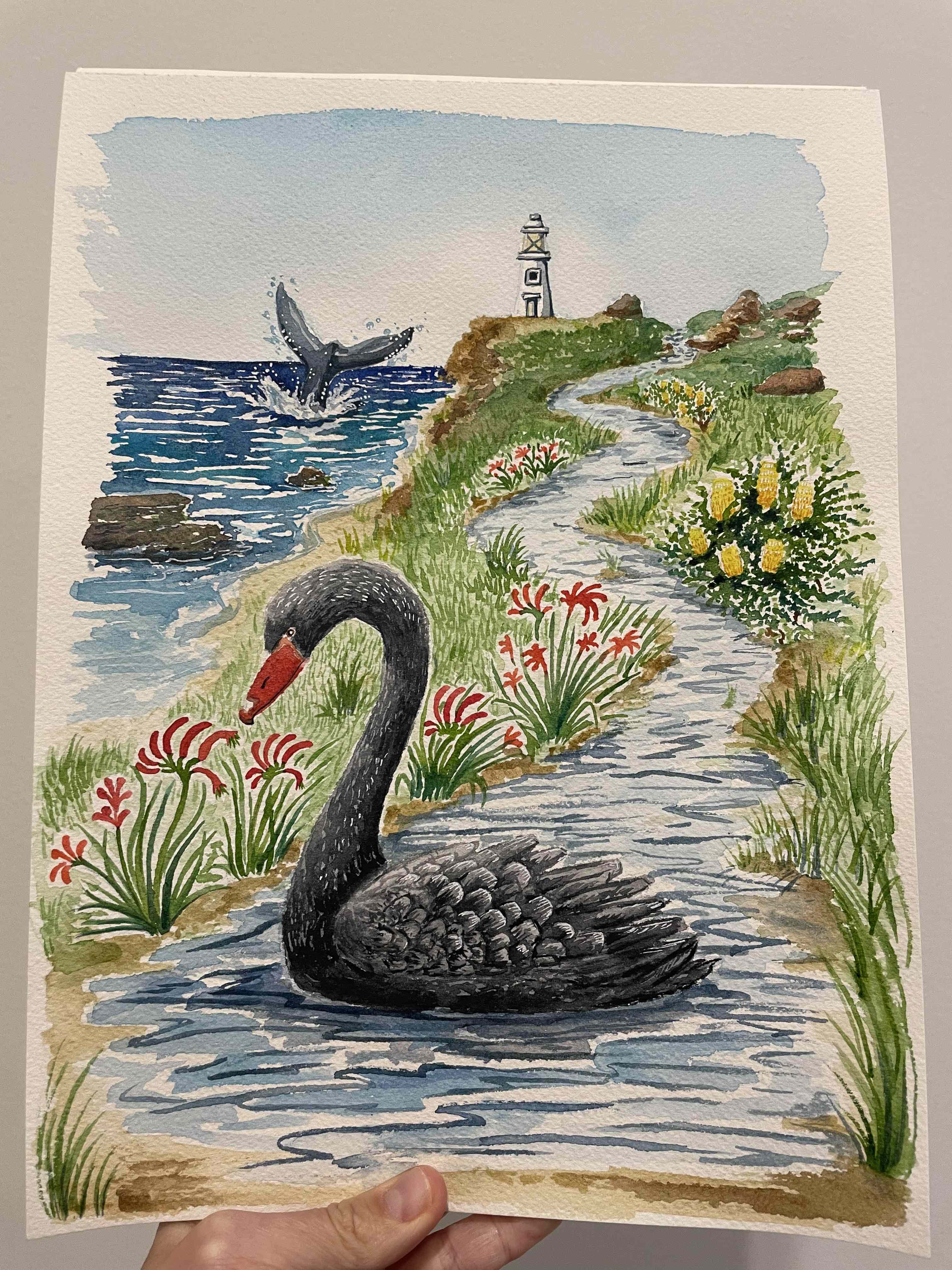
Alex got to work on the final design and when she sent it through we were blown away. The level of detail in each element and the layering is just exquisite. I had a chat with Alex about her art and the process she went through to create our logo pictured below. Isn’t it beautiful? Scroll on to read our conversation about her art and how the Perth Ring logo came into being!
Perth Ring Logo design by Alex Myers
Thanks for chatting with us, Alex. Tell us about your art or creative practice.
I am an avid urban sketcher, meaning I love to draw on location with the materials I have on hand to capture the essence of the place in real time, as it happens around me. The decisions around composition: to abstract, to remove, to emphasise, are the most difficult parts of sketching and I never know what the end product will look like. Once I leave a location, the artwork is deemed ‘finished’ and cannot be worked on later. This practice has helped me build a stronger way of ‘seeing’, building a visual vocabulary and ‘being’, that is, grounding myself in a space.
I’ve recently started experimenting with rendering abstract landscapes using mixed media and live portraits using watercolour and ink. Urban sketching has helped build up the visual reference points in my mind that I think helped me to become better at making creative decisions and to be able to work with fewer reference points.
What do you do outside of art?
My day job is to convince students that tests, marks, and grades are not as important as being a human being who can think creatively, collaborate, communicate and think critically. I am an educator. I teach grades 7-12 and I am currently teaching engineering in an independent school in New York City. I hope that through demystifying technology, that I can empower students to be curious about their world. AI and the robots are here! How do we do a better job at teaching kids the very few benefits and very large costs of engaging with these new technologies?
When I am not making art or planning lessons you will find me cooking with friends, relaxing in a yoga class, or stumbling my way through learning a new language (I’m studying French at the moment after levelling up to “intermediate” in Spanish) while planning my next international adventure.
When I first floated the idea of designing a logo for us, what came to mind? Tell us about your first ideas and drafts.
Mel, you floated the idea to me when I was visiting home in Perth and you showed me a sample from another ring to give me an idea of what might align with the other logos. I completed my high school and university education and have spent the majority of my education career in Perth. I drew upon memories of being a Bush Ranger in high school to get me started! As a student I worked on many conversation projects from water-testing and planting native flora around the lake near my high school to rehabilitating sand dunes in a marine park. I also coded my first website as a Bush Ranger and sketched native animal illustrations that were the very first graphics on it. These formative experiences also included trips to Rottnest/Wadjemup, bushwalking on the Bib, caving in Yanchep and visits to the Aquarium of Western Australia (AQWA). My first drafts really did come from memory and a few reference photos I’d taken myself and maybe a few from Google images.
After we decided on the swan, what was your process for turning the draft into the final logo? How long did it take?
I took my roughly A6 size draft and scaled it up to A4 on premium cold-pressed, Arches watercolour paper, my favourite surface to work on! I started with a rough pencil sketch then erased the darkest lines so that they were barely visible then I used a minimum of 4 watercolour layers, working wet on dry with a size 12 round brush. This means that I would wait until each layer was dry before going back into work on the next layer. I dug out the reference photos to zoom into to see the finer details and put the final touches such as the gloss on the swan’s wings in with a white Posca marker. This process took about 4-6 hours.
Wow, what a labour of love! Do you have a connection to the flora and fauna you’ve included in the logo?
I do! I was 12 years old when my family first moved to Perth and we used to visit a pair of black swans at Hyde Park after school everyday. I continued to live near there for almost 20 years and saw the family grow, leave and return, over and over again. It was a delight to see the fluffy, grey signets grow up every year. Now, my Perth home is near the hills, so I’ve swapped black swans for black cockatoos and my front garden is full of banksias, bottle brushes and kangaroo paws. I selected these to have a water-wise garden and because they bring me so much joy!
That is so special. Thank you for sharing your love of Western Australian flora and fauna with us. Do you have a favourite fairytale?
Despite how tragic the original version is, I love The Little Mermaid. Before I moved to Perth I grew up on small, coastal town where I could hear the sounds of the waves from the beach at night from our house. I played in rock pools, boogie-boarded and got dumped countless times by large waves. I spent many, many hours and days at the beach swimming with my family. Something that stuck with me was the day of a king tide, specially at low-tide. This is a semi-rare event where the gravitational pull on the tide is out so far that it reveals hidden reefs and exposes all the submerged sea critters to dry land! As a child, it felt like I was in the scene from “Under the Sea”, where all the sea creatures are dancing in the reef. We rented Disney’s The Little Mermaid VHS tape many times from the local video store and it still remains a favourite fairy tale for me.
The Little Mermaid is actually the next fairytale the Perth Ring will discuss! What is next for you? What are you hoping for your art or creative process in the future?
I just got accepted into a course called ‘Machine Language’ run by the School for Poetic Computation based in New York City. The course is focused on computation as a medium for critical and artistic expression. I am interested in learning about what it means to interact with machines at the hardware level and assembly language. The class will culminate in a collaborative project, so I’m excited to contribute to whatever that ends up looking like. The course is fully online and will run for 10 weeks starting at the end of January.
For my off-screen creative practice, I want to explore memoir through comics/graphic storytelling. I tend to represent my reality in a semi-realistic style, adhering to traditional composition techniques and playing it safe so I am hoping to branch out into a more whimsical and playful expression through learning how to distil and abstract reality. I am a huge fan of the Spanish urban sketcher, Maru Godas, and hope to be able to attend one of her gouache and mixed media workshops at the Urban Sketcher’s Symposium in Toulouse, France this July.
Thanks, Alex, for a stunning logo. You can find her on Instagram @alexmyer
Melbourne will host our 2026 Australian Fairy Tale Conference on August 15-16.
Theme: Witches in Fairy Tales: Wise Women or Evil Enchanters?
Venue: Arrow on Swanston, 488 Swanston Street, Carlton, VIC 3053
We’re excited to share this with you, as there’s so much to explore! Big thanks to conference artist, Cassandra Kavanagh.
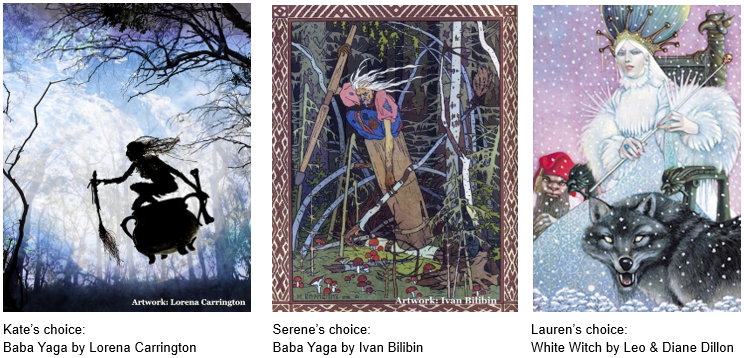
Who’s your favourite fairytale witch? Are they portrayed as the stereotypical evil enchanter, like Maleficent from Sleeping Beauty or the Evil Queen in Snow White; or more nuanced like Baba Yaga, who is often portrayed as the guardian between life and death, or the magical helper rather than a straight-up villain; or is it one of those sweet helper witches who morphed into a fairy over time, like Cinderella’s fairy godmother?
Fairy tales are a slippery genre to define – the borders of definition are made of seaweed rather than coral, with different characteristics drifting in or out?
Instead of saying that for a story to be a fairy tale, it must have ‘x’ characteristics, it can be more useful to look at a range of characteristics and then measure any given story against them to determine to what extent it is a fairy tale.
We can start by broadly defining genres by saying that
MYTHS are cosmic, describing origins and creations of various kinds.
LEGENDS are local, starting with specific places and times, with plausible situations that might have happened, but are now expressed as larger-than-life victories, betrayals, and defeats.
FAIRY TALES are individual following the lives of character archetypes that can represent aspects of humanity. They work as a psychological codes telling eternal truths about human nature in dream imagery – truthful rather than realistic.
FOLK TALES can be distinguished from fairy tales, because the one essential of fairy tales is that they must contain something magical or supernatural, often involving some sort of transformation, whereas folk tales have started with a realistic anecdote or joke.
But when we get into specific stories, it can be trickier.
The Pied Piper of Hamelin happened in Hamelin, As there’s a statue there linking it to a historic event, it’s definitely a legend… except it has magical elements, thereby making it a fairy tale.
Little Red Riding Hood has no magic at all, so it’s simply a talking animal story… but the world acclaims it as a fairy tale because the transformation is psychological, not magical.
Bamboo Cutter’s Daughter has a magically-born child found by a childless couple. As she ends up being taken up to heaven with other Chinese gods, is it a myth or a fairy tale?
As the purpose of a fairy tale is to unite that which is divided to reach a satisfying (psychological) cohesion, fairy tales ‘should’ end with a Happy Ever After… but nearly all of Hans Christian Andersen’s and Oscar Wilde’s fairy tales have bittersweet endings.
If we assembled common fairy tale characteristics, there would be some that are more central:
Magical transformations
Archetypal characters
Third person narrative
Non-specific time
Vanquishing evil
Achieving power
Plus other characteristics that are less essential but very common:
Coming of age
Finding a home
Union of Masculine and Feminine in marriage
Non-human characters
Happy endings.
Any of these characteristics may or may not be present in any given story, like a Venn diagram, so when we examine any story against those criteria, we can say that it is a fairy tale to such a degree, or in such a way, but not in others.
From these ingredients, we can have an infinite number of variations or patterns within all the fairy tales in the world, as well as the many stories that sit in the liminal space between fairy tale and myth, or legend, or animal story.
Then again, lots of people just get it wrong. Alice in Wonderland is a fantasy novel. Robin Hood is a legend. Three Billy Goats Gruff is an animal story. Bloggers including them in lists of fairy tales doesn’t make them fairy tales.
It’s equally wrong to think that real fairy tales must be European. Yes, it’s a European art form, starting with Straparola and Basile in Italy, and being named and published by the French Salonnieres in the 1690s – but just because it started there doesn’t mean it ends there. After all, many of our families started in Europe too, but that doesn’t stop us from evolving into our own (multi-) culture. So we can look at stories in India or Peru or Zimbabwe and say to what extent they can be called fairy tales too.
And … we can continue to create new fairy tales – new magical tales of Once Upon A TIme and Happily Ever After – right here and now.
We can also continue to discuss and debate just what a fairy tale is. This is just to get the conversation rolling!
With just five weeks to go, we’ve released Helen McCosker‘s stunning artwork on conference merchandise at our Red Bubble store.
While there, browse all the other incredible art from our talented members: Lorena Carrington, Erin-Claire Barrow, Debra Phillips, Helen Hewitt, Sue Khoo, Zoya Makarova and more.
Our keynote speaker Demelza Carlton is an internationally celebrated author, who’ll make her only Sydney appearance at our conference, Over Water, Under Water, Magical Waters of Fairy Tales!
Joining her will be acclaimed fairy tale writers Kate Forsyth and Kell Woods, and a range of authors and academics, storytellers and psychologists, artists and other performers, and all the fairy tale enthusiasts from around the country, at a beautiful ocean-facing site in the water-based city of Sydney.
For the full list of presenters and topics, please visit our conference page.
Register now for our June 14-15 conference at Prince Henry Centre, Little Bay, Sydney. (Please note, sessions run 10am-6pm each day.)
We invite all lovers of story to an afternoon of live storytelling to celebrate World Storytelling Day. Thrill to tales of ‘Deep Water’ from Christine Carlton, Jill Webster, Jo Henwood, Kiran Shah and Liz Locksley, our performers from the AFTS Sydney Fairy Tale Ring and Australian Storytellers.
When: Sunday March 23, 1-4pm Where: Kirribilli Neighbourhood Centre, 16-18 Fitzroy Street, Kirribilli, NSW 2061 Tickets: $15 members (AFTS or AS), $20 non-members
Scan the QR code for details and bookings, or visit humanitix.
Brought to you by:
World Storytelling Day celebrates the power and joy of storytelling around the world. The 2025 theme, Deep Water, matches beautifully with our 2025 Australian Fairy Tale Conference theme, Over Water, Under Water, Magical Waters of Fairy Tales. For June 14-15 details, visit our conference page.
In part two of our interview, best-selling Western Australian author – and this year’s conference keynote speaker – Demelza Carlton reveals more about her series of fairy tale inspired books, her favourite and least favourite tales, and some of her research trips around the world.
Missed part one? Read all about Demelza’s WA-set mermaid stories here.
You have 27 books (and counting!) in your Romance a Medieval Fairytale series; re-imaginings of some well-known and more obscure stories. What do you love about fairy tales, and will you write more?
I had so much fun writing and researching my medieval fairy tale retellings – and yes, there will be more, although I can’t confirm when as yet.
I love that fairy tales are stories that transcend time and place. We don’t know the original sources, though sometimes we do know when the earliest known written versions came from, and the variations take my breath away in how they encapsulate the history and culture of where they’re set, while at the same time, capturing the heart and soul of a familiar tale.
What do you love about being able to change these traditional tales for a new audience, and to say new things?
Well, writing is always a combination of the familiar and the new – and you need to get the balance right. So, if I’m exploring little-known history, or an island that only a handful of people have ever set foot on, I need a familiar story at the heart of it to entice people to come with to somewhere so new and dangerous.
What did you want to explore about the Hans Christian Andersen story for your Little Mermaid-inspired book Silence?
A lot of Little Mermaid retellings like to twist the tale, to tell it from the sea witch’s perspective. My heroines in that series are mostly witches with various magical power, so it made sense to make the mermaid and the sea witch one and the same – but there remained the problem of her voicelessness. Why would the sea witch take away her own voice, when one word to the prince could mean her happily ever after?
I thought: ‘What if there was something more powerful at play than her crush on a man she barely knew? Love of family, and her wish to save people…’ And I always loved the original tragic ending to Andersen’s tale, so I strove to make my story bittersweet as well.
Do you have a favourite fairy tale?
The Little Mermaid, obviously, but I’ve always been partial to The Brave Little Tailor, because it was about cunning more than strength.
Do you have a least favourite?
The Ballad of Tam Lin and possibly Sleeping Beauty. The first, because he’s a selfish, cheating bastard who doesn’t really deserve to be saved, and Sleeping Beauty because it’s a poor justification for rape and adultery.
You do a lot of research for each of your fairy tales, as you’ve set them in the medieval period. Can you describe one of your research trips?
I spent four months travelling through Europe for my medieval series, from Polish hunting lodges where you weren’t allowed to go outside at night because of wild boars, to Scotland where we stumbled on a castle that inspired both Outlander and Game of Thrones. Actually, there’s a funny story about Finlaggan Castle…
Our trip to Scotland was meant to be a treat for my husband, who is a huge fan of single malt whisky, and I volunteered to be his designated driver on Islay while he visited the distilleries and tasted their wares.
There are NINE distilleries on Islay, and we visited ALL of them. While my husband and his friend were singing loudly in the back seat, with the windows rolled down so the whisky fumes wouldn’t reach me in the driver’s seat, I was thinking about which fairy tales I hadn’t considered yet, and how Three Little Pigs could possibly be turned into a medieval romance for my series. I mean, pigs? Wolves? It was damn near impossible, I decided.
The singing had turned to excited shouts – the boys had spotted a castle, and they wanted to visit. I didn’t believe them, because I’d researched this island, and I knew there weren’t any castles that were relevant to my series, but they were adamant they’d seen a sign pointing to a castle. As there’s no arguing with drunk physicists, I had to turn around and follow that sign, just to show them it didn’t exist.
As we drove down the single-lane, winding road, I caught a glimpse of what had gotten the boys so excited: Finlaggan Castle, or what’s left of it.
A castle on an island that had been used as the seat for Hebridean leaders since the Iron Age (which is before the rise of Rome, so more than 2,000 years). Some of the structures dated back to the Viking occupation of the Hebrides – they didn’t belong in Scotland in the 12th century, when my Romance a Medieval Fairytale series is set. Instead, this castle belonged to a Viking prince, who married the daughter of one of the local islander girls, a lord’s daughter.
And Blow: Three Little Pigs Retold – yes, the book otherwise known as Three Little Pigs, the Romance – was born.
You appear at many author events, such as Supanova and Comic-Con. How does it feel to be able to chat to the readers who love your books?
I swear, when I go to those events, I’m absolutely in awe of the cosplayers, and how much effort goes into the costumes. Sometimes, even more time than it takes me to write a book – yes, really!
It always surprises me the number of people who recognise me at events. I mean, I write in my home office and keep to myself much of the time, so when I do go to those huge events like Comic-Con and Supanova, it’s quite surreal being recognised as me, writer of books, instead of as my kid’s mother.
Actually, those events are the place where I tend to get the strangest inspirations for my next books, usually from readers. Sometimes they offer up character names – their own, or someone they’d love to be a red shirt in one of my books – but also some of the amazing, original artwork, because a picture can inspire 50,000 words.
See Demelza in her only Sydney appearance as the keynote speaker at the 2025 conference Under Water, Over Water, Magical Waters of Fairy Tales, as detailed here, and visit her online at www.demelzacarlton.com
Sydney is a water city, with our character and identity defined by the harbour. People have sailed here throughout time, the harbour and rivers forming shared spaces, thoroughfares, and barriers as well.
Welcome!
The Australian Fairy Tale Society was established to investigate, create and communicate fairy tales from an Australian perspective. Local Rings and our Magic Mirror (Zoom) gather five times a year to explore specific fairy tales, like a book club for fairy tales. We have an irregular eZine, YouTube channel, Redbubble merchandise store, and an original anthology, South of the Sun: Australian Fairy Tales for the 21st Century, and another West of the Moon: More Australian Fairy Tales for the 21st Century in progress.
Recent conference themes include Australian Fairy Tales: Flesh or Fossil?; Cottage, Cauldron, Castle: Power and Place in Fairy Tales; and Once and Future Tales: What was, what is, what if?
For our conference, we invite you to submit presentations in a diversity of forms, because this is one of the delights of an AFTS conference.
Submissions open February 1 and will close 11pm AEDT, February 28, 2025.
Case study(or poster display) of a creative process of staging a fairy tale performance
Performance, 10 minutes max, with optional 5 minute Q&A. For example, storytelling, puppetry, theatre, singing, music, dance.
Panel discussion, 25 minute maximum including Q&A
Workshop, 30 minute maximum including set-up time. For example, art, writing, storytelling, sand sculpture, puppetry, gardening, cake decorating
Games or participative activities, 10 minute maximum
Launch of your book, video game, performance
Sales and/or displays of your books, art, puppets, toys, costumes etc.
New ideas welcome!
Stuck for ideas? Here are some ways you could explore the theme…
Over Water
Voyages in fairy tales
Voyages of fairy tales: how fairy tales have travelled across the seas from other parts of the world to make their home here
Discovering new and old as we explore stories that have travelled across time: what matches with the original and what clashes
Maritime fairy tale characters (e.g. sailors, smugglers, fishermen, pirates, lifesavers): what they have and what they could represent
Shipwrecks – be they fairy tale, Australian or creative shipwrecks
‘Kingdoms’ (Communities) by or in the sea.
Under Water (what lies beneath)
Psychological and symbolic meanings in fairy tales
Underwater portals to other worlds, which could be magical kingdoms, Death, or somewhere else)
Magical underwater creatures: mermaids, nixies, etc and what they could represent, including fluid identities and disability
Water colours in fairy tale art
Magical and Healing Waters
Blood, sweat, tears, rain, tea – The Water of Life, the Water of Death
Waterholes, rivers, bathing pools
Watermills, bridges, wishing wells
Still waters (= finding peace?)
Reflections and/or scrying the future
For further inspiration, here are some fairy tales with watery themes –
Fisherman and His Soul; Frog Prince; Isle of Magnificence; Knights of the Fish; Lady White Snake; Little Mermaid; Little Obelia; Melusine; Nixie of the Millpond; Selkie; Three Men in the Well; Three Snake Leaves; Turbot; Water Lily; Water of Life; Well at World’s End.
Western Australian writer Demelza Carlton is a USA Today bestselling author of more than a hundred books, which have been translated into more than a dozen languages and sold more than three million copies worldwide.
Her fairy tale collection, including Silence: The Little Mermaid Retold, and her six-book series Sirens of War, set off the WA coast, make her the perfect keynote speaker for our 2025 conference theme: ‘Under Water, Over Water, Magical Waters of Fairy tales’ – even if she was once scared of fish!
You’ve always loved the ocean, but on your first snorkelling trip you found you were afraid of fish. How did you overcome that?
Lots more snorkelling, a bit of scuba diving, and swimming with sharks, actually. It’s hard to be afraid of fish when you’re chasing a shark for a photo you promised your kid, and it’s swimming away as fast as it can. I’ve now swum with sea lions, sharks and sea cucumbers, and stood on spray-drenched cliffs over a seeting sea as a seven-metre cyclonic swell surged in, shattering a shipwreck below. And I live in Perth, WA, the shark attack capital of the world – and can assure you that sharks taste delicious!
While doing your Masters research on shipwrecks at remote islands off the WA coast, you came across one that didn’t make sense. How did that inspire a multi-book series about mermaids?
During a cyclone in the 1920s, a fishing boat broke free of its moorings with the two-man crew still aboard. One man managed to swim ashore, but the other couldn’t swim, so he disappeared in the waves when the boat sank. Everyone thought he drowned, but his body wasn’t found… until more than three weeks’ later, when it washed up miles from the boat went down, in the complete opposite direction to the ocean currents. Stranger still, the man was recognisable – which meant his corpse hadn’t been floating at sea for all those weeks – and he’d done some first aid to his broken leg. There was nowhere the man could have been all that time except in the ocean; because if he’d washed up on the island, someone would have seen him and helped him. So how could a man survive for three weeks at sea, do first aid on himself, and yet drown within sight of land?
No matter how much research I did, I couldn’t solve the mystery, so I wrote ‘mermaids did it’ in my report and left it at that. When I did the final proofread, I burst out laughing when I saw that bit. I quickly deleted it, submitted my dissertation, and celebrated with a glass of wine. Wine in hand, I decided to search mermaid myths on the internet. Was it actually possible?
I was amazed to find heaps of mermaid stories from all over the Indian Ocean, and of course I also dug out my copy of Hans Christian Andersen’s tales to read the fairy tale I remembered. Put the two together with my miracle man, and I had a story.
What if the reason mermaids went ashore was a biological imperative – they needed human men in order to breed – but instead of saving the man like the prince in Andersen’s tale, my Indian Ocean mermaid accidentally lost him to the waves? She’d be heartbroken, not wanting to return to the place she lost the man for a very long time. And a very long time later, she did come ashore again at the same islands to investigate an environmental issue. Right at the same time, a brand-new deckhand starts work on a lobster fishing vessel at the islands; a deckhand, who’s very interested in the woman who lives in the fishing shack next door to his. And he just happens to have the same first name as the man she lost to the waves…
What drew you to shipwrecks off the WA coast as your area of research?
It wasn’t just shipwrecks – my Masters is in Emergency Management, and my research project involved plane crashes, wartime battles, quarantines and tsunamis, as well as shipwrecks. I have a personal connection to the Batavia disaster at the Houtman Abrolhos Islands, up near Geraldton as one of my ancestors was the navigator. That might explain why I get lost so easily!
[In June 1629, Dutch-owned ship Batavia struck a reef and sank amongst islands 65km off the coast of what is now Western Australia. The whole story is chilling, if you want to read about it.]
What had you planned to do with that qualification, before becoming a writer?
I was investigating those incidents for my job as an administrator at a remote site, to improve our emergency management planning. Seeing as I was doing the research anyway, turning it into a Masters research project and getting the qualification seemed like a no-brainer.
That research inspired your first book, Ocean’s Gift, about a mermaid off the WA coast, which turned into a three-book Siren of Secrets trilogy and the six-book Siren of War series. What made you want to set a fairy tale story in Australia, rather than the traditional European setting?
At the time, I’d lived most of my life here, and my research showed that mermaid legends were everywhere – especially in the Indian Ocean. This part of the world is kind of a fairy tale to most of the rest of the world, so instead of imagining somewhere new that I’d never seen, I wanted to breathe new life into old legends in a place I knew well, which many of my overseas (and east coast Australian!) readers probably don’t.
Why do you think so many Australian writers stick with more traditional settings?
I think they do it because that’s what publishers want, and know how to sell. It’s also closer to their source material, which is usually Hans Christian Andersen and the Brothers Grimm, and to what Disney do with their fairy tales – and let’s face it, Disney definitely knows how to sell fairy tales!
It’s a very personal choice – why set any book anywhere? Writers are told to write what they know. Well, I’m Australian, not English, so I can’t wax lyrical about the beauties of an English wood, because I’ve never seen one. I have gotten my feet wet in both the Baltic and the North Sea though, and seen some of the less populated parts of France and Eastern Europe, so when I chose to write my mediaeval fairy tales, those are the places I tended to set those stories. The history in those regions is particularly fascinating, and also little-known in the English-speaking world.
You also include environmental issues. How important, for you, is it to incorporate these?
I absolutely do! I admit those mostly come up in my contemporary and sci-fi stories, more than my mediaeval ones, but while I was visiting relatives in the Netherlands, they showed me a small desert in Hoge Veluwe National Park that resembles the Pinnacles in WA’s Nambung National Park.
I did some digging, and it turned out that around a thousand years ago, this particular region was the only arable land in a sea of marshland – until a combination of flooding and salt production resulted in salinity issues that turned it into desert.
So, in 2025, I’ll be releasing a new, present-day fairy tale series that centres around an eco-village. I’ve been having so much fun researching all the technology and sustainable practices that will make this village a reality.
What are you looking forward to about the Australian Fairy Tale conference?
I miss academic life, and while I get to do a lot of research for my books, most of it is on history, geography, and the cutting-edge of science for my sci-fi, rather than in-depth research into origins and interpretations of fairy tales. I’m really hoping to get my geek on and listen to other people’s findings on fairy tales, instead of constantly having to think of how a modern audience would relate to them.
Next month, find out more about Demelza’s fairy tale books, her favourite (and least favourite) tales, and some of her research trips around the world. Learn even more by visiting her online at www.demelzacarlton.com. Enjoy Part 2!