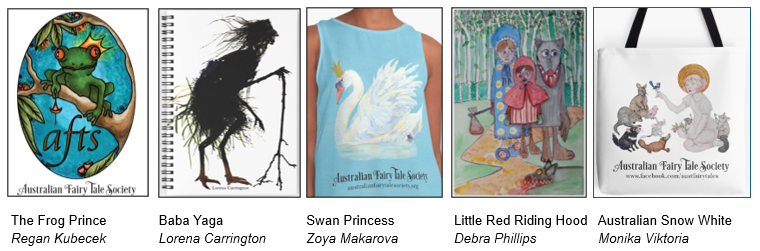
The artist members of the AFTS contribute so much beauty and insight to our understanding of what fairy tales are and what they can be – and you can own some of this remarkable work yourself through our online Redbubble store. https://www.redbubble.com/people/austfairytales/shop
Here you will find unique Australian artworks that you can match to the object of your choice, like clothing, mugs, soft furnishings, etc.
From fairy tale art
To our conference art
And the logos of the Fairy Tale Rings that members love to wear, especially to Rings, conferences, book and art events)
We love this way of celebrating our member artists and giving the world an opportunity to see their work, as well as surreptitiously letting the world know about the AFTS too! We are enormously grateful to them for their generosity in sharing their talents with us.
Buying any of the AFTS merch is a wonderful gift to yourself, a way of identifying yourself as a person with an individual and magical view of the world, and maybe opening up some conversations.
And this time of year, when you might be looking for gifts that have some meaning, that are not generic and mass-produced, is an ideal time for giving something special.
You’d better dive in quickly so that all you want is delivered in time for Christmas – though it’s always the right time to give AFTS merch.
This year, the Sydney Fairy Tale Ring has begun meeting to share what we call Magic Movies – fairy tale films from around the world – as another creative form that interprets the many strands of fairy tales; and there are many films to choose from.
Why? What is it about fairy tales that attracts film-makers to create their own interpretations?
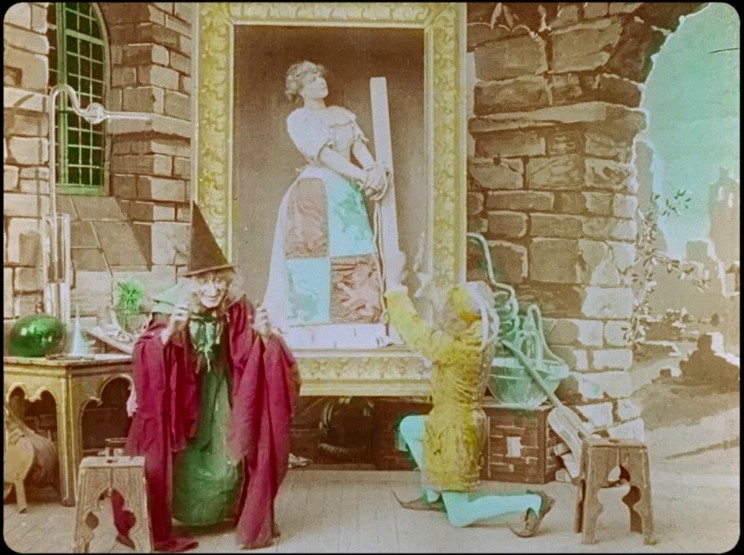
The earliest motivation, back in 1890s France, was simply to show what film could do. Georges Melies was the best-known of these innovators, using stop animation to create magical appearances, puppets, costumes and coloured slides to tie them to a narrative already popular through pantomimes. Those first audiences must have gasped in wonder.
In a way, Melies was following on from earlier forms of fairy tales as spectacles, known as feerie. Even before 17th century French Salons nurtured the performance of original fairy tales, the old oral stories were displayed in a sort of living statue form as outdoor entertainments for the aristocracy. After the 1789 revolution, a new proletariat audience watched their own versions of feerie, while over in England, James Plance presented what he called fairy tale Extravaganzas.
Only a generation later, German artist Lotte Reiniger created the world’s first animated fairy tale film, Prince Achmed (1926), to use her stunning paper-cut shadow puppetry in stop animation with full colour to create a stunning work of art.
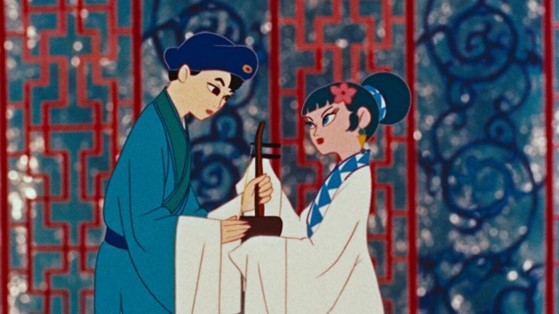
But of course, Prince Achmed‘s fame has been well and truly eclipsed by Walt Disney’s Snow White and the Seven Dwarfs in 1937, the beginning of world-wide dominance over the genre, so that other visions had little chance of being seen. Disney only paused in their fairy tale film production when the exquisitely animated and scored Sleeping Beauty failed commercially in 1959, (only to be resumed with 1989’s The Little Mermaid), just at the time that Japanese animated films took off with their version of the Chinese story, The White Serpent (1958).
To add to the struggles of making any sort of film in post-war France, director Jean Cocteau created La Belle et la Bete (1946), with magnificent costumes made almost from rags, and using techniques like making candles light up in sequence by blowing them out then running the film backwards. The Italian-Spanish mini-series Fantaghiro (1991) from Italo Calvino’s, Fantaghiro the Beautiful, had a much easier time of it with special effects.
BBC One animated the illustrations of Quentin Blake to their re-fracturing of Roald Dahl’s fractured fairy tales in six comic poems, Revolting Rhymes (2016), not with drawing but with computer animation, slipstreaming on what Tangled achieved in 2010. And some films live on mostly because of the costumes, like the French film Donkeyskin (1971) starring Catherine Deneuve.
Other film-makers use the template of fairy tale narratives to communicate their own messages for their own time. The most popular fairy tales, retold in film after film in Europe, America, and to a much lesser extent, Asia, are Cinderella, Little Red Riding Hood, Hansel and Gretel, Snow White, Bluebeard – as you would expect – have been used in many different genres.
In the 1930s and 1940s Hollywood, there were many shorts that parodied fairy tales for slapstick humour and occasionally for satire, e.g. Max Fleischer’s Betty Boop as Cinderella, Looney Tunes’ Little Red Riding Habit, Tex Avery’s Peachy Cobbler.
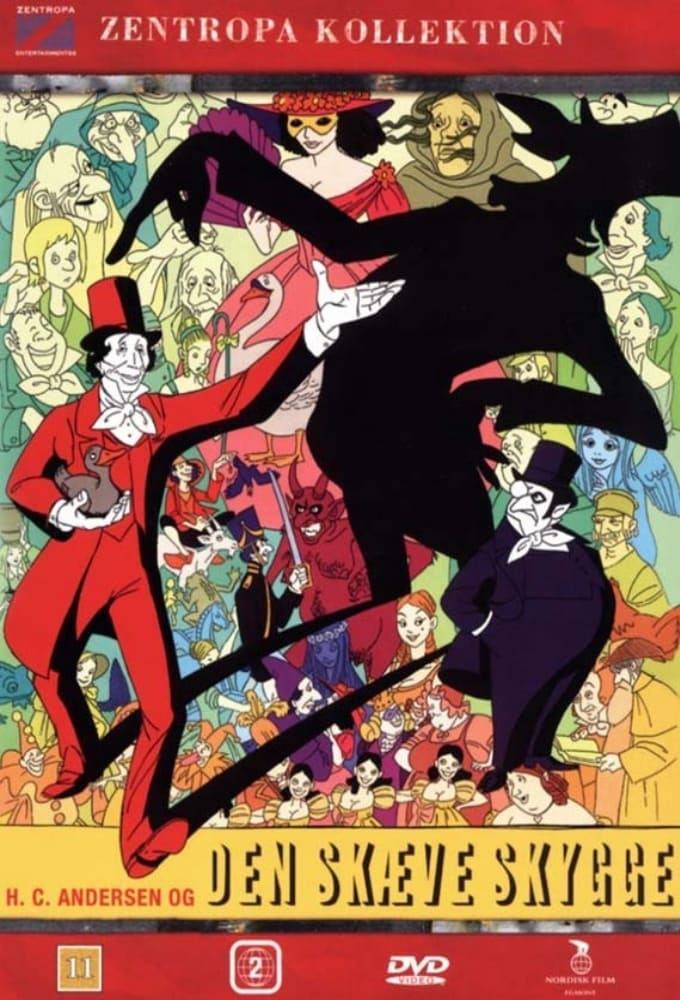
Cinderella was used to transform child star Deanna Durbin into romantic roles. Powell and Pressburger’s story told of the price of being an artist in the spellbinding Red Shoes (1948), and Jannik Hastrup extended that to look at what happens to the artist when what they have created lives beyond them in Hans Christian Andersen and the Long Shadow (1998) though it has not been translated into English, so most of us will never know how good it might be.
Political comments were made in communist era Czechoslovakia in Karel Zeman’s King Lavra (1948), a retelling of King Thrushbeard, the flood of Soviet fairy tales starting with Ivanov-Vano’s The Humpback Horse (1947), and in the French film, Paul Grimault’s The King and the Mockingbird (1979), a version of Andersen’s The Shepherdess and the Chimney Sweep that proclaims the values of freedom.
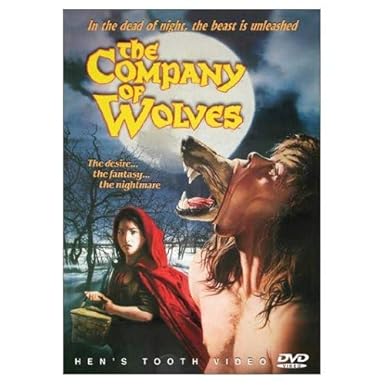
The world of fairy tale interpretation was transformed by Angela Carter’s book of retellings, The Bloody Chamber, which was followed by Neil Jordan’s film version, In the Company of Wolves. Horror fairy tale retellings came in the aftermath. That is probably the favourite use of fairy tales in Asia, with films such as A Tale of Two Sisters (2003) from Korea, as well as Little Otik (2000) from the Czech variant of Hans, My Hedgehog, and the American Hard Candy (2005), based on Little Red Riding Hood.
Women with power could be seen in such 21st century films as Blancanieves, a fractured version of Snow White (Spain 2012), Tale of Tales (Italy 2015), a reworking of Basile’s collection, and Green Snake (China 2021), as well as all the Add-A-Sword films like Snow White and the Huntsman (2012).
Some film-makers chose to avoid retellings in favour of creating new fairy tales specifically for film, such as Michael Ocelot’s Azur and Asmar (2006) and his Kirikou films (1998, 2005), Pan’s Labyrinth (Spain 2006) and many others.
Fairy tale films are also created to reach a particular audience, whether that be cultural – as in the massive output from Russia, Hungary, and the Czech Republic, such as the Christmas favourite Three Nuts for Cinderella (1973), and the 2010 Chinese film of the oldest Cinderella, Yeh Shen.
For the child and family market dominated by Disney, Don Bluth, also American, created some competition in the 1980s, with films such as Swan Princess (1994) made because they believed Disney was purely motivated by avarice with no concern for art (surely not!). Disney responded with Little Mermaid (1989) to begin its renaissance. In spite of all Bluth’s efforts, it was Pixar’s Shrek (2001) that really shook up the notion of what fairy tale-themed films could be, while Studio Ghibli’s success with Princess Kaguya (2013) had a lot to do with not being in competition for the same audience.
Where does Australia lie in all of this? Very much at the rear, I’m afraid.
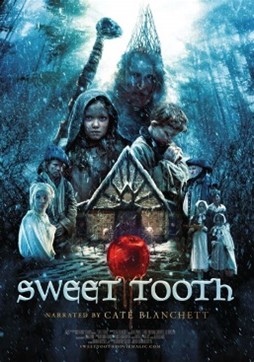
Australian rainforests and what was described as ‘Aboriginal mythology’ were used as the backdrop for the original environmental message movie, Fern Gully (1992), with American actors and occasional faux Aussie accents. This century, there has been the unsavoury and dreary Jane Campion fractured version of Sleeping Beauty (2011), and the Cate Blanchett-narrated short film of Sweet Tooth (2019), a retelling of Hansel and Gretel set in Europe but with Australian actors.
There are so many possibilities for what could be created next.
Further reading: Zipes, Jack. The Enchanted Screen: The Unknown History of Fairy-Tale Films. Routledge, 2011.
We are thrilled to announce that thanks to the support of Hobsons Bay City Council through its Make it Happen Grants program, the opening sessions for each day of the conference will be open to the public!
That’s right, Michael Earp’s Keynote Address and our Special Guest Presentation from Jaeden Williams (Boonwurrung educator, and founder/director of Biik Bundjil) will be free for everyone to attend. PLUS Michael’s Keynote Address will be Auslan interpreted too.
However, spaces for both sessions will be limited so whether you’re coming to the whole conference or just the morning sessions with Jaeden and Michael, register now!!!
(Note: if you’ve registered for the conference, you already have a place at the Keynote and Guest Presentation)
If you’re coming from regional Victoria, interstate, or even overseas(!) we have a handy dandy welcome pack to give you a starting point to find your way to the Newport Community Hub and other nifty bits of advice. You can download the welcome pack here.
We’re undergoing a little program revision, but start and end times will not change. Be ready to start at 9:45am each day, finishing by 6:30pm AEST and 4:30pm AEST on Saturday 3rd and Sunday 4th respectively. That gives you plenty of time to calmly plane, train, or automobile your way home. An updated conference program will be out very, very soon…
All AFTS members will have access to the recordings of conference sessions in the future, but if you have registered (regardless of whether you’re a member, and joining in-person or online) you will get access first. So what are you waiting for, get registered and get excited for a jam-packed weekend. We can’t wait to welcome you to Newport!
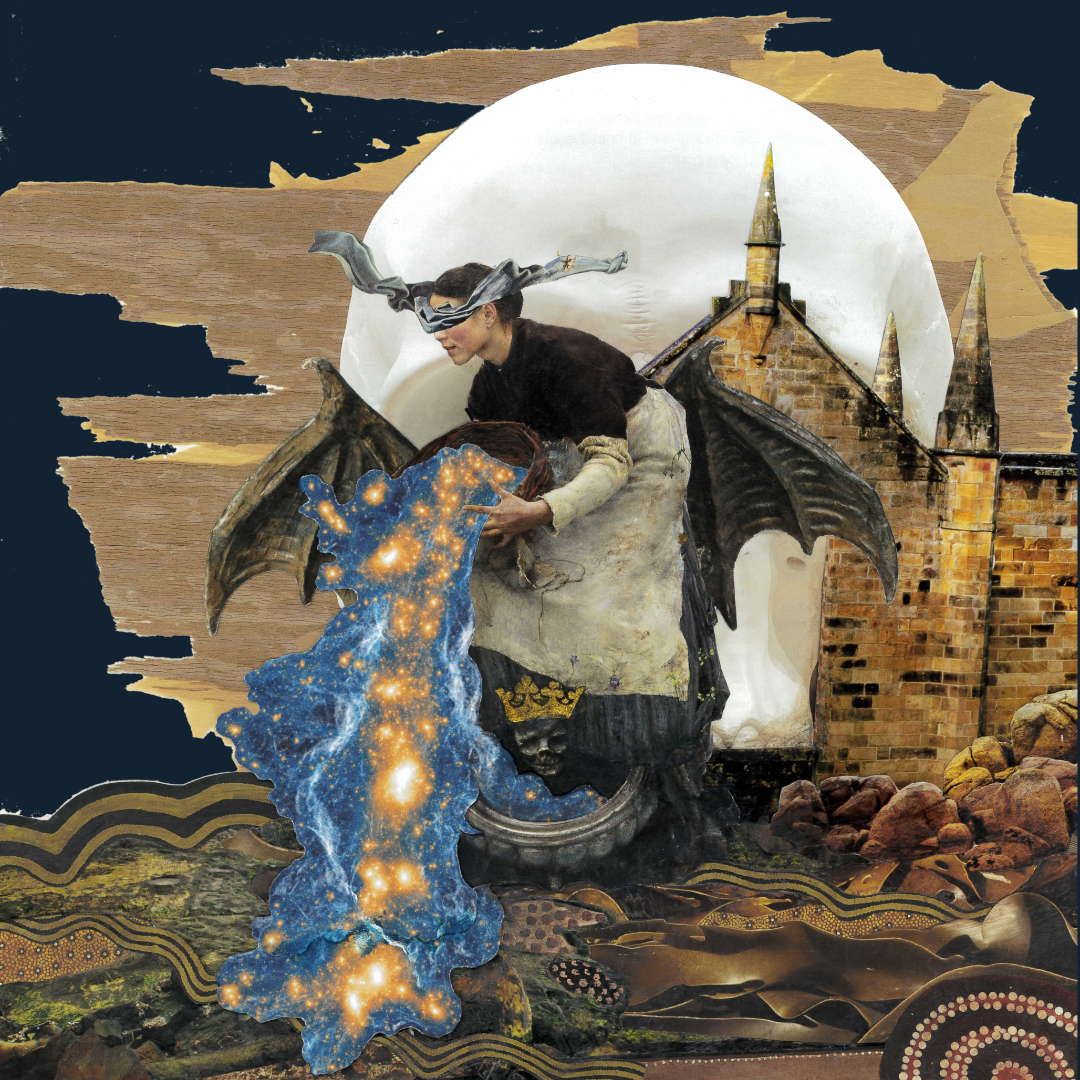
And if you need a reminder, our fantastic conference artwork is by the brilliant Roslyn Quin(@roslynquinart)!
Registrations have opened for our 2024 conference – register here for what is going to be a jam-packed two-day conference on August 3 & 4 in Newport.
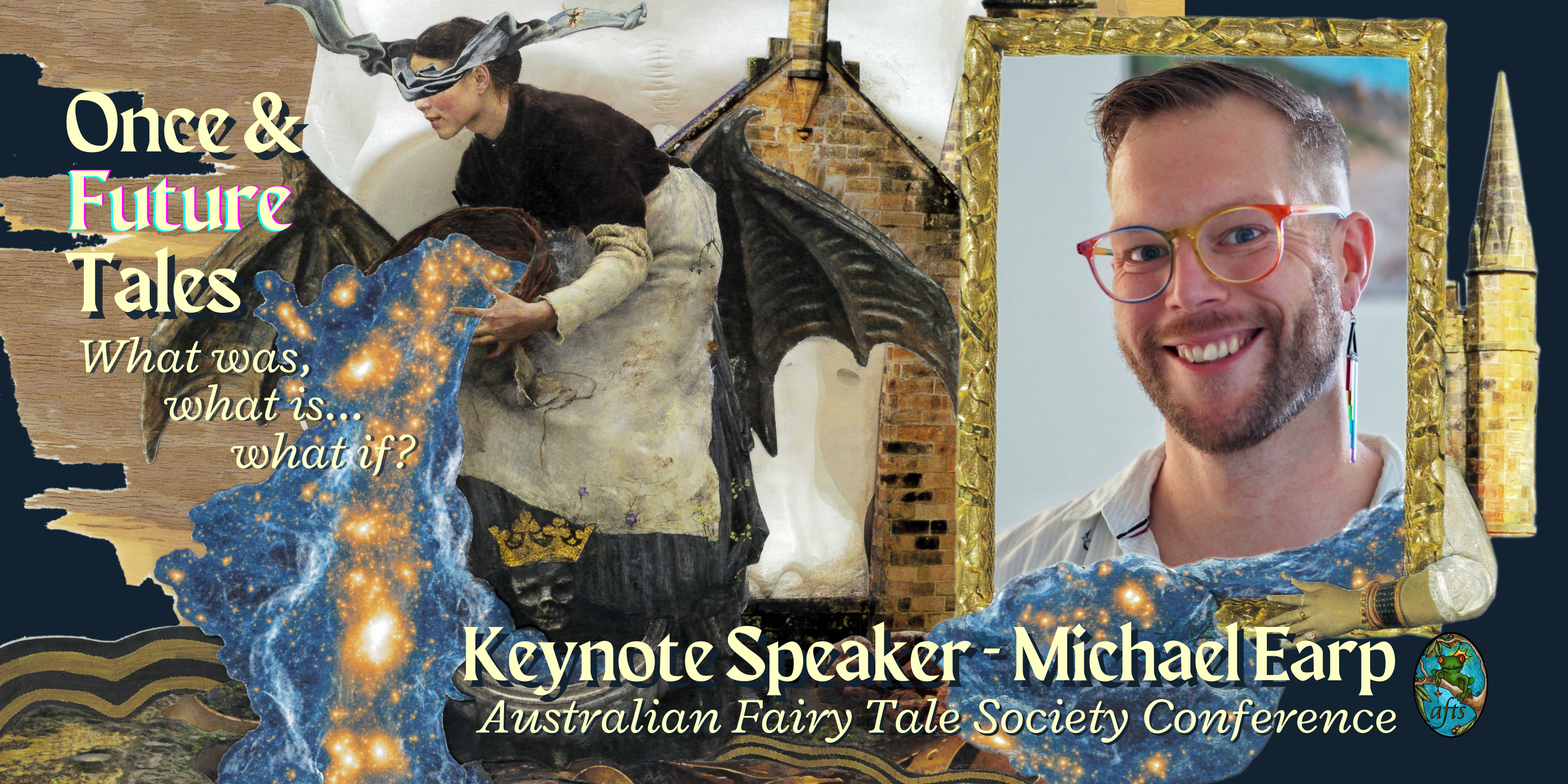
And what better way to kick off the announcements of this year’s presenters – and the conference as a whole – than with our Keynote Speaker… Michael Earp!
Michael Earp is a non-binary writer and bookseller living in Naarm (Melbourne, Australia). They are editor of, and contributor to Everything Under the Moon: Fairy tales in a queerer light, Kindred: 12 Queer #LoveOzYA Stories, Out-Side: Queer Words and Art from Regional Victoria and co-edited Avast! Pirate Stories From Transgender Authors with Alison Evans. Their writing has also appeared in Archer, The Age, PopMatters, The Victorian Writer, Aurealis and Underdog: #LoveOzYA Short Stories. For over twenty years they have worked between bookselling and publishing as a children’s and young adult specialist. Their role managing The Little Bookroom, the world’s oldest children’s bookstore saw them named ABA Bookseller of the year. A passionate advocate for LGBTQIA+ literature for young people, they established the #AusQueerYA Tumblr to catalogue all Australian young adult fiction containing queer content and characters. Representation of all people in the literature available to readers of all ages is the ethos that motivates their entire career. They have a Masters in Children’s Literature and a Teaching degree and previously served as committee chair for the #LoveOzYA campaign. Tea is the source of all their power.
In the coming weeks, plenty more presenters and other titbits and teasers will be announced. But don’t wait around, put August 3-4 in your diary and register now! We can’t welcome you to Newport for what will be a full-to-burst, exciting, diverse, and all-around fantastic conference. And don’t forget, if you can’t get to the whole weekend, don’t fret! There are single-day registrations and online attendee registrations.
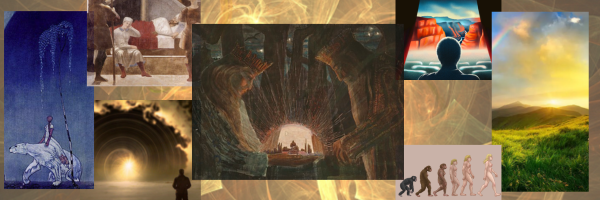
“Once upon a time” takes us into a place where time moves differently.
Fairy tales allow us to time travel to the past and scry into the future, uncovering lessons from what once was and paving the way for what might be. We can create conversations with our ancestors, premonitions for our descendants, and dreams of our here and now. Like King Arthur and Finn Macool, what tales lie waiting for our clarion call? And which, like Briar Rose, must be put to sleep for a spell?
Through folk and fairy tales we stitch together motif and memory, epics and anecdotes creating letters from the past to the future. But how do we hold these tales in our hearts here and now?
Do we tell stories because they have happened or because, maybe, they are yet to be?
“Time comes into it.
Say it. Say it.
The universe is made of stories
not of atoms.”
Once and Future Tales: What was, what is, … What if? Australian Fairy Tale Society Conference 2024
Call for Presentations – Submissions now openhere EXTENSION – Submissions now close at midnight AEST on March 8th! SUBMISSIONS HAVE NOW CLOSED
The Otherworld… Everywhen… Standing in the story-space…
“Once upon a time” takes us into a place where time moves differently.
Fairy tales allow us to time travel to the past and scry into the future, uncovering lessons from what once was and paving the way for what might be. We can create conversations with our ancestors, premonitions for our descendants, and dreams of our here and now. Like King Arthur and Finn Macool, what tales lie waiting for our clarion call? And which, like Briar Rose, must be put to sleep for a spell?
Through folk and fairy tales we stitch together motif and memory, epics and anecdotes creating letters from the past to the future. But how do we hold these tales in our hearts here and now?
Do we tell stories because they have happened or because, maybe, they are yet to be?
“Time comes into it. Say it. Say it. The universe is made of stories not of atoms.” from The Speed of Darkness by Muriel Rukeyser
We invite you to submit proposals for what you could present at our 10th annual conference, drawing from the creative invitation above. We encourage a variety of forms and ideas. Please submit your proposal on our online form hereby midnight 8th March 2024 (extended from the initial date).Submissions are now closed.
The 2024 conference will be primarily held face-to-face, with some hybrid/online sessions.
As always our focus is on the Australian interpretation and confections to fairy tales, particularly contemporary diverse Australia. As AFTS Conference-goers delight in diversity, we are looking for –
Talks of no more than 25 minutes, with the option of 5 minutes Q&A
These could be case studies of projects with a fairy tale basis
Analysis of a particular tale or tale type
Histories, research, and more! Be creative!
Panel discussions of no more than 25 minutes, with the option of 5 minutes Q&A
Performances of no more than 10 minutes, with an option for 5 minutes’ Q&A
Displays of your books, art, puppets, toys, costumes, etc for sale, or to decorate our venue.
Stalls to sell your merchandise
All submissions will be responded to in early April, so that the full program can be announced mid-to-late-April.
The Australian Fairy Tale Society was established to investigate, create, and communicate fairy tales from an Australian perspective. Local Rings gather five times a year, and our Magic Mirrors gather by Zoom almost every month, to explore specific fairy tales like a book club for fairy tales.
Some previous conference themes include The Fairy Tale in Australia, Transformations, Into the Bush, Gardens of Good and Evil, Magic Mirrors: The Seen and the Unseen, and Fairy Tales: Flesh or Fossil. We have an irregular Ezine and have published an original Anthology, South of the Sun: Australian Fairy Tales for the 21st Century.
Do gay fairy tales exist? How about bisexual fairy tales? Trans fairy tales? Asexual fairy tales? If you did a survey of the most well-known fairy tales you’d answer no. But that doesn’t mean they don’t exist. My name is Em Chandler (she/they), I’m currently the Vice-President of the AFTS, and I adore the odd, dusty, and overlooked; especially when it comes to fairy tales. And I’m here to tell you queer fairy tales do exist.
“But if queer fairy tales exist, where are they? What are they?”, I hear you ask…
Well, that is another story for another day. And I promise I will tell it to you. Just wait until June.
For as long as there have been stories, storytellers have been reimagining and interpreting those same stories. That includes queer storytellers. As here in Victoria (my home state) it is soon to be Midsumma Festival – our annual LQBTQIA+ festival, let’s have a look at a fraction of the retellings made so far.
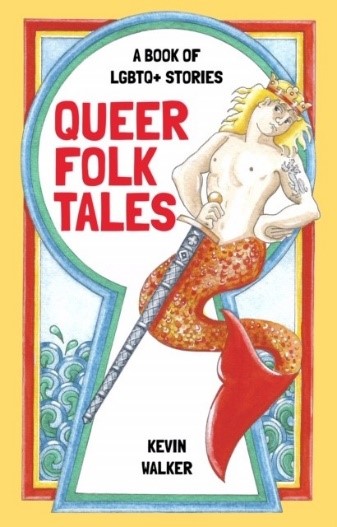
English storyteller and author, Kevin Walker (he/him), has a delightful volume called Queer Folk Tales. Drawing from his own repertoire of stories, he adapts and reimagines queer folk tales, fairy tales, legends and myths. I love revisiting The Blue Rose in this collection. It’s a beautiful story about love and truly seeing someone, so I’m surprised this is the first queer version I have come across! If you know of others, let me know. (Though despite popular belief, the original is not Chinese but a 19th century literary fairy tale. But it’s been shared so much as a ‘folktale’ I wonder whether that really matters now…).
Everything Under the Moon is absolutely beautiful anthology only published last year. And best of all, over 50% of the authors are Australian! Edited by Michael Earp (they/them)*, like Queer Folk Tales above, some stories are set in once upon a time, others modern day, some even science fiction but each is delight to behold. I was kindly sent a review copy (which I received on behalf of the AFTS). A full review should appear in our next E-Zine, but don’t wait until then – I cannot recommend it enough. The book is physically beautiful, and the tales even more so. Picking one favourite is an impossible task, but… If The Shoe Fits by Lili Wilkinson and Moonfall by Alison Evans are still dancing in my head after the most recent reread. Wonders await no matter of these magic beans you chose.
Kissing the Witch: Old Tales in New Skins is a collection of thirteen interconnected tales by Emma Donoghue (she/her) exploring Cinderella, Snow White, Beauty and the Beast and more with a decidedly queer and feminist lens. I adore that a character from each proceeding story becomes the narrator of the next in this collection. Each new fairy tale adding depth and complexity to the next, and vice versa.
But we’re not limited to short stories, there’s novels too. Cinderella is Dead by Kalynn Bayron (she/her) takes the Cinderella tale we’re most familiar and says, “what if it was true, and what would the world look like 200 years later”? Dystopian, fast paced, and a wickedly good re-examination of the tale we all know. One thing I love especially is that Bayron hasn’t set out to say the Cinderella narrative is bad – but how the narrative can be twisted and used by those in power.
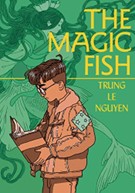
The Magic Fish by Trung Le Nguyen is a semi-autobiographical graphic novel. Tiến Phong is a second generation American Vietnamese teenager, and its through fairy tales he helps his mother learn English. But he’s also struggling to tell his mum about his sexuality. So, fairy tales step in once again. It’s a stunning narrative with gorgeous illustrations, and fantastic use of colour too.
There’s theatre too! The Story Keepers is a play/emerging children’s theatre ensemble that retell and perform overlooked fairy tales, especially queer fairy tales. Yes, this is a shameless plug, because I’m the director and writer! Three fairy tales, none of which you will have heard of, from Iceland, Germany, and Catalan, and all funny, enchanting and queer. Perfect for everyone 5+. If you’re Victoria based, we’ve got shows on February 3rd and 4th for Midsumma. Details and tickets here: https://www.midsumma.org.au/story-keepers. And while I’m doing a shameless plugs, I’ve written my own queer retelling of Cinderella – The Midnight Princess – and its been included in a new anthology, Out-Side: Queer Words & Art from Regional Victoria (It’s being launch on February 11thhttps://www.facebook.com/events/1104647510583022).
***
This list is barely the start, a needle in a haystack of diverse, brilliant, wildly different approaches to rediscover, reimagine, and reclaim fairy tales for queer people. There are a thousand and one queer fairy tales to explore, and I strongly encourage that you do. If you want a helping hand delving into queer folktales shared and collected from the oral tradition, I’m happy to give it to you. In June.
Do you think you can wait??
* For more information about the editor of “Everything Under the Moon”, ‘Take me to your reader’ will be interviewing Michael Earp on 24 February 2024.
Dr Michelle J. Smith is a Senior Lecturer in Literary Studies at Monash University, where she teaches fairy tales and children’s literature.
She has published research on Australian fairy tales and ‘Beauty and the Beast’ in the Victorian era, as well as guest-editing an issue of Marvels & Tales. Michelle is currently writing chapters about fairy tales in Australia, New Zealand and the Pacific for The Routledge Companion to Fairy Tales and The Cambridge History of Children’s Literature in English.
She is the author of three academic books and six edited collections on children’s literature and Victorian literature. Two co-edited books will be published in the coming year: Literary Cultures and the Nineteenth-Century Childhoods (Palgrave) and The Edinburgh History of Children’s Periodicals, for which she has written a chapter on fairy tales in St. Nicholas magazine.
Our guest editor Rebecca-Anne Do Rozario says that
“You’ll find plenty of great reading material, from essays and articles to art, tales, poems, and songs. The theme has certainly inspired our members to shimmering brilliance!”
Exclusive to AFTS members, look out for the link in your inboxes.











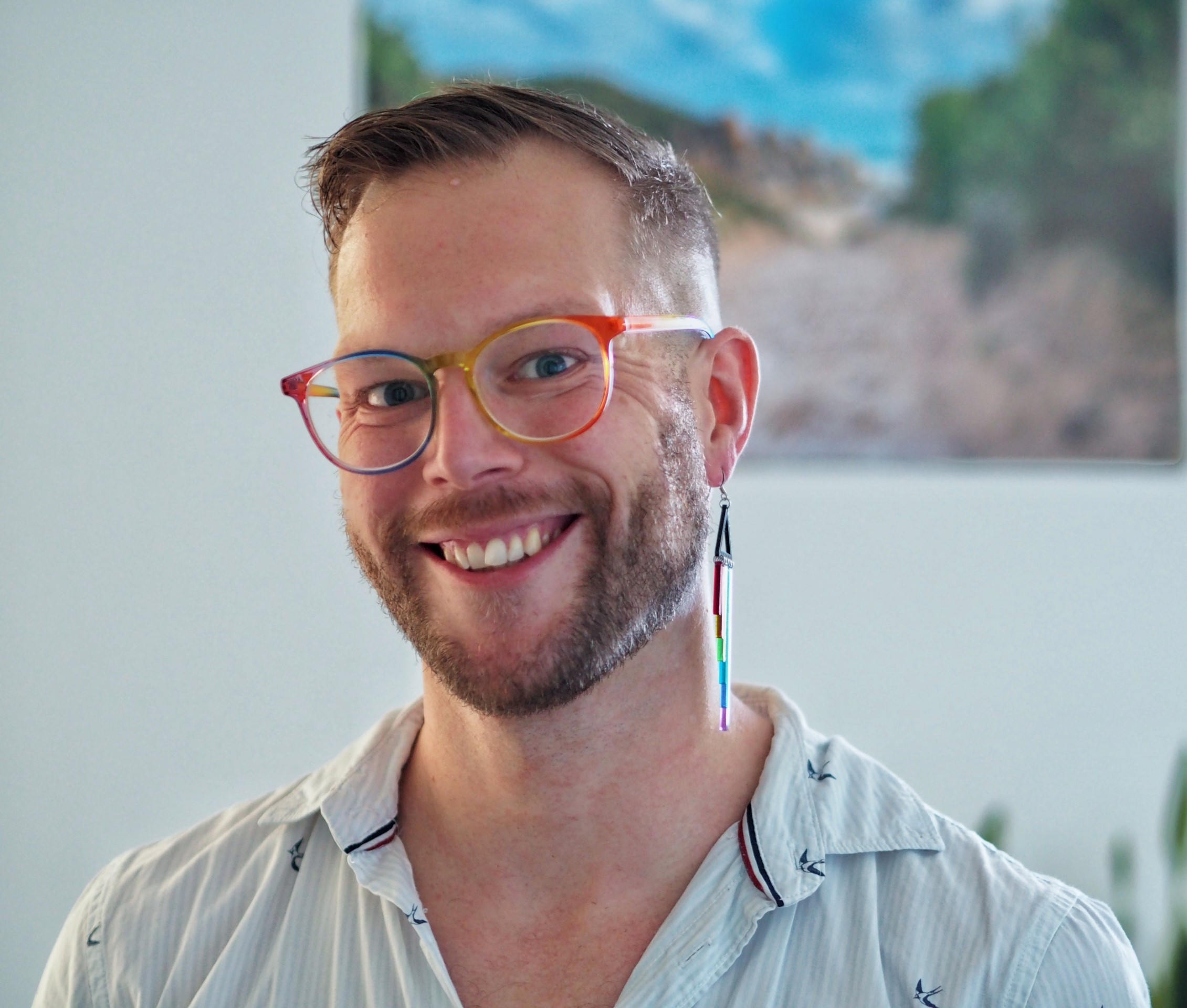 Michael Earp is a non-binary writer and bookseller living in Naarm (Melbourne, Australia). They are editor of, and contributor to Everything Under the Moon: Fairy tales in a queerer light, Kindred: 12 Queer #LoveOzYA Stories, Out-Side: Queer Words and Art from Regional Victoria and co-edited Avast! Pirate Stories From Transgender Authors with Alison Evans. Their writing has also appeared in Archer, The Age, PopMatters, The Victorian Writer, Aurealis and Underdog: #LoveOzYA Short Stories. For over twenty years they have worked between bookselling and publishing as a children’s and young adult specialist. Their role managing The Little Bookroom, the world’s oldest children’s bookstore saw them named ABA Bookseller of the year. A passionate advocate for LGBTQIA+ literature for young people, they established the #AusQueerYA Tumblr to catalogue all Australian young adult fiction containing queer content and characters. Representation of all people in the literature available to readers of all ages is the ethos that motivates their entire career. They have a Masters in Children’s Literature and a Teaching degree and previously served as committee chair for the #LoveOzYA campaign. Tea is the source of all their power.




 Australian Fairy Tale Society