With just five weeks to go, we’ve released Helen McCosker‘s stunning artwork on conference merchandise at our Red Bubble store.
While there, browse all the other incredible art from our talented members: Lorena Carrington, Erin-Claire Barrow, Debra Phillips, Helen Hewitt, Sue Khoo, Zoya Makarova and more.
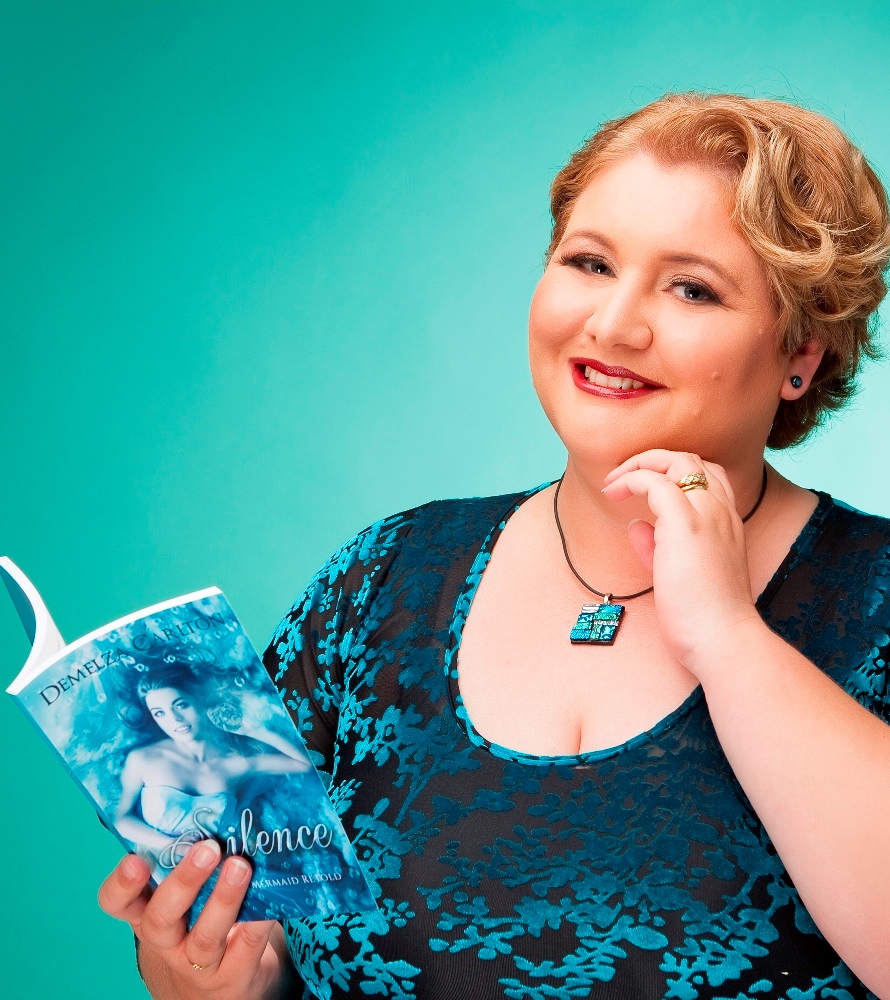
Our keynote speaker Demelza Carlton is an internationally celebrated author, who’ll make her only Sydney appearance at our conference, Over Water, Under Water, Magical Waters of Fairy Tales!
Joining her will be acclaimed fairy tale writers Kate Forsyth and Kell Woods, and a range of authors and academics, storytellers and psychologists, artists and other performers, and all the fairy tale enthusiasts from around the country, at a beautiful ocean-facing site in the water-based city of Sydney.
For the full list of presenters and topics, please visit our conference page.
Register now for our June 14-15 conference at Prince Henry Centre, Little Bay, Sydney. (Please note, sessions run 10am-6pm each day.)
In part two of our interview, best-selling Western Australian author – and this year’s conference keynote speaker – Demelza Carlton reveals more about her series of fairy tale inspired books, her favourite and least favourite tales, and some of her research trips around the world.
Missed part one? Read all about Demelza’s WA-set mermaid stories here.
You have 27 books (and counting!) in your Romance a Medieval Fairytale series; re-imaginings of some well-known and more obscure stories. What do you love about fairy tales, and will you write more?
I had so much fun writing and researching my medieval fairy tale retellings – and yes, there will be more, although I can’t confirm when as yet.
I love that fairy tales are stories that transcend time and place. We don’t know the original sources, though sometimes we do know when the earliest known written versions came from, and the variations take my breath away in how they encapsulate the history and culture of where they’re set, while at the same time, capturing the heart and soul of a familiar tale.
What do you love about being able to change these traditional tales for a new audience, and to say new things?
Well, writing is always a combination of the familiar and the new – and you need to get the balance right. So, if I’m exploring little-known history, or an island that only a handful of people have ever set foot on, I need a familiar story at the heart of it to entice people to come with to somewhere so new and dangerous.
What did you want to explore about the Hans Christian Andersen story for your Little Mermaid-inspired book Silence?
A lot of Little Mermaid retellings like to twist the tale, to tell it from the sea witch’s perspective. My heroines in that series are mostly witches with various magical power, so it made sense to make the mermaid and the sea witch one and the same – but there remained the problem of her voicelessness. Why would the sea witch take away her own voice, when one word to the prince could mean her happily ever after?
I thought: ‘What if there was something more powerful at play than her crush on a man she barely knew? Love of family, and her wish to save people…’ And I always loved the original tragic ending to Andersen’s tale, so I strove to make my story bittersweet as well.
Do you have a favourite fairy tale?
The Little Mermaid, obviously, but I’ve always been partial to The Brave Little Tailor, because it was about cunning more than strength.
Do you have a least favourite?
The Ballad of Tam Lin and possibly Sleeping Beauty. The first, because he’s a selfish, cheating bastard who doesn’t really deserve to be saved, and Sleeping Beauty because it’s a poor justification for rape and adultery.
You do a lot of research for each of your fairy tales, as you’ve set them in the medieval period. Can you describe one of your research trips?
I spent four months travelling through Europe for my medieval series, from Polish hunting lodges where you weren’t allowed to go outside at night because of wild boars, to Scotland where we stumbled on a castle that inspired both Outlander and Game of Thrones. Actually, there’s a funny story about Finlaggan Castle…
Our trip to Scotland was meant to be a treat for my husband, who is a huge fan of single malt whisky, and I volunteered to be his designated driver on Islay while he visited the distilleries and tasted their wares.
There are NINE distilleries on Islay, and we visited ALL of them. While my husband and his friend were singing loudly in the back seat, with the windows rolled down so the whisky fumes wouldn’t reach me in the driver’s seat, I was thinking about which fairy tales I hadn’t considered yet, and how Three Little Pigs could possibly be turned into a medieval romance for my series. I mean, pigs? Wolves? It was damn near impossible, I decided.
The singing had turned to excited shouts – the boys had spotted a castle, and they wanted to visit. I didn’t believe them, because I’d researched this island, and I knew there weren’t any castles that were relevant to my series, but they were adamant they’d seen a sign pointing to a castle. As there’s no arguing with drunk physicists, I had to turn around and follow that sign, just to show them it didn’t exist.
As we drove down the single-lane, winding road, I caught a glimpse of what had gotten the boys so excited: Finlaggan Castle, or what’s left of it.
A castle on an island that had been used as the seat for Hebridean leaders since the Iron Age (which is before the rise of Rome, so more than 2,000 years). Some of the structures dated back to the Viking occupation of the Hebrides – they didn’t belong in Scotland in the 12th century, when my Romance a Medieval Fairytale series is set. Instead, this castle belonged to a Viking prince, who married the daughter of one of the local islander girls, a lord’s daughter.
And Blow: Three Little Pigs Retold – yes, the book otherwise known as Three Little Pigs, the Romance – was born.
You appear at many author events, such as Supanova and Comic-Con. How does it feel to be able to chat to the readers who love your books?
I swear, when I go to those events, I’m absolutely in awe of the cosplayers, and how much effort goes into the costumes. Sometimes, even more time than it takes me to write a book – yes, really!
It always surprises me the number of people who recognise me at events. I mean, I write in my home office and keep to myself much of the time, so when I do go to those huge events like Comic-Con and Supanova, it’s quite surreal being recognised as me, writer of books, instead of as my kid’s mother.
Actually, those events are the place where I tend to get the strangest inspirations for my next books, usually from readers. Sometimes they offer up character names – their own, or someone they’d love to be a red shirt in one of my books – but also some of the amazing, original artwork, because a picture can inspire 50,000 words.
See Demelza in her only Sydney appearance as the keynote speaker at the 2025 conference Under Water, Over Water, Magical Waters of Fairy Tales, as detailed here, and visit her online at www.demelzacarlton.com
Western Australian writer Demelza Carlton is a USA Today bestselling author of more than a hundred books, which have been translated into more than a dozen languages and sold more than three million copies worldwide.
Her fairy tale collection, including Silence: The Little Mermaid Retold, and her six-book series Sirens of War, set off the WA coast, make her the perfect keynote speaker for our 2025 conference theme: ‘Under Water, Over Water, Magical Waters of Fairy tales’ – even if she was once scared of fish!
You’ve always loved the ocean, but on your first snorkelling trip you found you were afraid of fish. How did you overcome that?
Lots more snorkelling, a bit of scuba diving, and swimming with sharks, actually. It’s hard to be afraid of fish when you’re chasing a shark for a photo you promised your kid, and it’s swimming away as fast as it can. I’ve now swum with sea lions, sharks and sea cucumbers, and stood on spray-drenched cliffs over a seeting sea as a seven-metre cyclonic swell surged in, shattering a shipwreck below. And I live in Perth, WA, the shark attack capital of the world – and can assure you that sharks taste delicious!
While doing your Masters research on shipwrecks at remote islands off the WA coast, you came across one that didn’t make sense. How did that inspire a multi-book series about mermaids?
During a cyclone in the 1920s, a fishing boat broke free of its moorings with the two-man crew still aboard. One man managed to swim ashore, but the other couldn’t swim, so he disappeared in the waves when the boat sank. Everyone thought he drowned, but his body wasn’t found… until more than three weeks’ later, when it washed up miles from the boat went down, in the complete opposite direction to the ocean currents. Stranger still, the man was recognisable – which meant his corpse hadn’t been floating at sea for all those weeks – and he’d done some first aid to his broken leg. There was nowhere the man could have been all that time except in the ocean; because if he’d washed up on the island, someone would have seen him and helped him. So how could a man survive for three weeks at sea, do first aid on himself, and yet drown within sight of land?
No matter how much research I did, I couldn’t solve the mystery, so I wrote ‘mermaids did it’ in my report and left it at that. When I did the final proofread, I burst out laughing when I saw that bit. I quickly deleted it, submitted my dissertation, and celebrated with a glass of wine. Wine in hand, I decided to search mermaid myths on the internet. Was it actually possible?
I was amazed to find heaps of mermaid stories from all over the Indian Ocean, and of course I also dug out my copy of Hans Christian Andersen’s tales to read the fairy tale I remembered. Put the two together with my miracle man, and I had a story.
What if the reason mermaids went ashore was a biological imperative – they needed human men in order to breed – but instead of saving the man like the prince in Andersen’s tale, my Indian Ocean mermaid accidentally lost him to the waves? She’d be heartbroken, not wanting to return to the place she lost the man for a very long time. And a very long time later, she did come ashore again at the same islands to investigate an environmental issue. Right at the same time, a brand-new deckhand starts work on a lobster fishing vessel at the islands; a deckhand, who’s very interested in the woman who lives in the fishing shack next door to his. And he just happens to have the same first name as the man she lost to the waves…
What drew you to shipwrecks off the WA coast as your area of research?
It wasn’t just shipwrecks – my Masters is in Emergency Management, and my research project involved plane crashes, wartime battles, quarantines and tsunamis, as well as shipwrecks. I have a personal connection to the Batavia disaster at the Houtman Abrolhos Islands, up near Geraldton as one of my ancestors was the navigator. That might explain why I get lost so easily!
[In June 1629, Dutch-owned ship Batavia struck a reef and sank amongst islands 65km off the coast of what is now Western Australia. The whole story is chilling, if you want to read about it.]
What had you planned to do with that qualification, before becoming a writer?
I was investigating those incidents for my job as an administrator at a remote site, to improve our emergency management planning. Seeing as I was doing the research anyway, turning it into a Masters research project and getting the qualification seemed like a no-brainer.
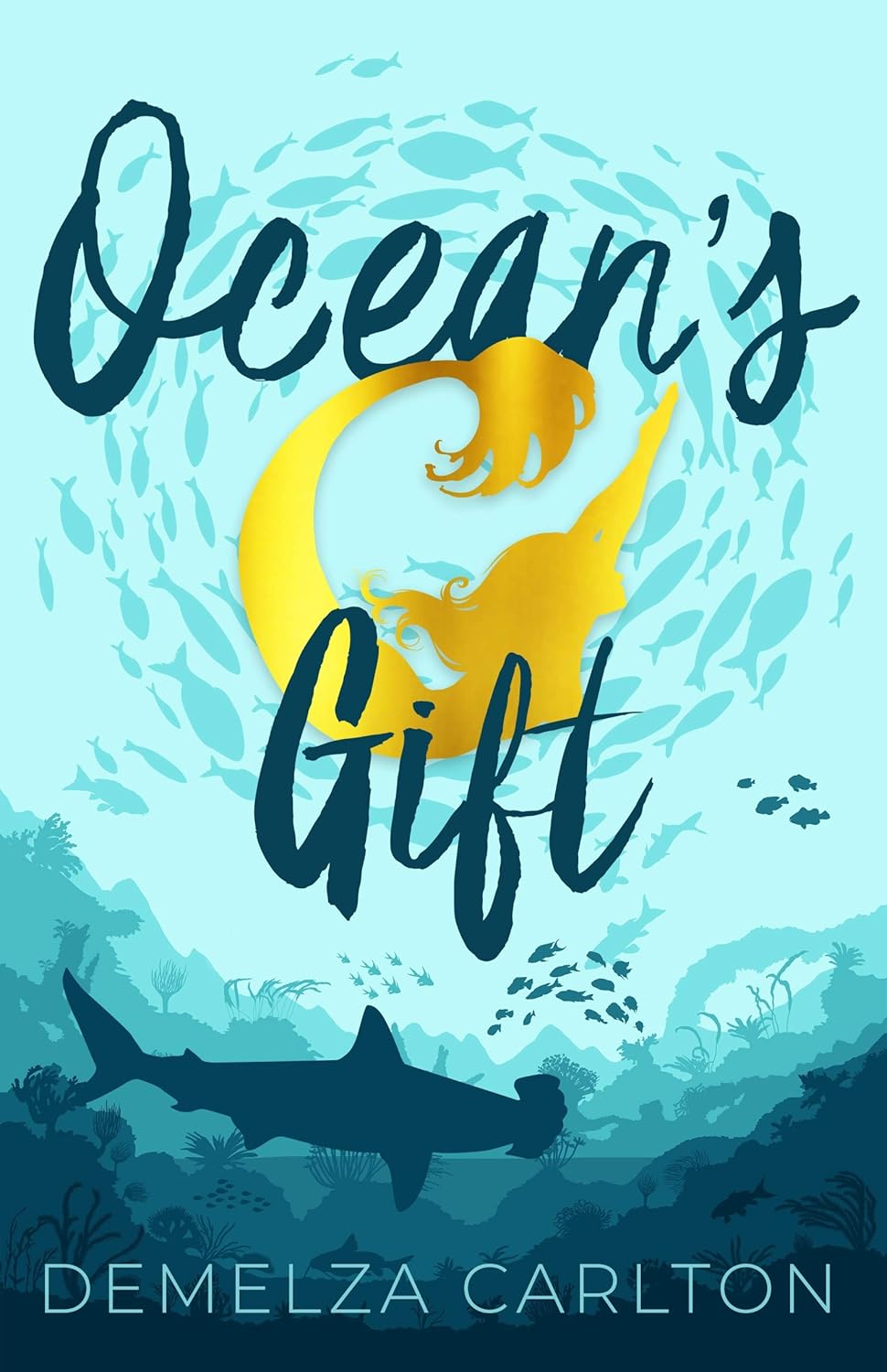
That research inspired your first book, Ocean’s Gift, about a mermaid off the WA coast, which turned into a three-book Siren of Secrets trilogy and the six-book Siren of War series. What made you want to set a fairy tale story in Australia, rather than the traditional European setting?
At the time, I’d lived most of my life here, and my research showed that mermaid legends were everywhere – especially in the Indian Ocean. This part of the world is kind of a fairy tale to most of the rest of the world, so instead of imagining somewhere new that I’d never seen, I wanted to breathe new life into old legends in a place I knew well, which many of my overseas (and east coast Australian!) readers probably don’t.
Why do you think so many Australian writers stick with more traditional settings?
I think they do it because that’s what publishers want, and know how to sell. It’s also closer to their source material, which is usually Hans Christian Andersen and the Brothers Grimm, and to what Disney do with their fairy tales – and let’s face it, Disney definitely knows how to sell fairy tales!
It’s a very personal choice – why set any book anywhere? Writers are told to write what they know. Well, I’m Australian, not English, so I can’t wax lyrical about the beauties of an English wood, because I’ve never seen one. I have gotten my feet wet in both the Baltic and the North Sea though, and seen some of the less populated parts of France and Eastern Europe, so when I chose to write my mediaeval fairy tales, those are the places I tended to set those stories. The history in those regions is particularly fascinating, and also little-known in the English-speaking world.
You also include environmental issues. How important, for you, is it to incorporate these?
I absolutely do! I admit those mostly come up in my contemporary and sci-fi stories, more than my mediaeval ones, but while I was visiting relatives in the Netherlands, they showed me a small desert in Hoge Veluwe National Park that resembles the Pinnacles in WA’s Nambung National Park.
I did some digging, and it turned out that around a thousand years ago, this particular region was the only arable land in a sea of marshland – until a combination of flooding and salt production resulted in salinity issues that turned it into desert.
So, in 2025, I’ll be releasing a new, present-day fairy tale series that centres around an eco-village. I’ve been having so much fun researching all the technology and sustainable practices that will make this village a reality.
What are you looking forward to about the Australian Fairy Tale conference?
I miss academic life, and while I get to do a lot of research for my books, most of it is on history, geography, and the cutting-edge of science for my sci-fi, rather than in-depth research into origins and interpretations of fairy tales. I’m really hoping to get my geek on and listen to other people’s findings on fairy tales, instead of constantly having to think of how a modern audience would relate to them.
Next month, find out more about Demelza’s fairy tale books, her favourite (and least favourite) tales, and some of her research trips around the world. Learn even more by visiting her online at www.demelzacarlton.com. Enjoy Part 2!


 Australian Fairy Tale Society