A Special Fairy Tale Edition of TEXT: CFP

IMG_2503
Good morning fairy tale enthusiasts!

I’m so excited to announce that three members of the Australian Fairy Tale Society committee – Dr Nike Sulway, Dr Rebecca-Anne Do Rozario, and myself – are collaborating to produce a special edition of the scholarly journal TEXT. This edition is all about Australasian fairy tales and will compliment our 2016 conference coming up on June 26.

We are now calling for submissions! All details below:

______________________________________________

Into the Bush: Australasian Fairy Tales
A Special Issue of TEXT
http://www.textjournal.com.au/
Editors: Dr Nike Sulway, Dr Rebecca Anne Do Rozario,
Dr Belinda Calderone

The fairy tale has a long tradition in both oral and literary forms. Indeed, recently Sara da Silva and Jamshid Tehrani have argued, using a phylogenetic analysis of tales in the Aarne Thompson Uther (ATU) index, that some of the tales still told today ‘can be securely traced back to … between 2500 and 6000 years ago’ (8). Such an ancient tradition has left its mark across a range of literary traditions, including those of Australasia. While old and gnarled, the fairy tale is also alive and well, informing contemporary literary practice across a range of forms and genres, in works written for both children and adults.

This Special issue of TEXT, developed in association with the Australian Fairy Tale Society, responds to the challenge of honouring the long-lived traditions of the fairy tale in the Australasian context, of exploring and expanding our understanding of fairy tales and their tellers in a postcolonial context.

This issue seeks to reflect on Australasia’s unique creative and scholarly contributions to this long-lived genre, and seeks submissions that address the growing interest in fairy tale narratives across a range of platforms, particularly those stories set in and around Australasia.

Submissions may address, but are not limited to, the following:
• Writing about fairy tales and their tellers
• Fairy tales in the Australasian landscape/context
• Fairy tales in the colonial and postcolonial context
• Appropriations and adaptations
• Gender, sexuality and the fairy tale
• Teaching and learning about fairy tales
• Tale types and tropes: critical discussions of the ATU and Propp models, of Dundes’s motifemes or similar schemas
• Other relevant topics and issues

Scholarly papers should be no more than 6000 words in length. Creative works will usually be up to 3,500 words in length, or as agreed by editors.

Creative work must be accompanied by an ERA research statement that clearly explains the submission’s relevance as a research outcome. Peruse any of TEXT journal’s Creative Writing as Research special issues to familiarise yourself with research statements.

Please also contact us with ideas for book reviews.

Please include a brief biography (200 words max, in TEXT style) and ensure that you include your email address for reply. Submissions MUST be in TEXT style and formatting. Please see http://www.textjournal.com.au/speciss/info.htm for submission guidelines.

Deadline for initial submission: July 29, 2016
Final revised submissions will be due: September 15, 2016
Publication date: April, 2017
Email: nike.sulway@usq.edu.au, rebecca.dorozario@monash.edu, or belinda.calderone85@outlook.com
_______________________________________

Enchanted regards,
Dr Belinda Calderone
President – Australian Fairy Tale Society


CFP Closed, Registrations Open!


Bush

The CFP has officially closed for our third annual conference, Into the Bush: Its Beauty and Its Terror. We have received some fantastic submissions and are currently deciding on the successful applicants. We look forward to releasing our conference program soon!

In the meantime, registrations are now open!

REGISTER HERE

Magical regards,
Belinda Calderone
The Australian Fairy Tale Society

Our 2015 Conference Videos

Good morning fairy tale lovers!

The videos from our 2015 conference are finally online – woo!

A HUGE thank you to AFTS member Thang Luong, who worked tirelessly to bring these videos to you, almost killing his computer in the process!

To refresh your memory, here is a PDF version of our 2015 conference program: 2015 AFTS Conference Program

View the videos on youtube here. (Note: some will play as a full video, and some will only show an image with audio over it, for copyright reasons.)

Wondrous wishes,
Dr Belinda Calderone
AFTS President

Reminder: CFP Closing this Week

Clock1

Good afternoon fairy tale lovers!

We know that January is a hectic month for a lot of people, but just a quick post to remind everyone that our CFP will be closing this Friday, 29 Jan, at 5pm.

*******************************************

The details again:

Conference title: Into the Bush: Its Beauty and Its Terror

When: Sunday, 26 June 2016

Where: Glen Eira Town Hall, Caulfield, VIC, 3162.

Call for presentations: See the call for presentations below, or print off a PDF version here: AFTS 2016 Conference – CFP

*******************************************

Australian Fairy Tale Society – 2016 Conference

Call for Presentations – Into the Bush: Its Beauty and Its Terror

‘Into the Woods,’ is a phrase that has become closely linked to the fairy tale genre. It conjures up all manner of fairy tale images, such as roguish wolves waiting behind trees and lost children stumbling upon gingerbread houses.

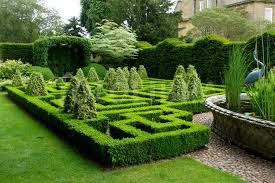
But how does it translate into the Australian fairy tale tradition? For our third annual conference, we will be exploring what happens when we venture… ‘Into the Bush.’ Australian fairy tales reflect many of the realities of the bush, while also reimagining it as a space of magic and mystery. Whether it is depicted as real or otherworldly, the bush always encompasses duality – it is a place of both beauty and terror.

We are now accepting proposals for storytelling performances, musical performances, academic papers, and creative readings. We would also love to hear from artists wishing to display and/or sell their works at the conference.

Presentation topics may include (but are not limited to):

  • Into the unknown
  • Getting lost, getting found
  • Native flora and fauna
  • Environmental concerns
  • Drought and fire
  • Elements of nature: earth, wind, fire, water
  • Urban and rural
  • The bush as sexual metaphor
  • Fear and danger in the bush
  • Secrets and hidden treasures
  • Havens, homes and holes in the ground
  • A place to breathe in: spiritual nourishment
  • National identity and our relationship to the bush
  • Tales of colonisation
  • Culture clash, culture meld
  • A fork in the road
  • The bush as a liminal space
  • Making your own path
  • Following tracks
  • Blazing trails and dropping breadcrumbs
  • Survival kits (including a storyteller’s swag bag)
  • Stories like wildfire
  • The wildness of stories (and their seeding)
  • Changing nature and ‘the changing nature’ of the Australian bush and the stories we tell there
  • When European fairies and tales re-root themselves in the bush
  • The changing landscape of fairy tales and tellings in Australia

Academic papers will be up to 20 minutes in duration and performances and readings will be up to 15 minutes in duration. All presentations will be offered the option of 10 additional minutes of question time.

Please email your proposal of no more than 200 words to austfairytales@gmail.com by 5pm Friday January 29, 2016.

Fairy wishes,
The AFTS Committee


Rough Magick

 
Rough Magick
 

We are delighted to announce that our very own Tegan Elizabeth Webb has published a short story entitled “Selkie” in Rough Magick, a collection of haunting stories and poems about the darker side of love and sex. Congratulations, Tegan!! This sounds like an amazing collection. As the blurb explains:

Some of the stories are magical; some are more realistic and the “magic” comes through in language and lyricism. Some protagonists are teens and some are adults. There is romanticism and eroticism and even horror. What unites the stories is that the writers have boldly faced love’s shadows in unique and gripping ways.


Tegan Webb

Tegan Elizabeth Webb

Tegan is a student and writer based in Melbourne. Her work has appeared in various publications, including Moss Piglet Journal, Grotty, and A Sharp Knife. She writes mostly about strange creatures who have a lot of feelings.


I had the chance to ask Tegan about how she came to write “Selkie” for the anthology , and she responded:
Rough Magick is a collection of stories about the darker side of love and sex, and so I thought the theme of possession that runs through selkie mythology would be an interesting angle from which I could explore some of the darker elements of romantic relationships, and in particular the power dynamics in said relationships.”


She also elaborated on the symbolism of taking the selkie cloak in this thought-provoking comment:
“For me, the taking of the cloak is a perfectly explicit metaphor for the kinds of power that men have been known to take from women in unhealthily possessive and emotionally abusive relationships. What I wanted to do with “Selkie” was to take this mythology and bring it forward into a contemporary setting, in order to highlight that this narrative is still being played out in the countless tales we hear of women being abused, both physically and emotionally, by men they know, trust and love.”


What an incredible idea. Tegan’s comment also demonstrates how older mythologies can still have relevance for the lives we are living today. There is always something we can absorb, always something to reflect upon.


If you’d like to read Tegan’s story, and others in the collection, you can get a copy here.


Magical regards,
Dr Belinda Calderone
AFTS President


A Magical Writing Retreat


Cotswolds


Fancy a writing retreat in England next year? (Okay, that question is really redundant – who wouldn’t?!)

Kate Forsyth, award-winning author and valued AFTS member, will be running a writing retreat and literary tour in England from June 19-June 26 2016.

Kate will guide you as you write, read, listen, learn and discover all aspects of creative writing, covering everything from the initial discovery of your story all the way to finding a publisher.

Woven into this writing retreat are trips to places that will inspire you to put pen to paper. Some of the locations on the literary tour include Oxford, the Cotswolds, Stonehenge, Warwick Castle, and Stratford-upon-Avon (the birthplace of William Shakespeare).

As Kate has written:

If you’re writing fiction and want to explore history and mythology, or if you wish to instil a little magic and wonder in your writing, then you’ll love this unique experience.

For the full details, click here.

Magical regards,
Dr Belinda Calderone
AFTS President

Our 2016 Conference – Call for Presentations!

After months of discussion and preparation, the AFTS committee is delighted to announce the theme of our 2016 conference…

Into the Bush: Its Beauty and Its Terror

Bush

Here are the details:

When: Sunday, 26 June 2016

Where: We have chosen to hold our conference in Victoria this year! For our venue, we have chosen the Glen Eira Town Hall, Caulfield, VIC, 3162.

Our call for papers is now officially open, and will close at 5pm on Friday, 29 January 2016. See the call for papers below, or print off a PDF version here: AFTS 2016 Conference – CFP

*******************************************

Australian Fairy Tale Society – 2016 Conference

Call for Presentations – Into the Bush: Its Beauty and Its Terror

‘Into the Woods,’ is a phrase that has become closely linked to the fairy tale genre. It conjures up all manner of fairy tale images, such as roguish wolves waiting behind trees and lost children stumbling upon gingerbread houses.

But how does it translate into the Australian fairy tale tradition? For our third annual conference, we will be exploring what happens when we venture… ‘Into the Bush.’ Australian fairy tales reflect many of the realities of the bush, while also reimagining it as a space of magic and mystery. Whether it is depicted as real or otherworldly, the bush always encompasses duality – it is a place of both beauty and terror.

We are now accepting proposals for storytelling performances, musical performances, academic papers, and creative readings. We would also love to hear from artists wishing to display and/or sell their works at the conference.

Presentation topics may include (but are not limited to):

  • Into the unknown
  • Getting lost, getting found
  • Native flora and fauna
  • Environmental concerns
  • Drought and fire
  • Elements of nature: earth, wind, fire, water
  • Urban and rural
  • The bush as sexual metaphor
  • Fear and danger in the bush
  • Secrets and hidden treasures
  • Havens, homes and holes in the ground
  • A place to breathe in: spiritual nourishment
  • National identity and our relationship to the bush
  • Tales of colonisation
  • Culture clash, culture meld
  • A fork in the road
  • The bush as a liminal space
  • Making your own path
  • Following tracks
  • Blazing trails and dropping breadcrumbs
  • Survival kits (including a storyteller’s swag bag)
  • Stories like wildfire
  • The wildness of stories (and their seeding)
  • Changing nature and ‘the changing nature’ of the Australian bush and the stories we tell there
  • When European fairies and tales re-root themselves in the bush
  • The changing landscape of fairy tales and tellings in Australia

Academic papers will be up to 20 minutes in duration and performances and readings will be up to 15 minutes in duration. All presentations will be offered the option of 10 additional minutes of question time.

Please email your proposal of no more than 200 words to austfairytales@gmail.com by 5pm Friday January 29, 2016.

We look forward to receiving your proposals!

Fairy wishes,
The AFTS Committee


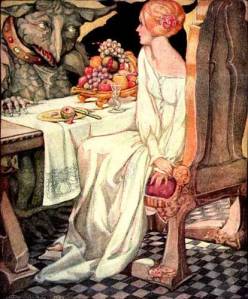
Beauty and the Beast – Our Fairy Tale for November


Illustration by Anne Anderson

Illustration by Anne Anderson


Hello fairy tale enthusiasts,

It’s Fairy Tale Ring time again!

Our chosen fairy tale for April is ‘Beauty and the Beast.’ All AFTS members have now received their ‘Beauty and the Beast’ Reading List and Points to Ponder, compiled by the amazing Jo Henwood.

Even if you can’t manage to get to a Fairy Tale Ring, you are always welcome to send in stories or artwork inspired by the tale.

If you’re not part of a local Fairy Tale Ring, but would like to be, Contact us for more information.

Let the discussions begin!

Dr Belinda Calderone
AFTS President


Fairy Tales: Contexts of Subversion

Today we have a guest post by Christine Chettle from Reading the Fantastic.

Reading the Fantastic is an initiative based at the University of Leeds in the UK to bring together fellow enthusiasts of fairy tales, folk tales, and fantasy literature through reading groups and seminars (plus coffee, tea, wine and snacks), with a specific focus on exploring stories across cultures and disciplines.

Christine Chettle is a co-organizer of Reading the Fantastic and has recently finished a PhD examining Victorian fantasy and social change. We hope you enjoy her article:


 Fairy Tales: Contexts of Subversion

By Christine Chettle


The Foxes, 1913, by Franz Marc, 1880-1916

The Foxes, 1913, by Franz Marc, 1880-1916


An email conversation between myself, part of the Reading the Fantastic initiative in Leeds, UK, and Jo Henwood of the Australian Fairy Tale Society, revealed two things: both of us, Jo in Australia and I in Leeds, are co-organizers of discussion groups passionate about fairy and folktales, and both groups are separated by miles and budgets. But, we thought, an exchange of blog posts could provide a concrete way to explore our groups’ mutual interests and to explore how fairy and folktales connect people across time and space. Intriguingly, we already had a point of connection, as a conversation with another AFTS member, Reilly McCarron revealed: one of the first tales my group had discussed was ‘Mr Fox’ — in the version published by Joseph Jacobs (1854-1916). Born in Australia, spending a good deal of his working life in the UK, and dying in America, Jacobs collected and published fairy tales from a number of countries, beginning with English Fairy Tales (1890), in addition to his work in anthropology, cultural history, and folklore.

Jacobs’s motivations for his project were, in addition to uncovering and popularizing tales special to different countries, to ‘giv[e] a common fund of nursery literature to all classes of the English people and [ . . .] to gain fuller knowledge of the workings of the popular mind as well as traces of archaic modes of thought and custom’. His inclination towards universality was in part prompted by what he termed ‘The only reason, I imagine, why such tales have not hitherto been brought to light, is the lamentable gap between the governing and recording classes and the dumb working classes of this country–dumb to others but eloquent among themselves’. (A critical examination of this statement, as Caroline Sumpter points out in The Victorian Periodical Press and the Fairy Tale, reveals that ‘In his patriotic task of recovering the English folktale for “all classes”, Jacobs had to turn a blind eye to the fact that the working classes had been reading and recording for some time’ and reminds us of another reason for discussing connected versions of tales: each of us, and each version, will have flaws in outlook and can only benefit from the opinions of others.)

Jacobs represents part of a larger context of people, inspired by collections of earlier tales from other countries, trying to explore new understandings of fairy and folk tales. The Grimms themselves, of course, were in part influenced by the tales of Marie d’Aulnoy, originator of the term ‘fairy tale’, and Charles Perrault (among others), who were themselves influenced by earlier Italian writers (and so on it goes). In the nineteenth century, for example, John Ruskin and George MacDonald wrote new fairy tales (‘King of the Golden River’ [1841] and ‘The Light Princess’ [1864]) in response to earlier collections. At the end of the nineteenth century, the cumulative cultural influence of Hans Christian Andersen’s and the Grimms’ collections, along with various translations of The Thousand and One Nights compilation of Arabic folktales, prompted fairy tale scholars and enthusiasts to collect and study fairy tales in an extended and diffused critical context: as well as Jacobs, see the works of Antti Aarne and Andrew Lang, for example.

‘Collecting’ tales doesn’t just mean putting them into a book; it means seeking to understand them, exploring the connections they suggest, and investigating how they reach across multiple borders. As phylogenetic researcher Jamie Tehrani explains,


Folktales [ . . .] embody our shared fantasies, fears and experiences. Understanding which elements of them remain stable and which ones change as they get transmitted across generations and societies can therefore provide a unique window into universal and variable aspects of the human condition . . . .[and] represent a potentially rich point of contact between anthropologists, folklorists, literary scholars, biologists and cognitive scientists.


Another boy born in the Southern hemisphere who later travelled to England was also influenced by the study of fairy tale collections. Literary scholar, linguist and author John Ronald Reuel Tolkien, in discussing what prompted him to create his Middle-Earth legendarium, explained that his dissatisfaction with existing folk tale work was one such prompt: “I was from early days grieved by the poverty of my own beloved country: it had no stories of its own (bound up with its tongue and soil), not of the quality that I sought, and found (as an ingredient) in legends of other lands” [quoted in Fimi, page 50]. Tolkien’s searches led him to build a fantasy literary world which combined his own experience with a knowledge and appreciation of a number of other cultures.  Of course, the intersections of race in Tolkien’s world contain complexities and flaws; for a well-researched, comprehensive and nuanced discussion of this matter, I refer you to Dimitra Fimi’s Tolkien, Race and Cultural History: From Fairies to Hobbits. Investigating the intersections of folktales and fantasy means acknowledging all the different ways, both positive and negative, in which myriads of tales impact the huge range of voices who read and speak them, and the tensions such impact can evoke.

Lady Mary, the heroine of Mr Fox, walks the complex path of analysing and connecting text with audience as she transmits her experience to craft a subversive narrative. One day, she follows her fiancé to his house; passing mysterious signs proclaiming, firstly just ‘Be bold, be bold, but not too bold’, then ‘Be bold, be bold, but not too bold/Lest your life’s blood run cold’, she sees these words come to life as her fiancé overpowers and murders a young woman, another of his brides, while Lady Mary spies on him. Her wedding feast gives her the opportunity to overpower this murderous man, since she is surrounded by many witnesses – yet Mr Fox controls the conversation. By initially presenting her tale as a dream, she can command attention without being silenced; by gradually increasing her tone of discomfort in uncovering scenes of horror, she builds fascination through the cumulative mystery she relays. When she finally reveals the dead woman’s hand and accuses her murderous fiancé outright, the witnesses at the feast are ready to kill on her behalf, redeeming her from a destructive social contract.

While we are unlikely to battle vulpine fiancés and discussion groups generally don’t incur violence, as we seek to understand the tensions beneath tales and explore how they connect us to other people, we too can gain the power to transmit experience across barriers of social space as well as time. The discussion group format extends this power, as in this context, no one person controls the conversation (well, certainly not to the extent of Mr Fox) and we can all join in discovering and uncovering the subversive dynamics in folk and fairy tale lore.


Bibliography:

Dimitra Fimi, Tolkien, Race and Cultural History: From Fairies to Hobbits, Palgrave Macmillan: Basingstoke, 2010

Caroline Sumpter The Victorian Periodical Press and the Fairy Tale, Palgrave Macmillan: Basingstoke, 2012

Jamie Tehrani, ‘As they spread, fairy tales evolve like biological species’ https://theconversation.com/as-they-spread-folktales-evolve-like-biological-species-20271, 2013


For more information on Reading the Fantastic, visit their site: http://reading-the-fantastic.tumblr.com/, their facebook page (https://www.facebook.com/ReadingTheFantastic),Twitter (@FantasyReadings) and by email (readingthefantastic@gmail.com).

Christine Chettle blogs here (www.fantasiesofthevictorians.blogspot.co.uk), tweets @Cherissonne and can be reached at c_chettle@yahoo.co.uk. Her write-up of the Reading the Fantastic session featuring Mr Fox is here.


Two Amazing Keynotes

Good afternoon fairy-tale enthusiasts!

The two wonderful keynote addresses from our inaugural 2014 conference and our recent 2015 conference are now available to everyone on our website at Events > Previous AFTS Events. Both Sophie Masson and Carmel Bird are captivating speakers and we are delighted to share their addresses with you all. Enjoy!


Sophie Masson’s Keynote Address – 2015 AFTS Conference

Sophie Masson

Sophie Masson


Carmel Bird’s Keynote Address – 2014 AFTS Conference

Carmel Bird

Carmel Bird


Hope you’re all having a magical week,

Belinda Calderone
President
Australian Fairy Tale Society