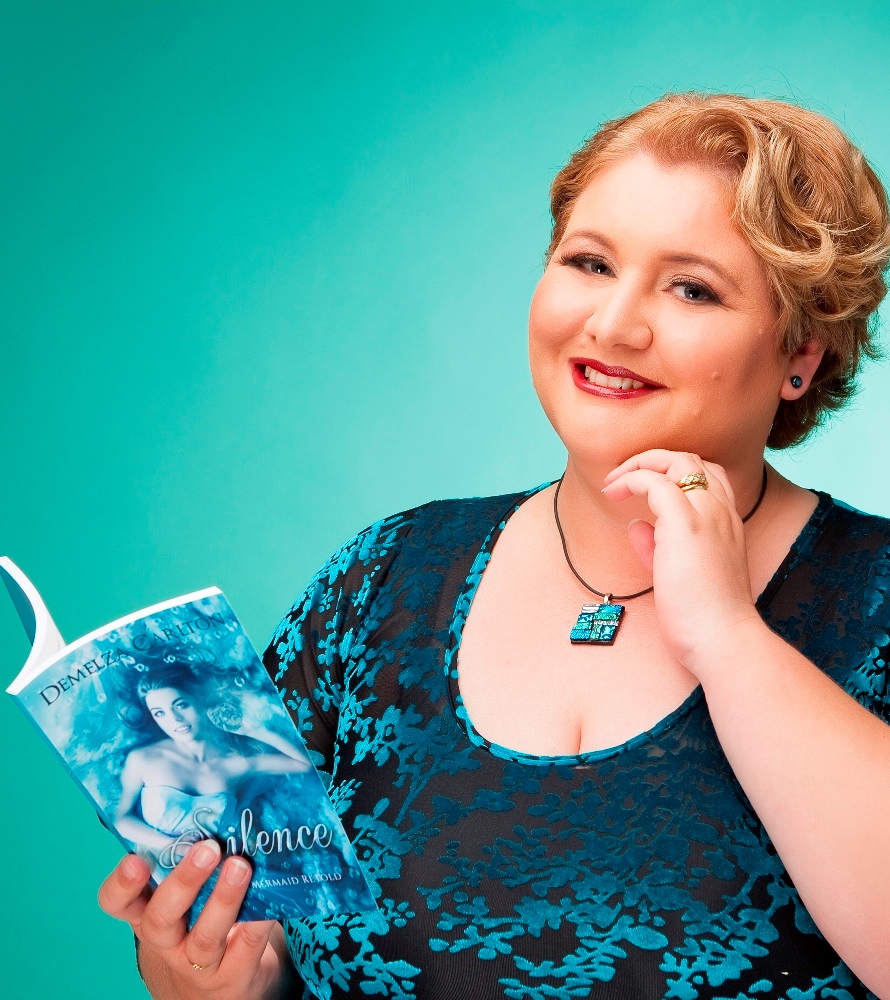
Western Australian writer Demelza Carlton is a USA Today bestselling author of more than a hundred books, which have been translated into more than a dozen languages and sold more than three million copies worldwide.
Her fairy tale collection, including Silence: The Little Mermaid Retold, and her six-book series Sirens of War, set off the WA coast, make her the perfect keynote speaker for our 2025 conference theme: ‘Under Water, Over Water, Magical Waters of Fairy tales’ – even if she was once scared of fish!
You’ve always loved the ocean, but on your first snorkelling trip you found you were afraid of fish. How did you overcome that?
Lots more snorkelling, a bit of scuba diving, and swimming with sharks, actually. It’s hard to be afraid of fish when you’re chasing a shark for a photo you promised your kid, and it’s swimming away as fast as it can. I’ve now swum with sea lions, sharks and sea cucumbers, and stood on spray-drenched cliffs over a seeting sea as a seven-metre cyclonic swell surged in, shattering a shipwreck below. And I live in Perth, WA, the shark attack capital of the world – and can assure you that sharks taste delicious!
While doing your Masters research on shipwrecks at remote islands off the WA coast, you came across one that didn’t make sense. How did that inspire a multi-book series about mermaids?
During a cyclone in the 1920s, a fishing boat broke free of its moorings with the two-man crew still aboard. One man managed to swim ashore, but the other couldn’t swim, so he disappeared in the waves when the boat sank. Everyone thought he drowned, but his body wasn’t found… until more than three weeks’ later, when it washed up miles from the boat went down, in the complete opposite direction to the ocean currents. Stranger still, the man was recognisable – which meant his corpse hadn’t been floating at sea for all those weeks – and he’d done some first aid to his broken leg. There was nowhere the man could have been all that time except in the ocean; because if he’d washed up on the island, someone would have seen him and helped him. So how could a man survive for three weeks at sea, do first aid on himself, and yet drown within sight of land?
No matter how much research I did, I couldn’t solve the mystery, so I wrote ‘mermaids did it’ in my report and left it at that. When I did the final proofread, I burst out laughing when I saw that bit. I quickly deleted it, submitted my dissertation, and celebrated with a glass of wine. Wine in hand, I decided to search mermaid myths on the internet. Was it actually possible?
I was amazed to find heaps of mermaid stories from all over the Indian Ocean, and of course I also dug out my copy of Hans Christian Andersen’s tales to read the fairy tale I remembered. Put the two together with my miracle man, and I had a story.
What if the reason mermaids went ashore was a biological imperative – they needed human men in order to breed – but instead of saving the man like the prince in Andersen’s tale, my Indian Ocean mermaid accidentally lost him to the waves? She’d be heartbroken, not wanting to return to the place she lost the man for a very long time. And a very long time later, she did come ashore again at the same islands to investigate an environmental issue. Right at the same time, a brand-new deckhand starts work on a lobster fishing vessel at the islands; a deckhand, who’s very interested in the woman who lives in the fishing shack next door to his. And he just happens to have the same first name as the man she lost to the waves…
What drew you to shipwrecks off the WA coast as your area of research?
It wasn’t just shipwrecks – my Masters is in Emergency Management, and my research project involved plane crashes, wartime battles, quarantines and tsunamis, as well as shipwrecks. I have a personal connection to the Batavia disaster at the Houtman Abrolhos Islands, up near Geraldton as one of my ancestors was the navigator. That might explain why I get lost so easily!
[In June 1629, Dutch-owned ship Batavia struck a reef and sank amongst islands 65km off the coast of what is now Western Australia. The whole story is chilling, if you want to read about it.]
What had you planned to do with that qualification, before becoming a writer?
I was investigating those incidents for my job as an administrator at a remote site, to improve our emergency management planning. Seeing as I was doing the research anyway, turning it into a Masters research project and getting the qualification seemed like a no-brainer.
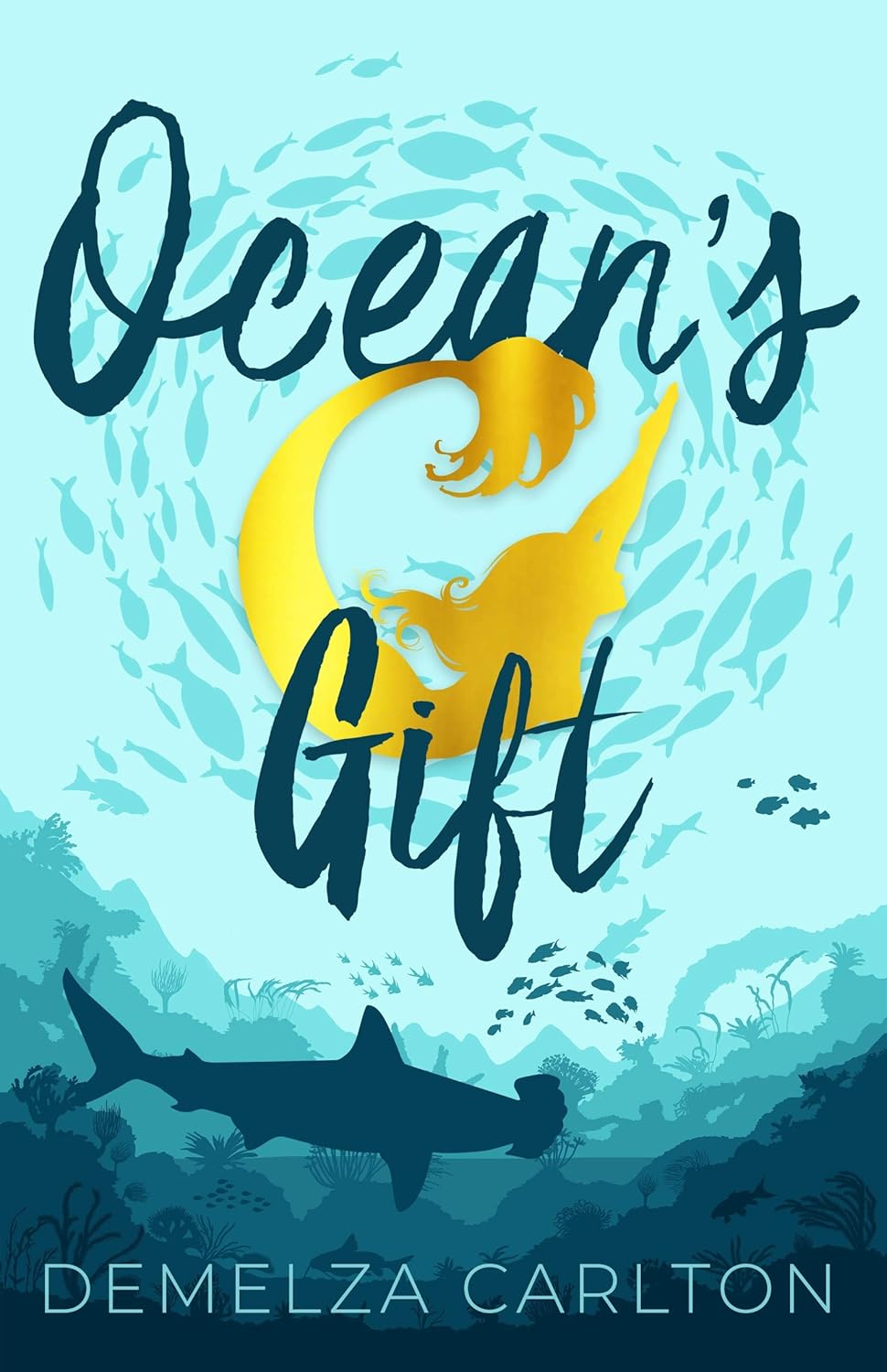
That research inspired your first book, Ocean’s Gift, about a mermaid off the WA coast, which turned into a three-book Siren of Secrets trilogy and the six-book Siren of War series. What made you want to set a fairy tale story in Australia, rather than the traditional European setting?
At the time, I’d lived most of my life here, and my research showed that mermaid legends were everywhere – especially in the Indian Ocean. This part of the world is kind of a fairy tale to most of the rest of the world, so instead of imagining somewhere new that I’d never seen, I wanted to breathe new life into old legends in a place I knew well, which many of my overseas (and east coast Australian!) readers probably don’t.
Why do you think so many Australian writers stick with more traditional settings?
I think they do it because that’s what publishers want, and know how to sell. It’s also closer to their source material, which is usually Hans Christian Andersen and the Brothers Grimm, and to what Disney do with their fairy tales – and let’s face it, Disney definitely knows how to sell fairy tales!
It’s a very personal choice – why set any book anywhere? Writers are told to write what they know. Well, I’m Australian, not English, so I can’t wax lyrical about the beauties of an English wood, because I’ve never seen one. I have gotten my feet wet in both the Baltic and the North Sea though, and seen some of the less populated parts of France and Eastern Europe, so when I chose to write my mediaeval fairy tales, those are the places I tended to set those stories. The history in those regions is particularly fascinating, and also little-known in the English-speaking world.
You also include environmental issues. How important, for you, is it to incorporate these?
I absolutely do! I admit those mostly come up in my contemporary and sci-fi stories, more than my mediaeval ones, but while I was visiting relatives in the Netherlands, they showed me a small desert in Hoge Veluwe National Park that resembles the Pinnacles in WA’s Nambung National Park.
I did some digging, and it turned out that around a thousand years ago, this particular region was the only arable land in a sea of marshland – until a combination of flooding and salt production resulted in salinity issues that turned it into desert.
So, in 2025, I’ll be releasing a new, present-day fairy tale series that centres around an eco-village. I’ve been having so much fun researching all the technology and sustainable practices that will make this village a reality.
What are you looking forward to about the Australian Fairy Tale conference?
I miss academic life, and while I get to do a lot of research for my books, most of it is on history, geography, and the cutting-edge of science for my sci-fi, rather than in-depth research into origins and interpretations of fairy tales. I’m really hoping to get my geek on and listen to other people’s findings on fairy tales, instead of constantly having to think of how a modern audience would relate to them.
Next month, find out more about Demelza’s fairy tale books, her favourite (and least favourite) tales, and some of her research trips around the world. Learn even more by visiting her online at www.demelzacarlton.com. Enjoy Part 2!
 Australian Fairy Tale Society